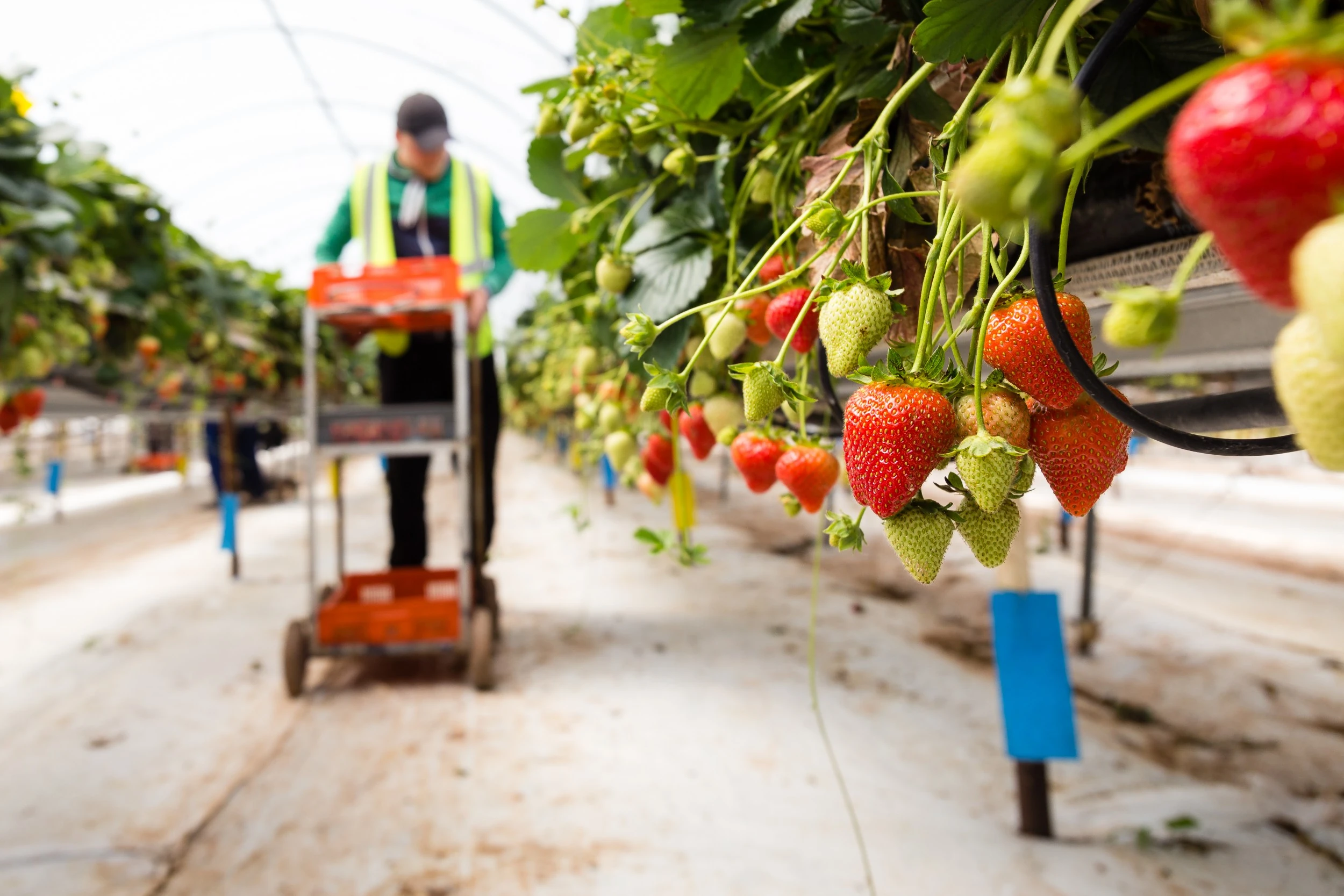
A new berry farm needs a production system before a shopping list. We connect the crop programme, site evidence, resources and market requirements into an engineering brief. The concept brings growing areas, utilities, harvesting routes and packing together, providing a common basis for design decisions, phased investment and equipment procurement.
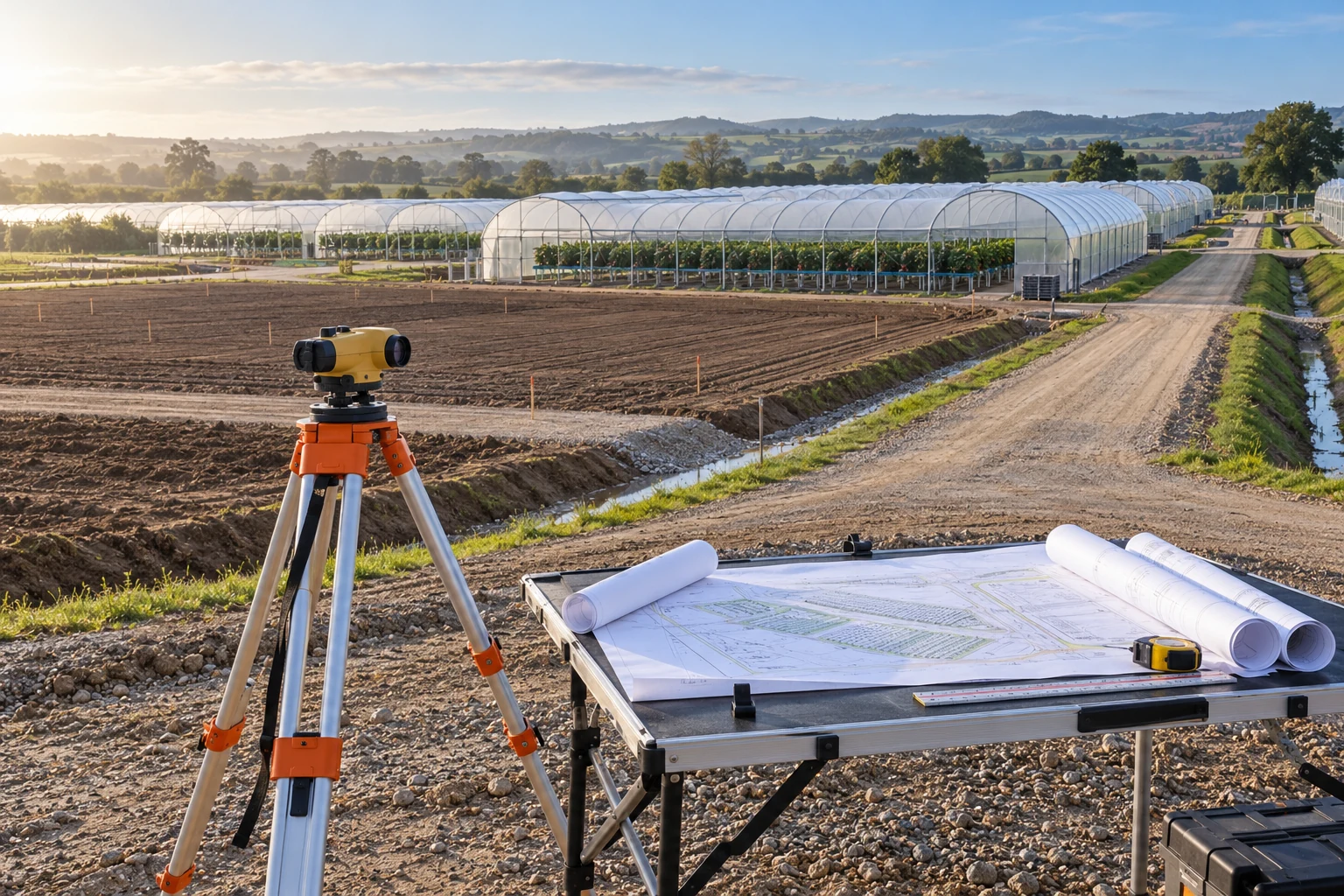
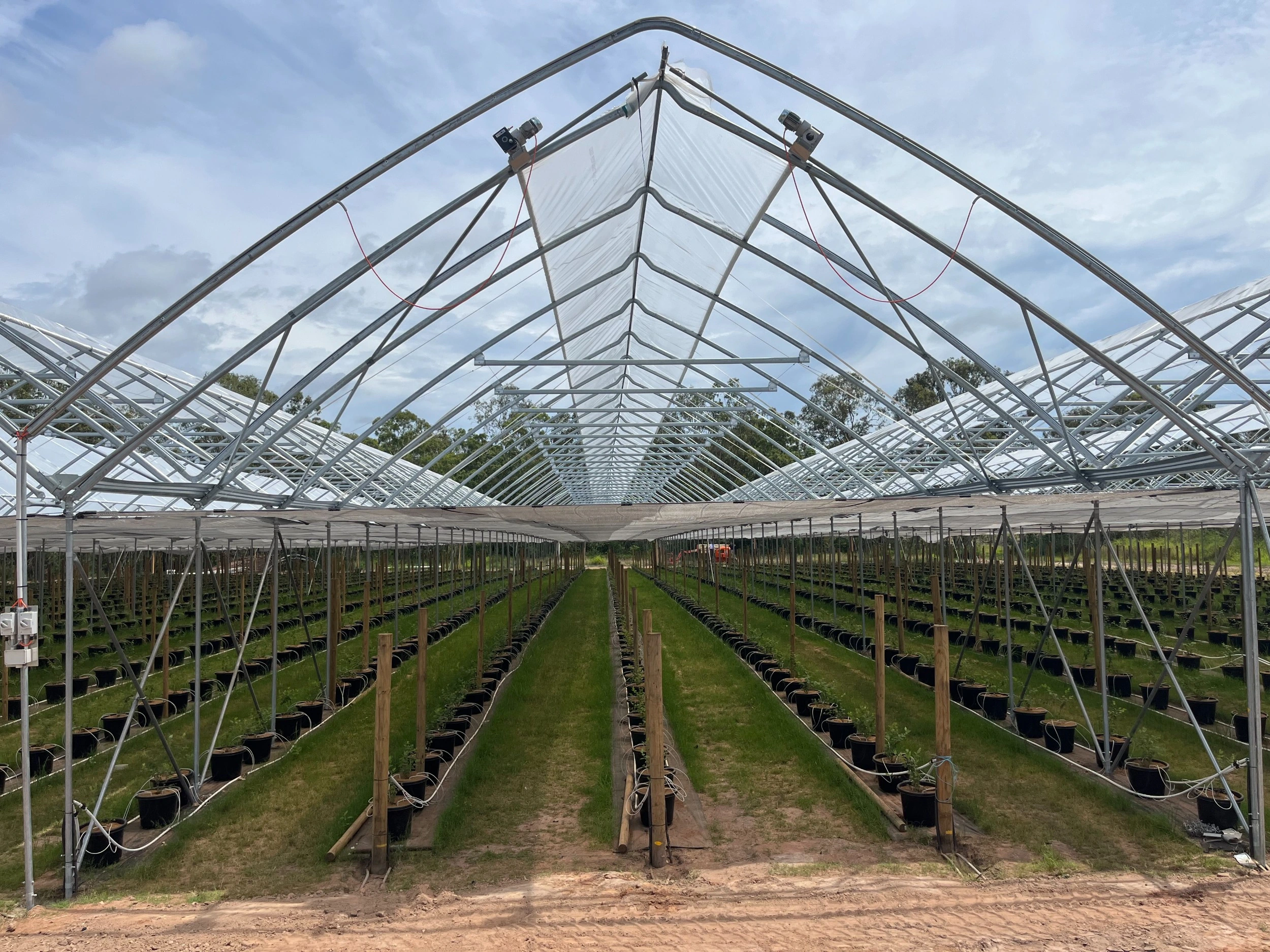
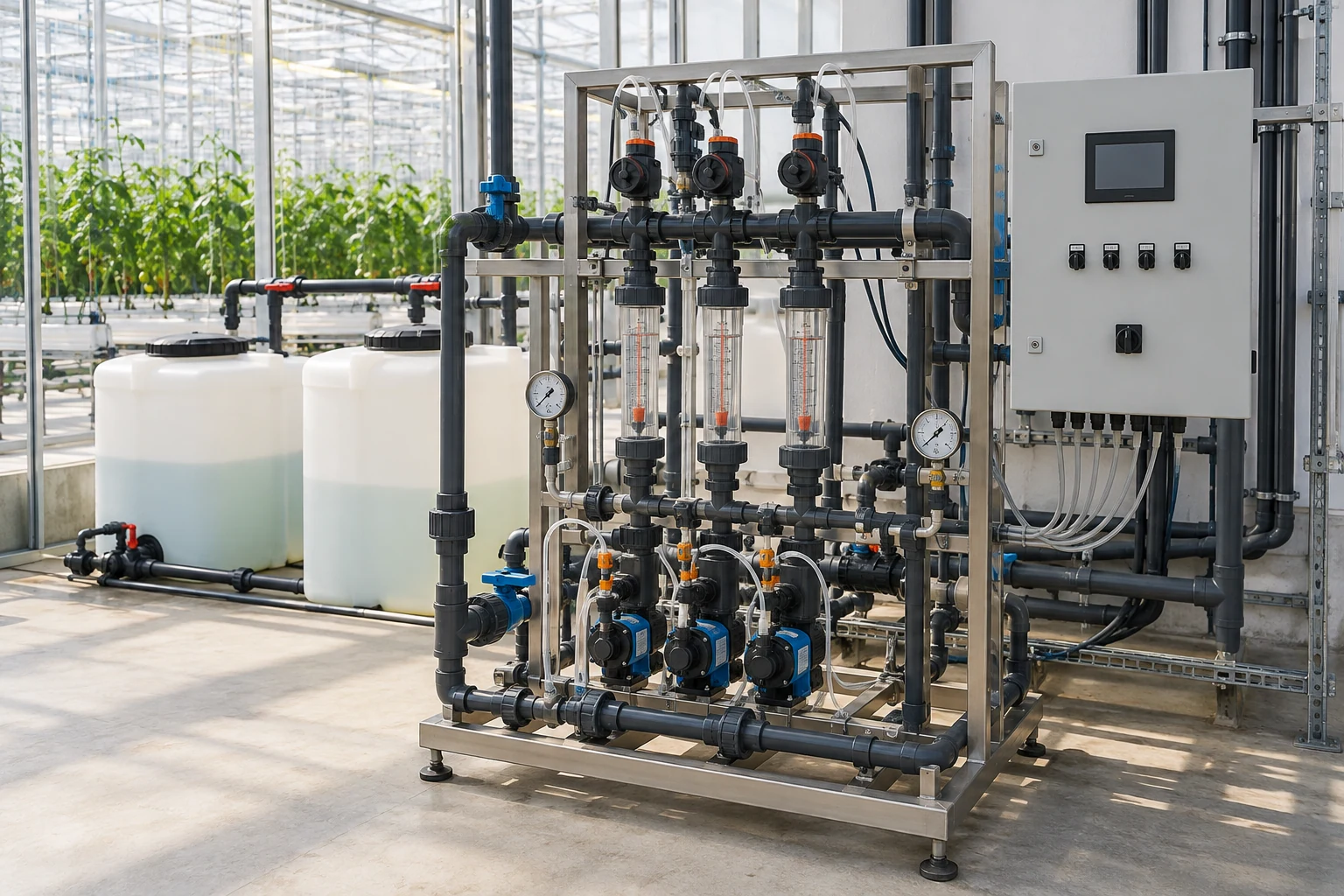
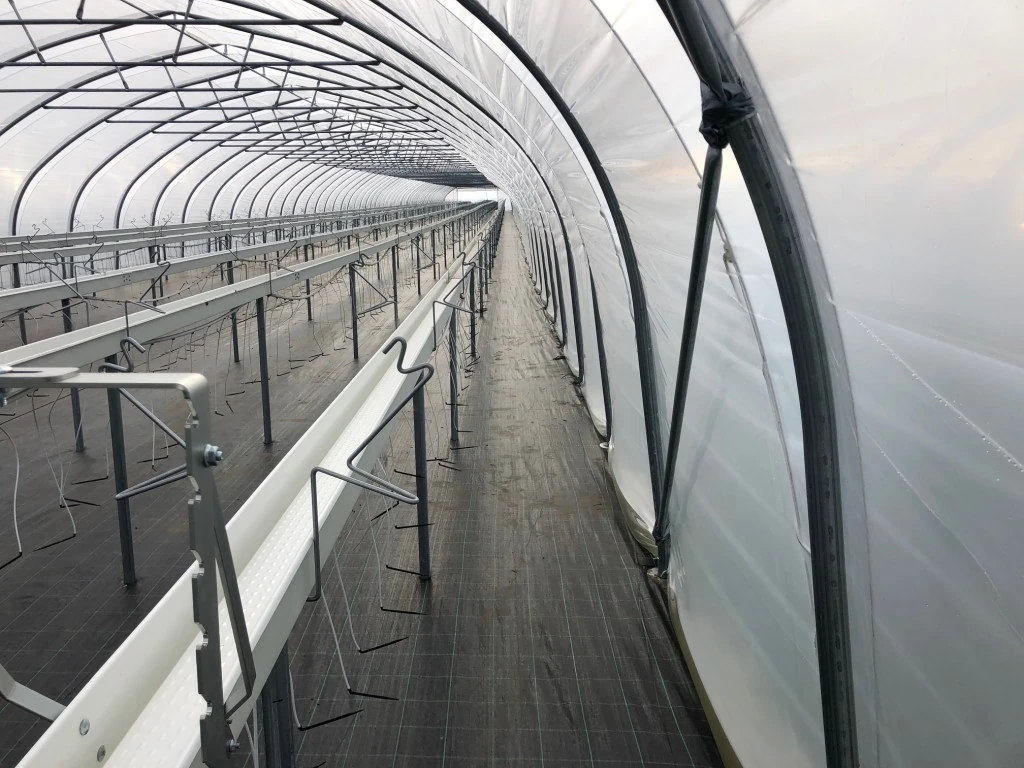
Illustrative project view. The actual layout and equipment are defined by the agreed specification.
System scope
Specify the connections, as well as the equipment.
These work packages form the technical brief. Their boundaries, configurations and quantities are confirmed during project development.
01
Site layout and protected areas
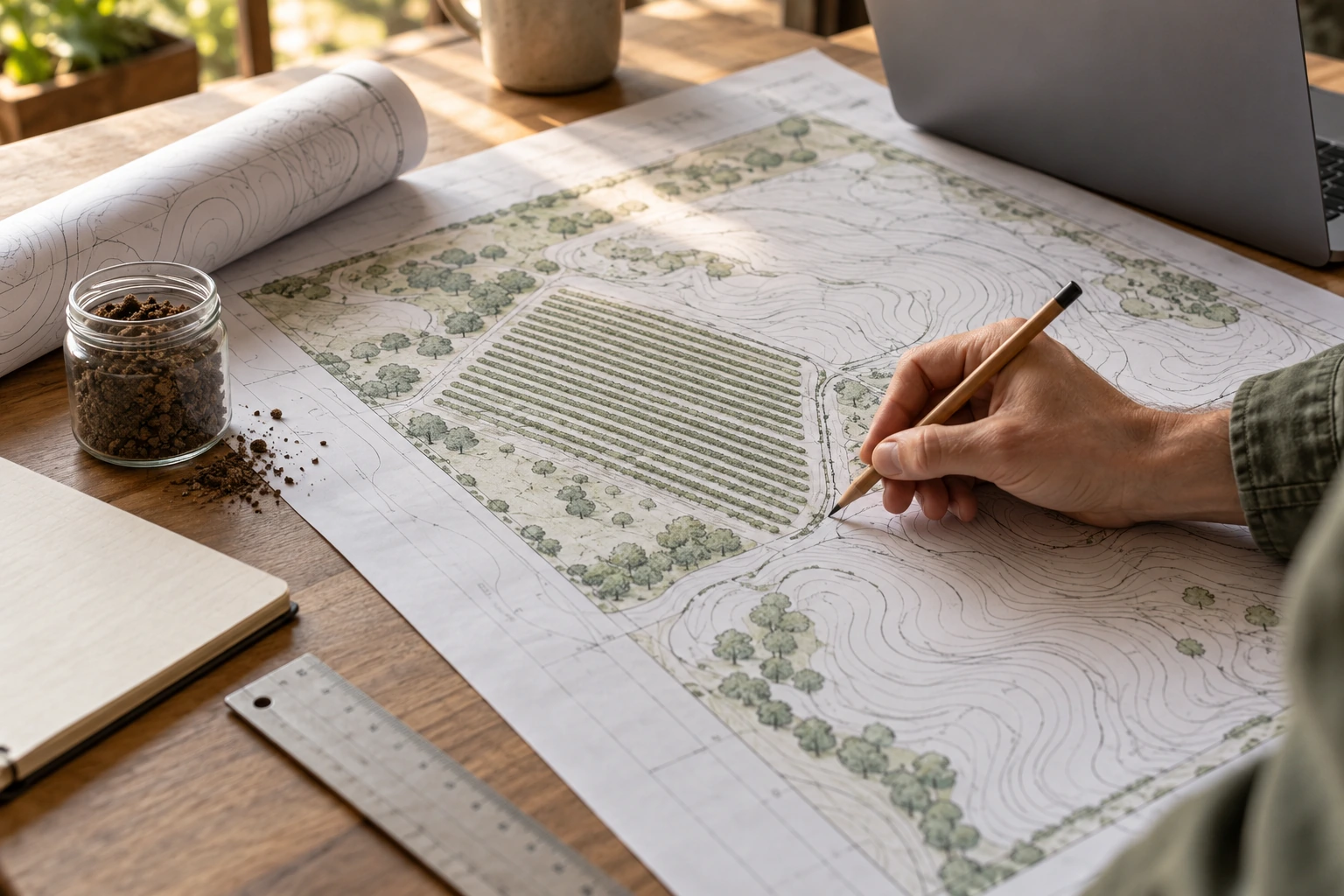
Set out production blocks using boundaries, levels, access and drainage information. Compare open and protected areas against the crop programme, local exposure and operational access. Identify structural requirements and local technical reviews before selecting a tunnel configuration; photographs and nominal area do not establish a buildable layout.
Link the crop and block schedule to source-water analysis, available flow, pressure, power and drainage. Develop irrigation zones and treatment requirements around those inputs, allowing future phases to be reviewed explicitly. Mark connection points and responsibilities so civil works, water preparation and growing equipment can be specified as a coordinated system.
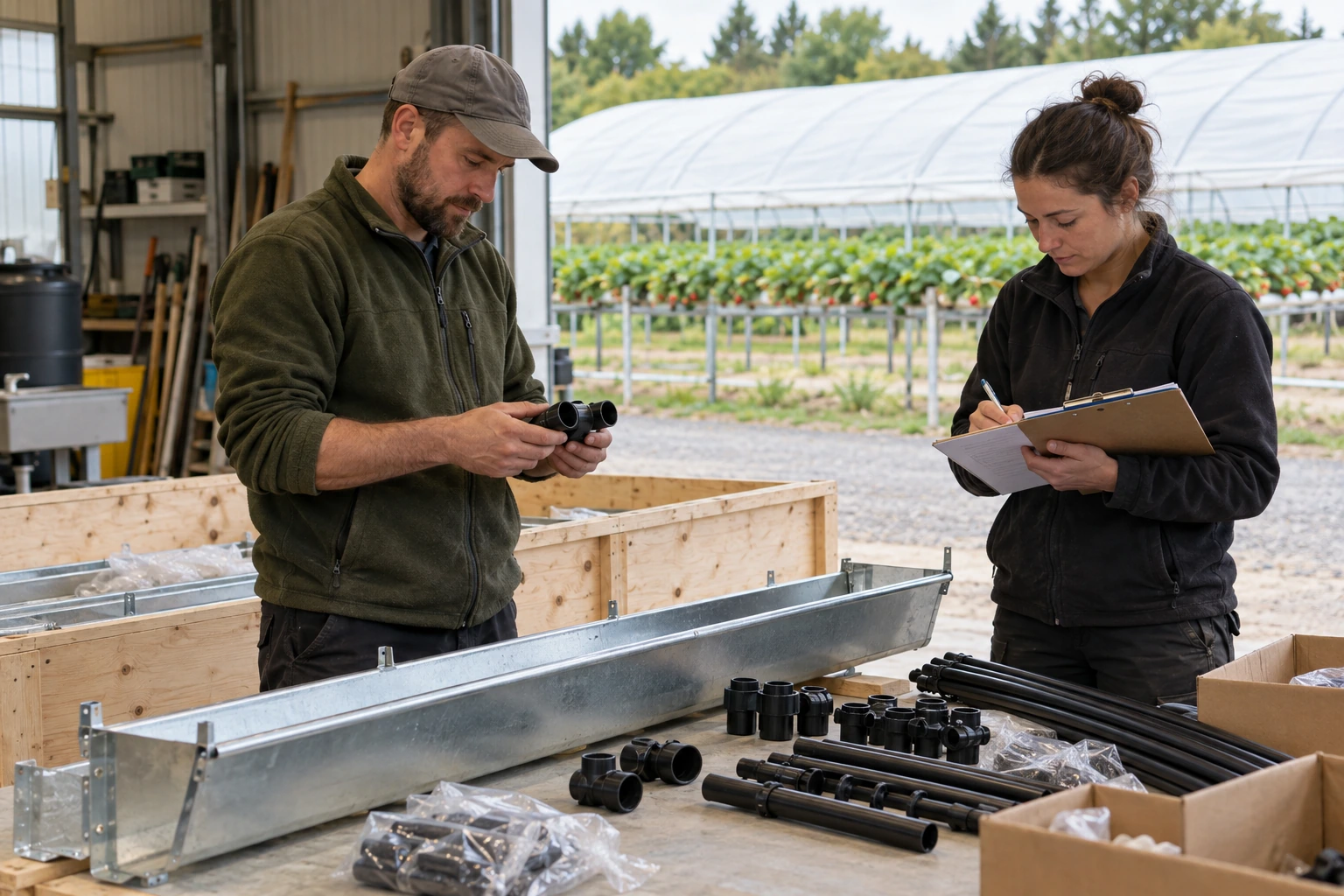
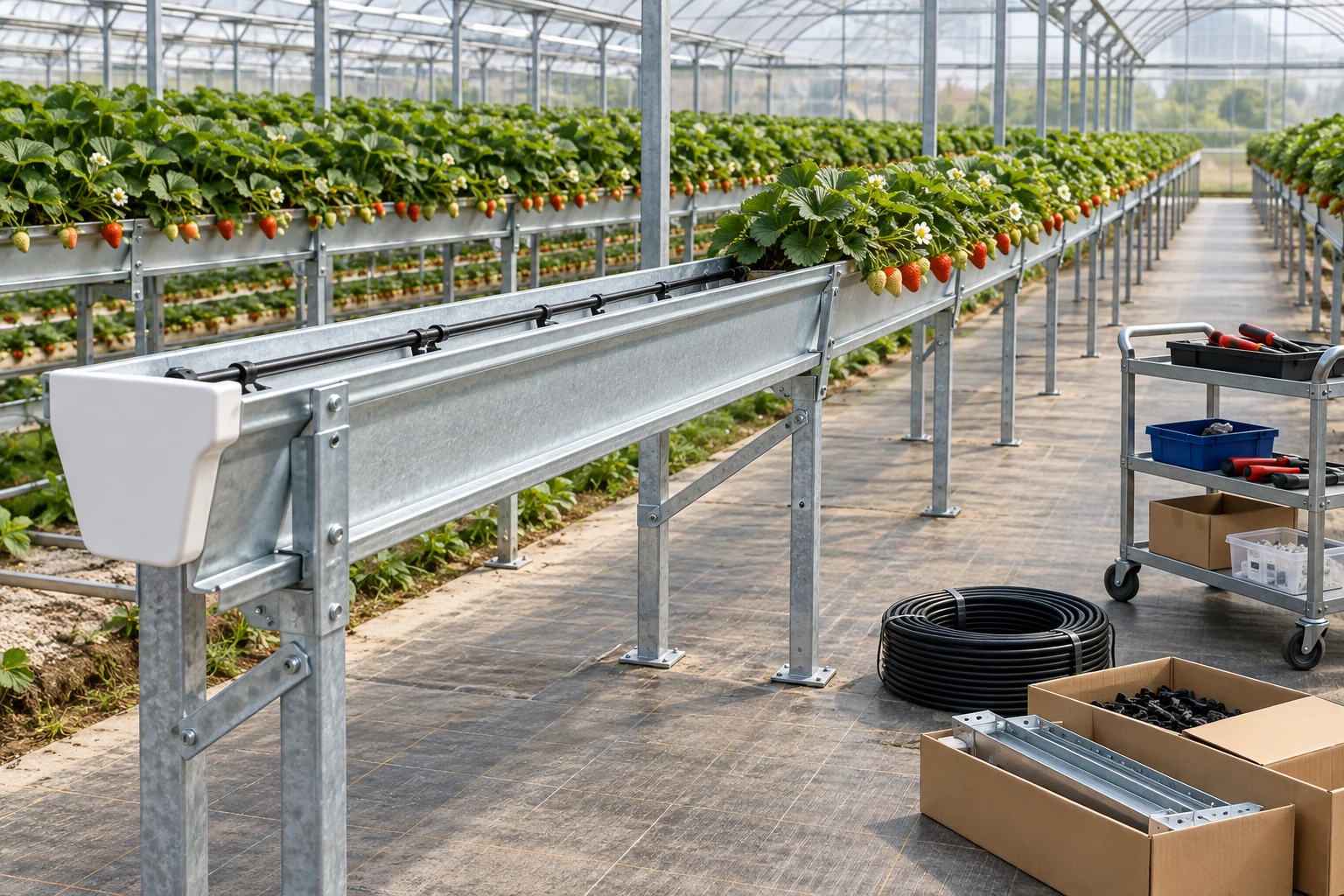
Coordinate beds, containers, gutters or trellises with row access, worker tasks and collection routes. Check trolley dimensions, turning areas, container handling and cleaning access before fixing the row arrangement. Planting material and agronomic choices belong to the client’s production programme; equipment must support that programme and its operating workflow.
Work backwards from market pack formats and the expected arrival pattern of harvested fruit. Define receiving, weighing, packing and dispatch interfaces, including staffing and space for work in progress. Temperature-management needs should be coordinated with the responsible postharvest specialists; refrigerated equipment is not assumed to be part of this supply package.
From the first brief to a coordinated supply scope.
01
Establish the design basis
Separate verified site information from assumptions and missing investigations. Agree crop areas, planting windows, market formats and priorities with the client. Assign owners and deadlines to evidence that could change layout or equipment selection.
02
Compare development options
Compare coherent farm concepts against the same brief. Explain effects on utilities, access, handling and expansion. Record the selection rationale and assumptions requiring confirmation before detailed specification, so later decisions remain connected to the chosen concept.
03
Coordinate design and equipment packages
Translate the concept into layouts, interface requirements and equipment schedules. Review boundaries with civil works, utilities and operating teams. System changes should trigger checks of affected quantities, connections and procurement dates.
04
Release and hand over by phase
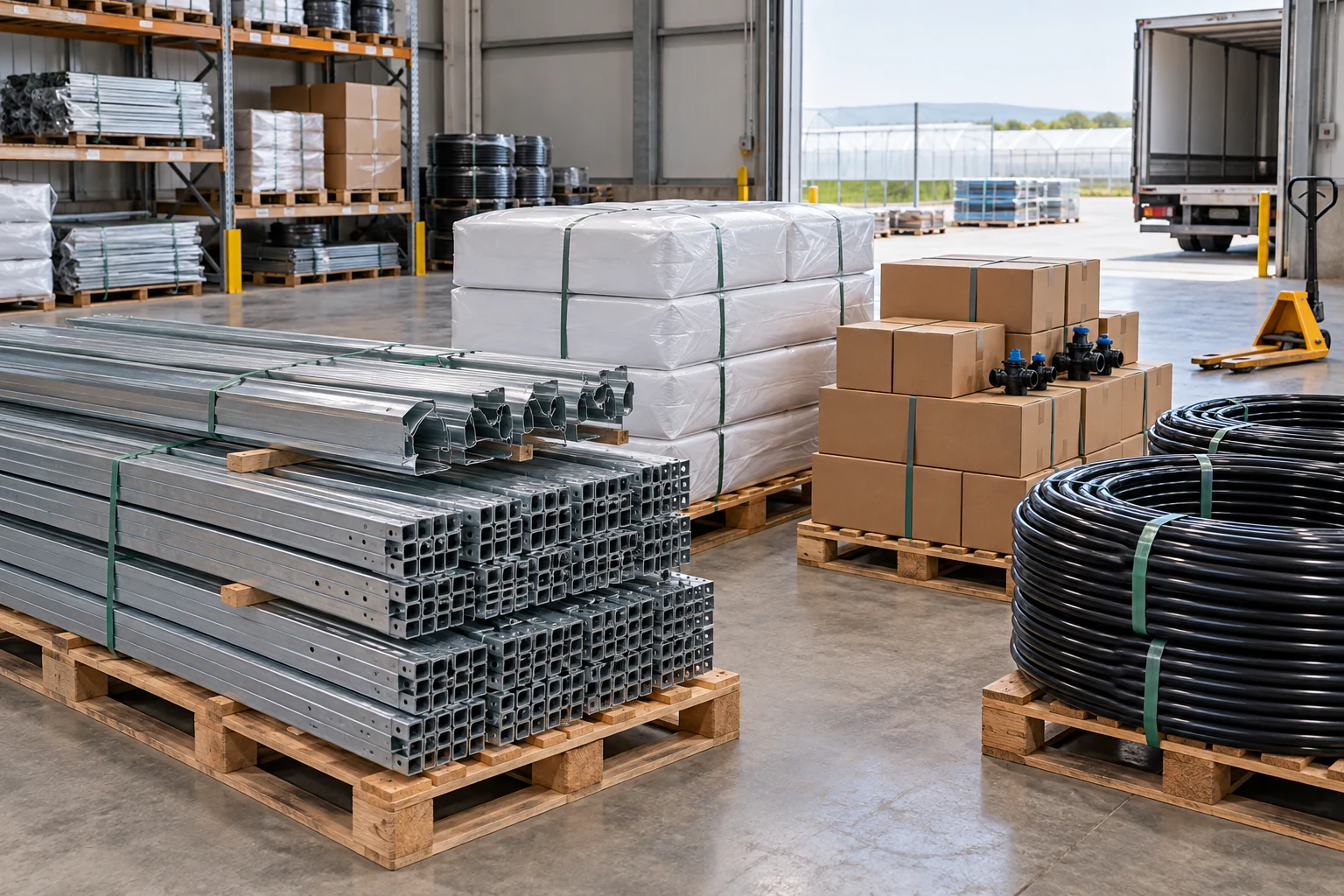
Release packages against approved information and documented readiness. Align delivery with receiving capacity, protected storage and installation sequence. Agree the transfer of documents, inspection records and outstanding items to each responsible operating team.
Project documents
A project you can review, price and implement.
The agreed scope identifies which documents we prepare, their level of detail and the parties responsible for review. The package below is defined for this solution.
01
Design-basis dossier recording crop blocks, site evidence, resource constraints, assumptions and the decisions requiring client or specialist approval.
02
Concept layout and interface register connecting structures, growing rows, water infrastructure, harvest routes and packing connections within the agreed scope.
03
Equipment schedule with configurations, quantities, included accessories, technical dependencies and separately identified options for each agreed procurement phase.
04
Responsibility and milestone plan identifying document reviews, infrastructure prerequisites, delivery readiness and the conditions for handing over each package.
Review & acceptance
Agree how the proposed system will be checked.
Turn project objectives into review points. Test conditions, responsibilities and records belong in the agreed specification.
The selected concept addresses the agreed crop programme, with unresolved site assumptions clearly recorded and assigned for confirmation.
Equipment schedules and layouts use consistent quantities, connection points and package boundaries, with changes traceable to approved decisions.
Each delivery phase has defined prerequisites, document requirements and responsible receiving personnel before it is released for procurement.
Connected equipment
Explore the equipment families behind the solution. Final selection follows the coordinated specification.
01Site location, boundary survey, levels, access and dated photographs identifying existing infrastructure and known development restrictions.
02Crop and variety programme, growing methods, block areas, planting dates and the agronomic decisions already agreed.
03Recent water analysis, measured source flow and pressure, seasonal limitations, electrical supply and available drainage arrangements.
04Target markets, pack formats, harvest arrival assumptions, labour organisation and proposed fruit handling routes across the site.
05Investment phases, planting or operating dates and decisions that must be resolved before each procurement commitment.
06Named decision-makers and local specialists responsible for surveys, approvals, construction, utilities, agronomy and eventual farm operation.
Engineering, documentation, sourcing and supply are defined in the proposal. Surveys, local permits, civil works, installation, commissioning and training require explicit allocation; inclusion is confirmed for the actual project and location.