Describe the operating outcome and constraints
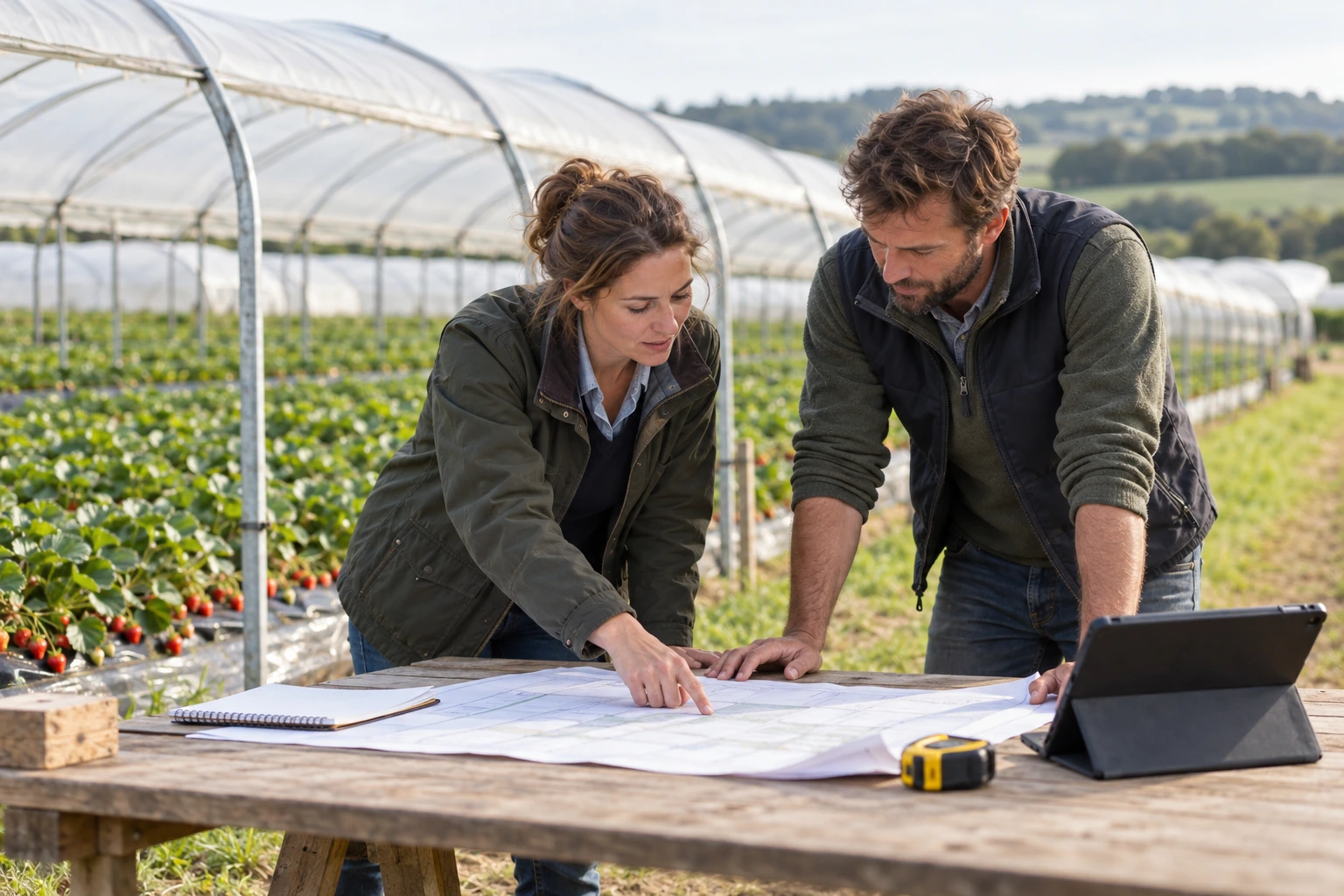
Replace “a modern berry farm” with decisions the project must resolve: protected or open cultivation, soil or substrate, intended harvest period, pack formats and phased expansion. State what is already fixed and what can be compared. Record the target planting or operating date and the decisions needed before it. A brief is strongest when it explains why a requirement matters, rather than listing preferred equipment without its operating context.
Build a site evidence folder
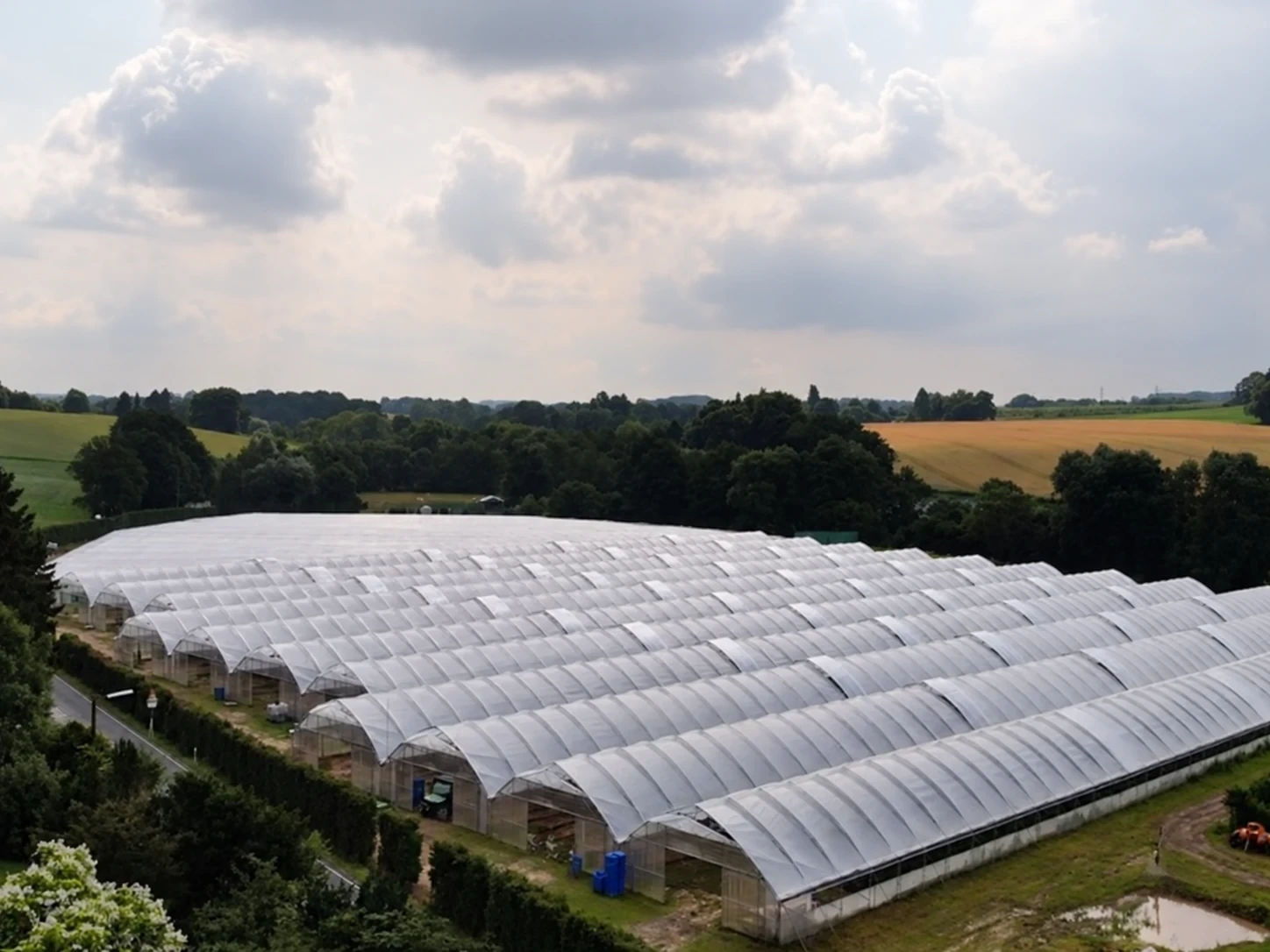
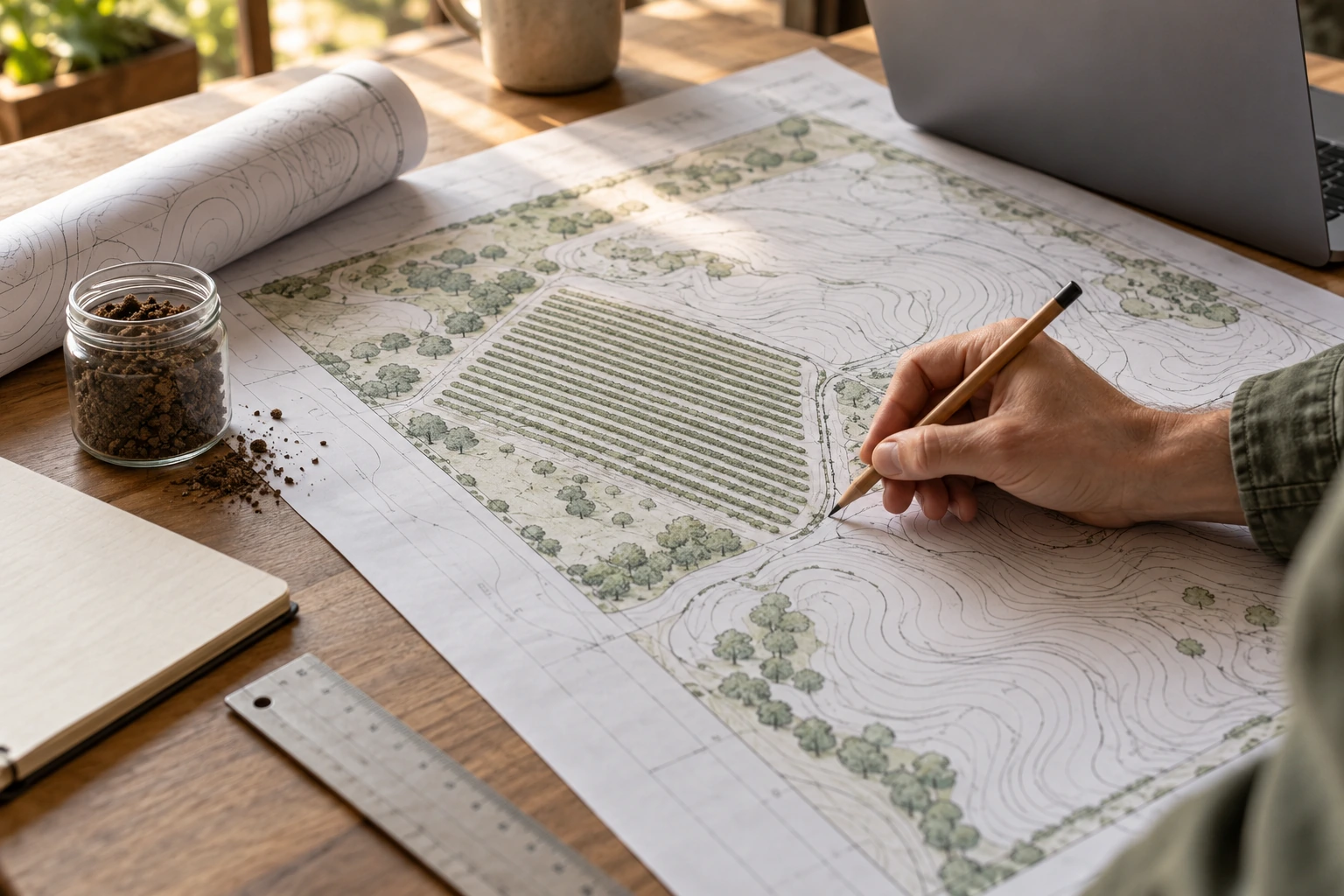
Provide a location plan, boundaries, elevations, existing buildings and access routes, supported by dated photographs. Mark drainage routes, slopes, exposed areas and known underground services. For existing structures, include drawings and any available load information; photographs alone cannot establish capacity for suspended gutters or added equipment. Label each file with its date and origin. If a survey or investigation is missing, list it as a task rather than allowing a guess to become a design fact.
Link the crop plan to resource data
Prepare a block schedule with crop, variety, growing method, planting period and expected harvest window. Add water-source information, recent analysis, available flow and pressure, power supply and drainage constraints. Distinguish measured values from estimates, and record seasonal variation where known. The agronomic programme and engineering design must inform each other: substrate choice affects irrigation management, while available water and site conditions can limit feasible layouts or expansion phases.

Show how people and fruit move
Draw a simple sequence from crop care and picking to transport, packing and dispatch. Note trolley paths, turning points, container sizes, pack formats and peak arrival periods. Describe current staffing and where work queues form. For digital tasks, attach an anonymised example of the record needed at each handover. This connects growing equipment, packing and software requirements before individual models are selected, and reveals interfaces that a category-by-category shopping list can miss.
Specify the documents you need
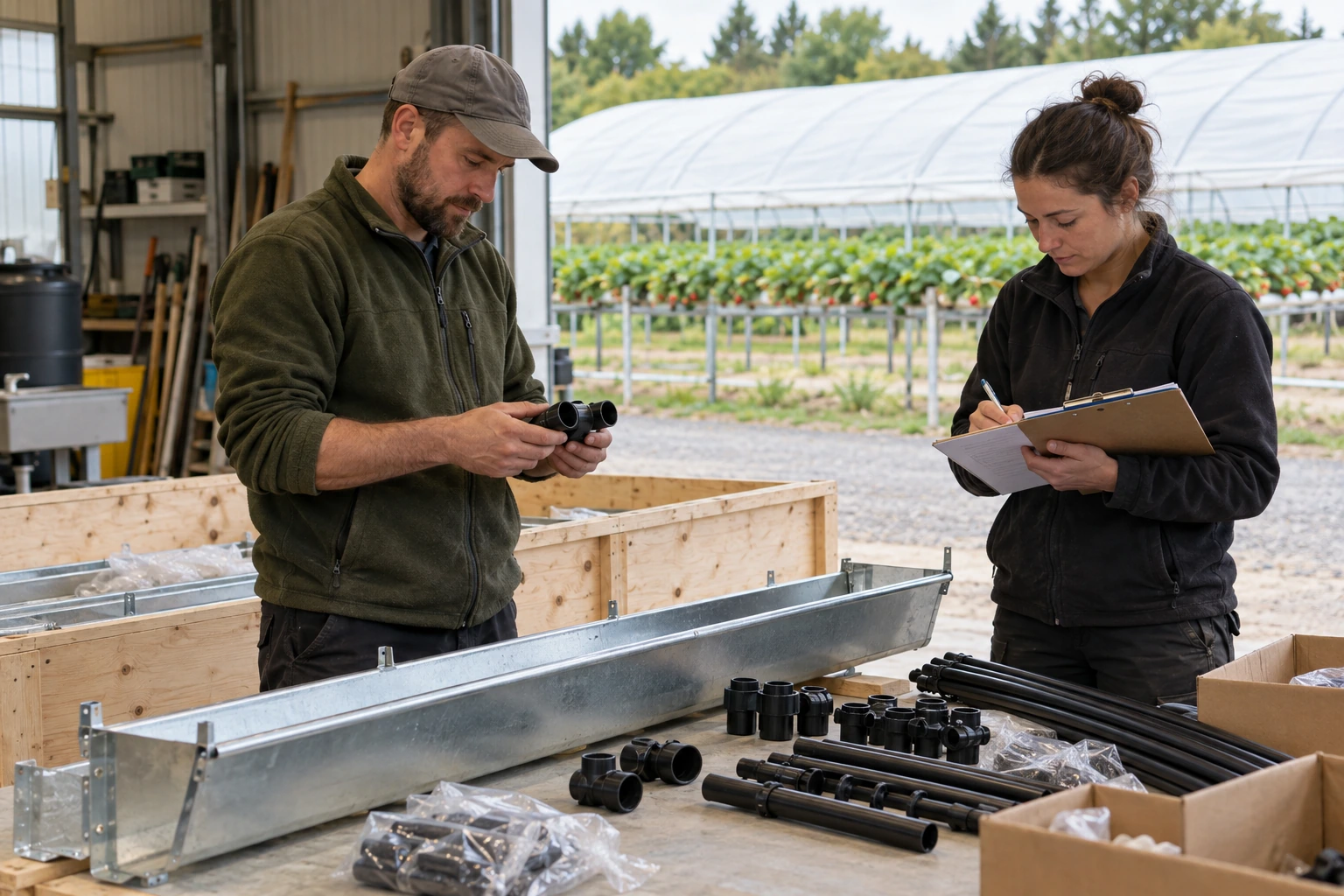
Ask for named outputs: design-basis notes, a coordinated layout, equipment specifications, a bill of materials, utility and interface schedules, and a responsibility matrix. Agree which are concept documents and which will support procurement or installation. Define drawing formats, languages and review stages. Future Farm Equipment develops project documentation and equipment supply packages; local investigations, approvals, installation and commissioning responsibilities must be allocated in the proposal rather than assumed from the phrase “turnkey”.
Review the brief before detailed selection
Give each unresolved item an owner and a decision date. Maintain a short assumptions register showing what is confirmed, provisional or awaiting evidence. Review the brief with farm management, agronomy and the people who will operate the system. Approve a dated version before detailed selection, then record changes and their consequences. A changed row layout, planting date or pack format should trigger a review of affected quantities, interfaces and delivery milestones.
How complete does each input need to be?
Swipe the table sideways to compare all columns.
| Input | Useful starting point | Needed before final selection |
|---|---|---|
| Site geometry | Annotated plan and photographs | Verified dimensions and levels |
| Water resources | Source description and existing records | Analysis and confirmed design conditions |
| Operating scope | Crop calendar and workflow sketch | Approved layout, capacities and responsibilities |
Common mistakes to avoid
- 01
Presenting an estimate as measured data: label confidence and define the required verification.
- 02
Requesting only a price and machine list: ask for the assumptions and interfaces behind them.
- 03
Changing the brief without a revision: track consequences across drawings, quantities and dates.
Prepare these inputs for an engineering discussion
Mark the information you already have. Download the list and use it to prepare your conversation with our engineering team.
The checklist is a working aid. Ticks stay on this page only; no information is sent. Missing inputs can be identified together during the project review.
An introductory planning guide from Future Farm Equipment. Equipment specifications, site calculations, responsibilities and the final scope are confirmed in the project documentation and proposal.