Compare a defined package, not just a price
A useful quotation identifies equipment references, configuration, quantities and the design conditions behind them. List included accessories, controls, software, spares and documents separately from options. State exclusions and clarify the delivery point, unloading arrangements and services. Use a comparison sheet with one row for each requirement. If two offers assume different pack sizes, water quality, operating hours or installation scope, resolve those differences before treating their totals as comparable.
Make every connection someone’s responsibility
Equipment can be individually suitable yet fail to form a workable system. Create an interface register covering pipe connections, electrical supply, structural supports, conveyor heights, container dimensions and data exchange as applicable. For each connection, name the parties on both sides and the person approving the final arrangement. Future Farm Equipment coordinates design and supply within the agreed scope; the responsibility matrix should explicitly allocate civil works, utilities, installation, commissioning and operator training.
Prepare dispatch and receiving documents early
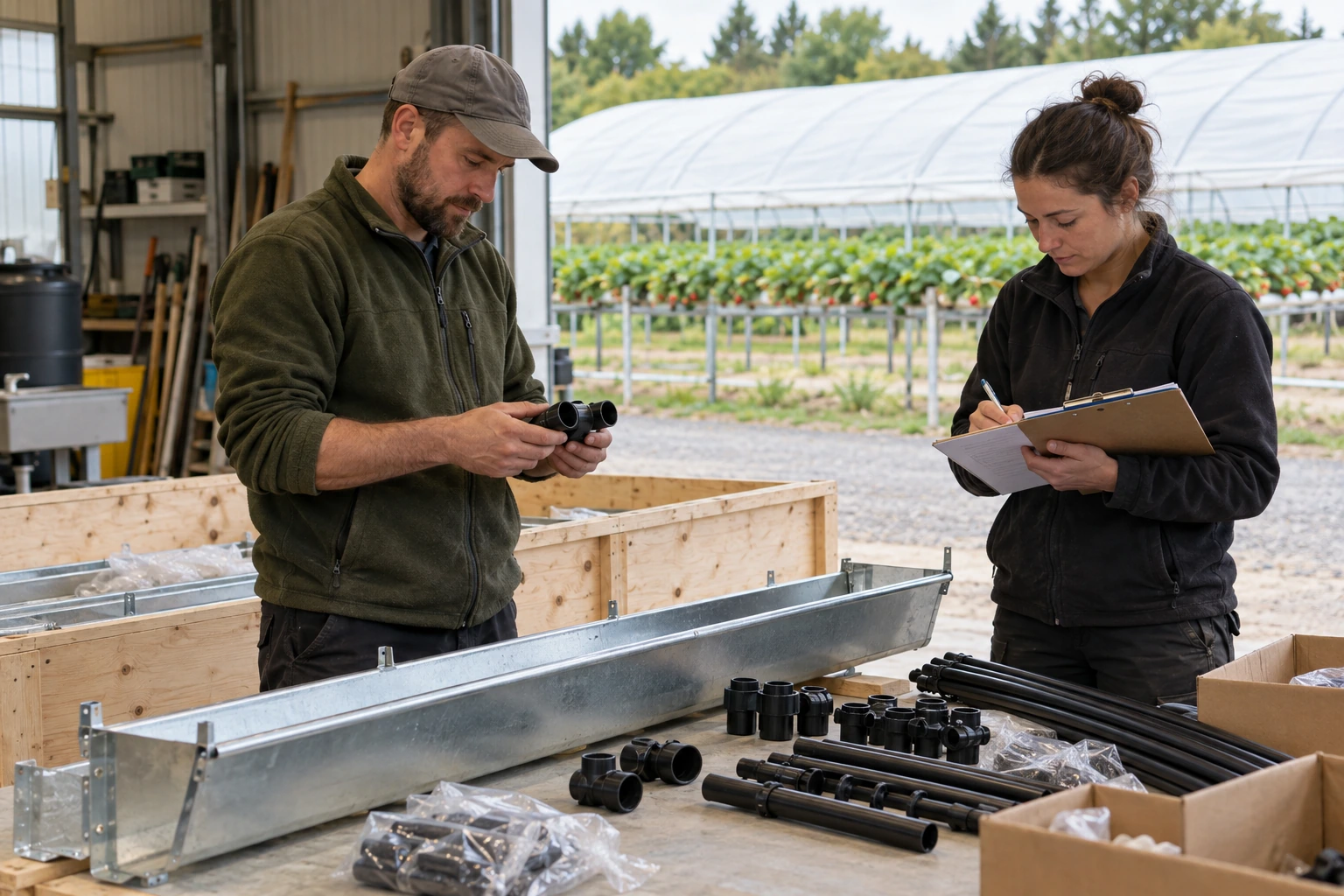
Agree the document list before dispatch: packing list, item references, package dimensions and weights, relevant commercial and transport documents, and handling or storage instructions. Match package identifiers to the equipment schedule so partial deliveries can be checked. Confirm access, unloading equipment and a protected storage area with the receiving team. Record shortages or visible damage promptly with photographs and package references, then follow the agreed reporting process rather than losing the connection to the shipment.
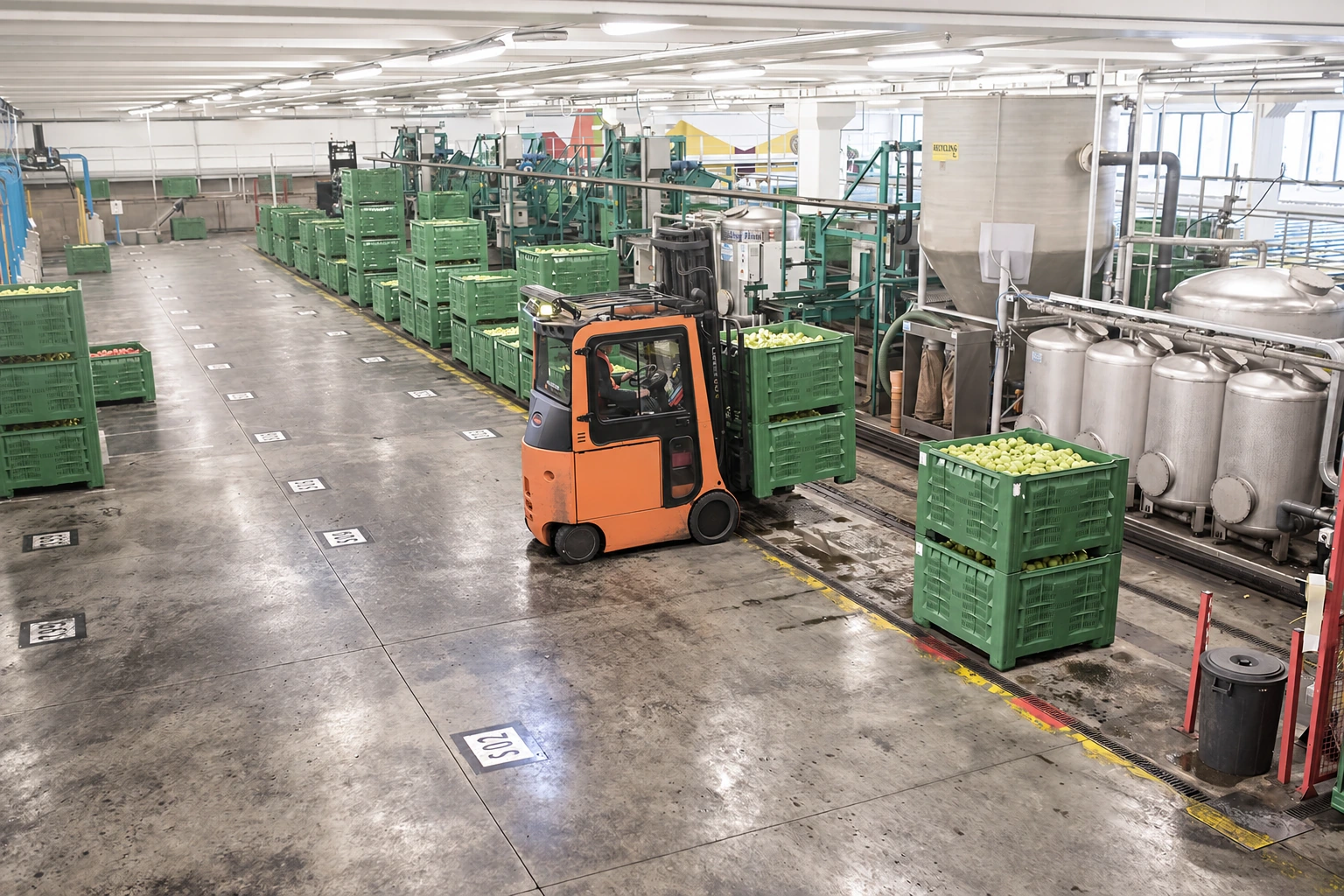
Check readiness before the installation date
Use a readiness checklist tied to approved drawings: foundations or supports, working access, utility connection points, drainage, storage and required lifting arrangements. Confirm who provides people, tools, consumables and sample product for trials. Changes discovered on site should be recorded and reviewed before modifying equipment or supports. Schedule installation around completed prerequisites, with qualified personnel following the equipment instructions; arrival of the shipment alone is not proof that installation can start.
Agree what successful acceptance looks like
Define acceptance criteria and methods before trials. Identify the configuration, test conditions, instruments, sample product, duration and person recording results. A packing trial might assess agreed pack formats and net output; an irrigation check might compare measured flow and pressure with the approved design. Keep delivery inspection, functional checks and operating trials distinct. List unresolved items with owners and deadlines, and document any restrictions rather than treating a brief start-up demonstration as full acceptance.
Hand over a system the team can maintain
Build the handover file around actual operation: final drawings reflecting agreed changes, equipment and serial-number register where applicable, manuals, settings, test records, training attendance and the open-item list. Include maintenance tasks, consumables, spare-part references and service contacts for the supplied configuration. Assign a person to keep records current after modifications. Agree what future support includes and how it is requested; engineering and supply do not automatically imply unlimited maintenance or on-site assistance.
A document for each decision point
Swipe the table sideways to compare all columns.
| Stage | Document to agree | What it prevents |
|---|---|---|
| Before ordering | Specification, exclusions and interface register | Hidden gaps between packages |
| Before arrival | Packing list and readiness checklist | Unplanned unloading and storage |
| Before handover | Acceptance record and operating file | Unclear settings and unresolved issues |
Common mistakes to avoid
- 01
Assuming “complete supply” includes installation: name every service and its responsible party.
- 02
Checking only that a machine starts: test agreed requirements under recorded operating conditions.
- 03
Leaving manuals and settings until later: make the operating file a defined handover deliverable.
Prepare these inputs for an engineering discussion
Mark the information you already have. Download the list and use it to prepare your conversation with our engineering team.
The checklist is a working aid. Ticks stay on this page only; no information is sent. Missing inputs can be identified together during the project review.
An introductory planning guide from Future Farm Equipment. Equipment specifications, site calculations, responsibilities and the final scope are confirmed in the project documentation and proposal.