A strawberry project starts with the fruit you intend to sell: its harvest window, quality specification and delivery format. Plant type, growing environment and harvest organisation then determine the equipment. We connect these decisions in one coordinated plan, covering protected structures, soil or substrate cultivation, water distribution, picking access and packing interfaces. The result is a documented equipment scope matched to your site, crop programme and operating team.
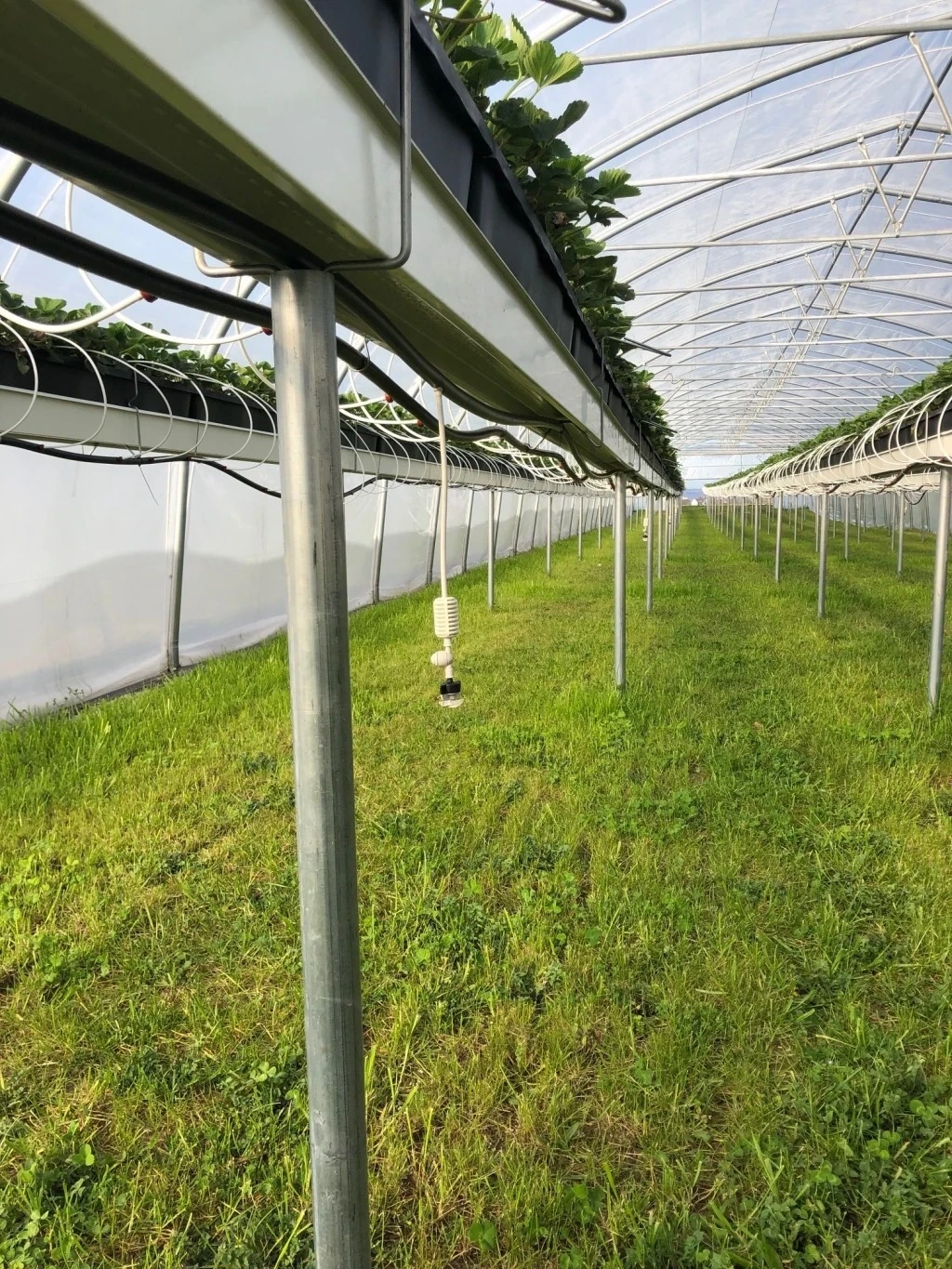
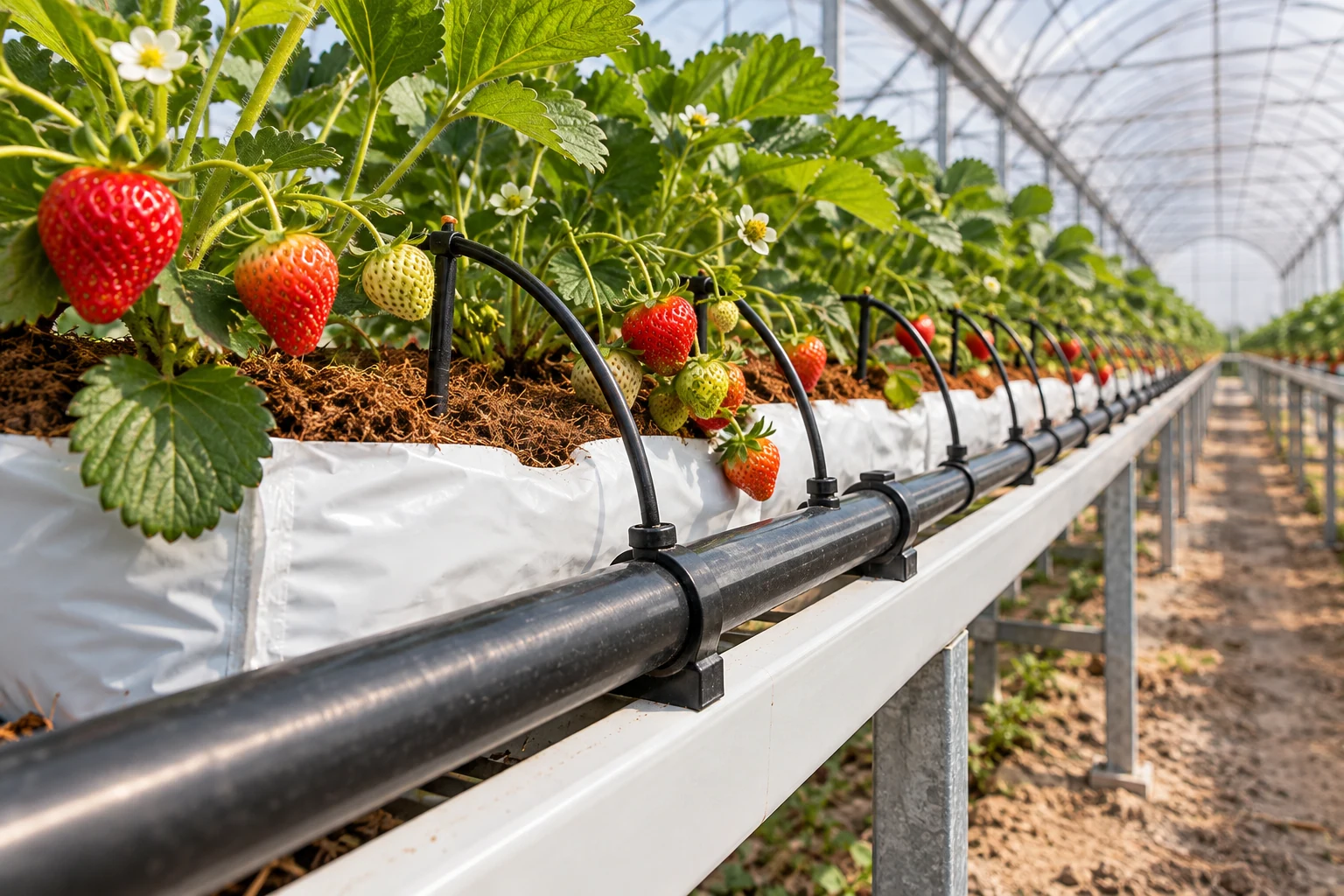
Protected strawberry production on raised substrate gutters, with accessible fruit and a working aisle between rows.
Key design priorities
Align plant type with the intended harvest window
Design root-zone irrigation and drainage together
Protect fruit quality through every handling step
Production systems
Compare the production approach first.
The growing method sets the requirements for structures, root-zone management, utilities and daily work. Compare the options against your site, crop programme and team.
01
Open-field soil cultivation
Open-field cultivation can suit farms where the local season meets the sales window and soil conditions support the crop. Plan beds, mulch and irrigation as one system, with routes for field machinery and low-level picking. Review drainage, previous crops and exposure before planting. Weather variability remains part of the operating plan, including how harvest and access continue after rain.
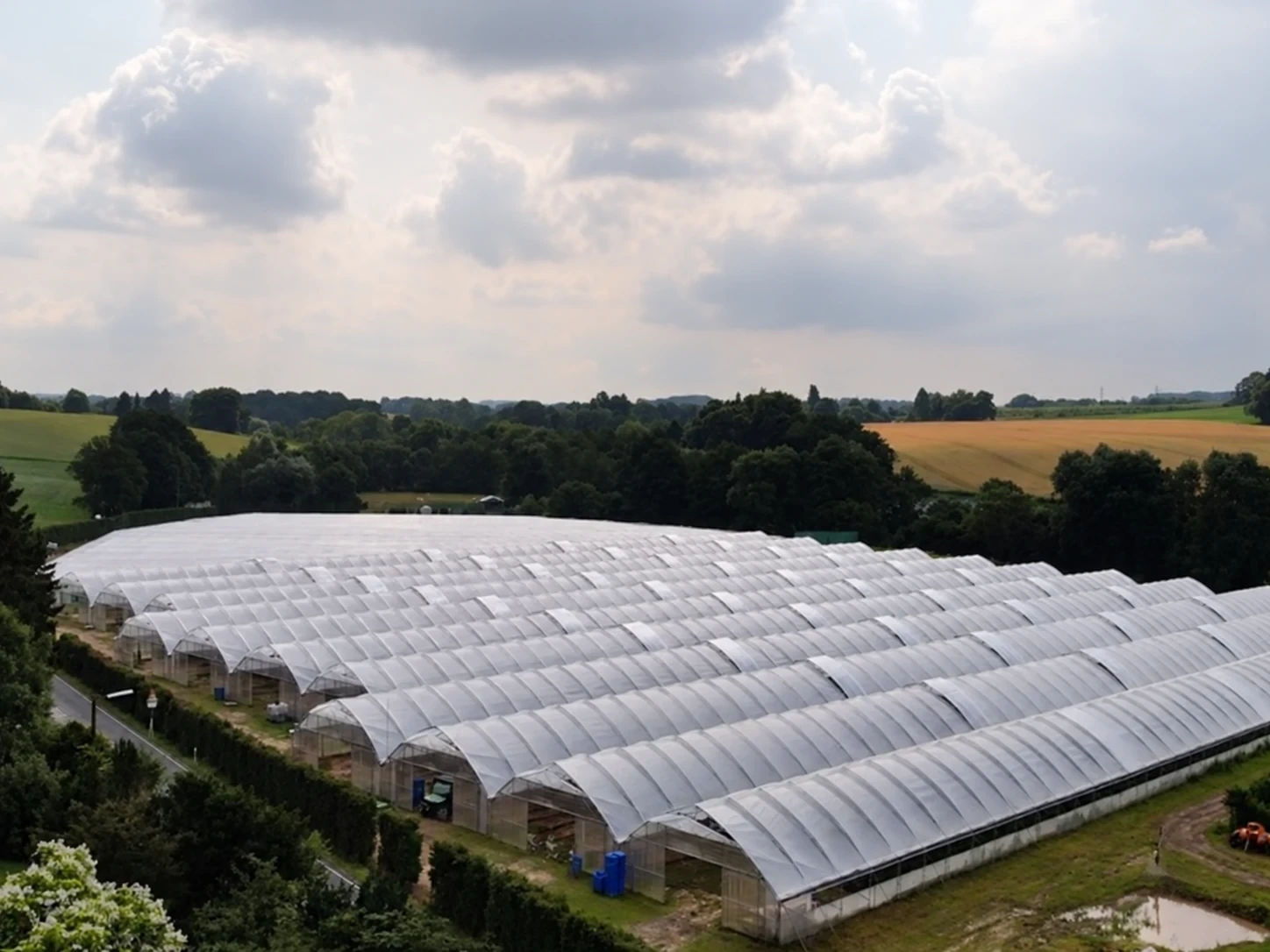
Growing soil beds under tunnels can combine an existing field production method with rain protection and seasonal management. Tunnel geometry must leave room for bed preparation, film handling, irrigation service and picking. Ventilation becomes an additional daily task. Check whether the soil and drainage remain suitable for the planned crop sequence: a protective structure does not remove below-ground constraints.
Tabletop or suspended gutters place the crop at a planned working height and separate root-zone management from field soil. They require a compatible container or growing bag, stable supports, reliable fertigation and accessible drainage collection. Compare the complete installed system and daily management requirements, including plant replacement, rather than selecting gutters independently of the tunnel and water system.
Each stage creates requirements for the next. Resolve the crop-specific decisions below before selecting individual machines or fixing the site layout.
01
Define the crop programme and market window
Short-day and day-neutral varieties have different flowering patterns; temperature and local conditions still influence harvest timing. Match cultivar, plant preparation and planting dates to the sales period before sizing the area. Separate successive plantings into identifiable blocks. Confirm the nursery delivery specification and site readiness; where establishment or propagation happens on the farm, provide a separate zone with appropriate irrigation, hygiene and plant inspection.
Decisions to agree
Which plant type and planting batches serve each sales period?
Is the first phase sized to the available management team?
02
Coordinate protection, working height and root space
Select protection for rain exposure, seasonal conditions and the intended working environment. In elevated systems, coordinate wet substrate weight, crop load, gutter position and drainage fall with the support design. Keep crowns and fruit accessible without narrowing picking aisles. For soil beds, assess drainage through the profile as well as surface runoff. Establish how bags, plants and irrigation components can be replaced between crop cycles.
Decisions to agree
Will workers pick from the ground, a stool or standing?
Where will drainage go without crossing harvest routes?
03
Deliver water and nutrients to the active root zone
Strawberry roots need consistent moisture without prolonged saturation. In substrate cultivation, container volume and water-holding behaviour shape irrigation strategy; soil programmes need adaptation and verification. Provide filtration, pressure control and sampling access, then monitor delivered water and drainage. Give blocks with different water needs independent irrigation control. Any overhead establishment or frost-protection requirement needs its own hydraulic and operating assessment.
Decisions to agree
Which blocks need separate irrigation recipes and monitoring?
Can operators sample irrigation solution and drainage at representative points?
04
Keep the canopy workable throughout the season
Rain protection changes the crop environment: ventilation, humidity and heat management must be considered together. Allow access for pollination management, scouting, runner removal and leaf or fruit sanitation appropriate to the chosen production method. Position sensors where they represent the crop, not just a convenient service point. Agree who reviews readings, opens ventilation and responds to faults, including weekends and periods of maximum harvest demand.
Decisions to agree
How will ventilation and crop checks fit the daily work plan?
Which alerts require action when the main team is absent?
05
Move harvested berries with minimal handling
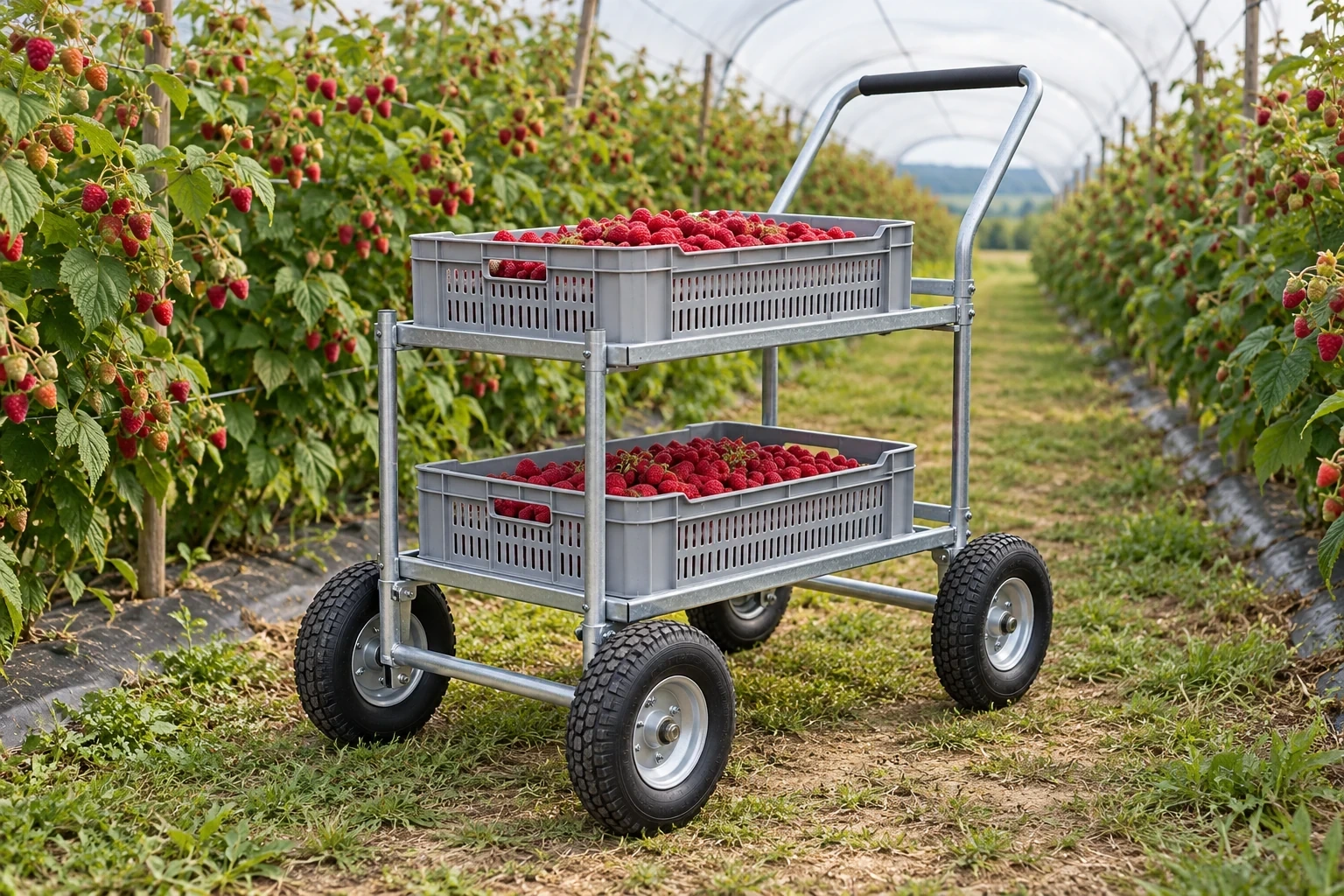
Fresh strawberries should be picked at the maturity required by the buyer, with damaged fruit separated at harvest. Decide whether the retail pack is filled in the row or fruit moves to a packing station. Match trolley height, tray dimensions and collection points to that decision. Plan shaded holding and frequent transfer to the cooling interface; assess the busiest harvest period rather than an average day.
Decisions to agree
Which container remains with the fruit until final packing?
Where could queues build up during the peak picking shift?
06
Specify packing, records and the cooling handover
Specify punnet dimensions, target weight, closure and label before choosing packing equipment. Weighing, visual inspection and sorting are different tasks and may not require the same level of automation. Trial real fruit and packaging at transfer points to assess bruising and presentation. Link the field block and picking date to the finished lot. Coordinate cooling capacity, pack ventilation and handover responsibilities with the appointed refrigeration specialist.
Decisions to agree
Is packing completed in the field or at a central station?
Which lot information must remain visible through dispatch?
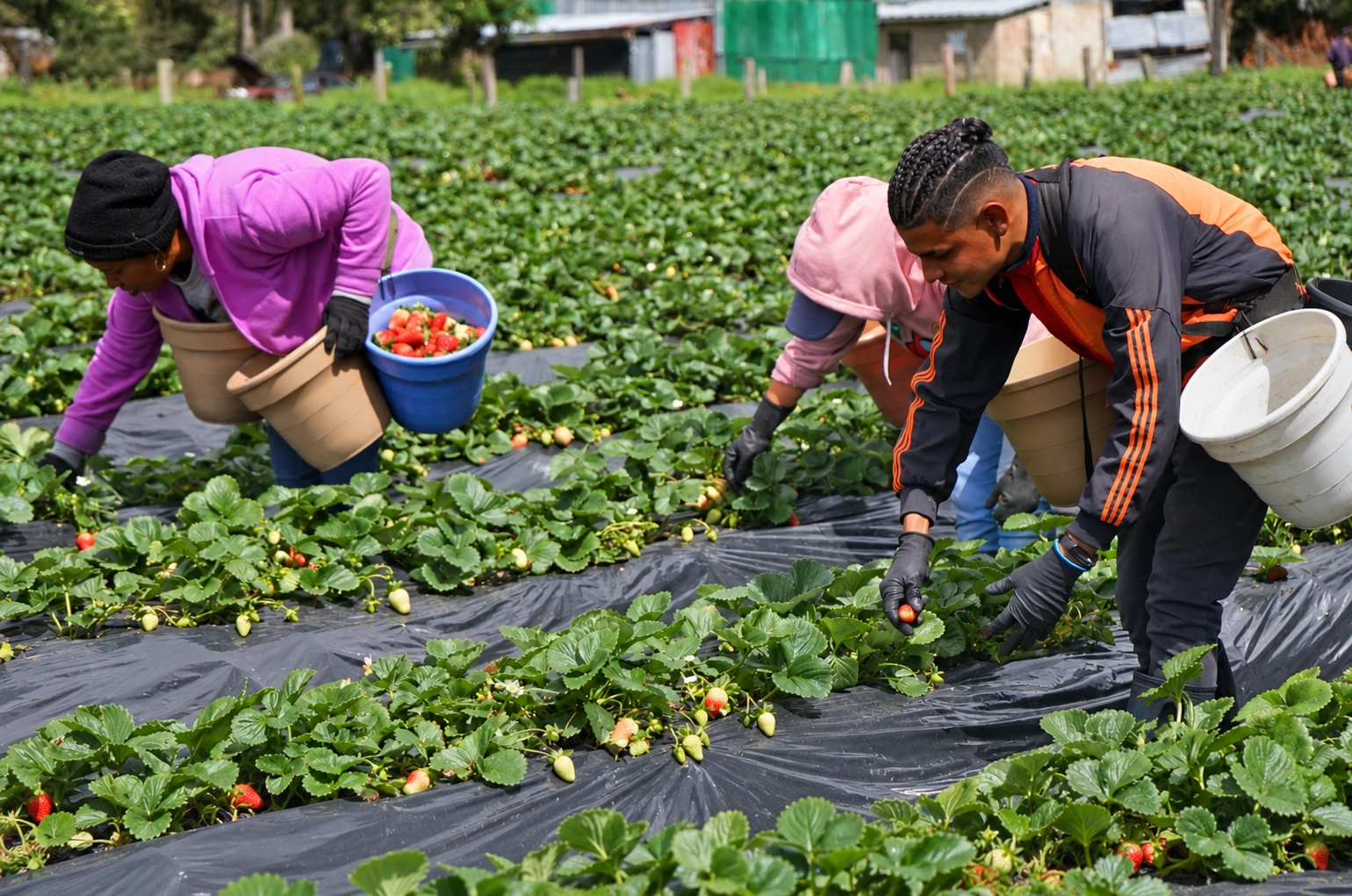
Hand harvesting links row access, picking labour, field containers and the route to the packing area.Detailed irrigation planning for this crop
IRRIGATION PLANNING
Irrigation designed around berries
Strawberries
Plan establishment and fruit production separately, then coordinate overhead irrigation, root-zone delivery and fertigation.
01
Runner establishment
Overhead irrigation can support runner establishment before roots develop. Select coverage and droplet application for the bed layout or tunnel geometry.
Root-zone drip delivery supports controlled irrigation cycles. Coordinate emitter spacing, uniformity and nutrient dosing with the growing medium and water analysis.
A target sales date is not a production programme. Plant type, nursery preparation and local seasonal conditions must be agreed before committing equipment quantities and installation dates; otherwise the infrastructure may be ready for the wrong crop cycle.
02
Substrate selected separately from irrigation
A bag that fits the gutter may still behave differently in wetting and drainage. Assess substrate structure, actual container geometry and emitter placement together, then confirm the operating approach on a trial block or sample batch.
03
Harvest capacity without a receiving plan
More picking positions can simply move a bottleneck to collection or packing. Test tray movement, weighing and the cooling handover against the expected peak, with a named person responsible for each transfer.
Connected equipment
These catalogue areas support the production plan. Final models, configurations and quantities follow the agreed engineering specification.
Use this list for the first project discussion. We identify missing inputs, coordinate the design and documentation, then prepare the equipment schedule and supply scope.
01Site plan, topography, exposure and soil or substrate production preference.
02Cultivars, plant types, nursery preparation and proposed planting batches.
03Water analysis, available flow and pressure, source reliability and power supply.
04Target harvest periods, sales channels and representative retail packs.
05Available labour, picking method and existing handling or packing equipment.
06Phasing, budget boundaries and the agreed cooling and installation responsibilities.
Cultivar, climate, site conditions and management determine the final configuration. Agronomic targets, local approvals, installation, commissioning and training responsibilities are agreed for each project.
Knowledge
Practical guides
Go deeper into the decisions behind your crop plan.