A raspberry project connects the cane’s life cycle with farm operations. Fruiting type, plant supply and scheduling influence trellising, protection, root-zone management and harvest capacity. We develop the equipment plan for the complete sequence: plant arrival, cane training, gentle picking and packing interfaces. The aim is a coherent system that the team can manage throughout the crop cycle.
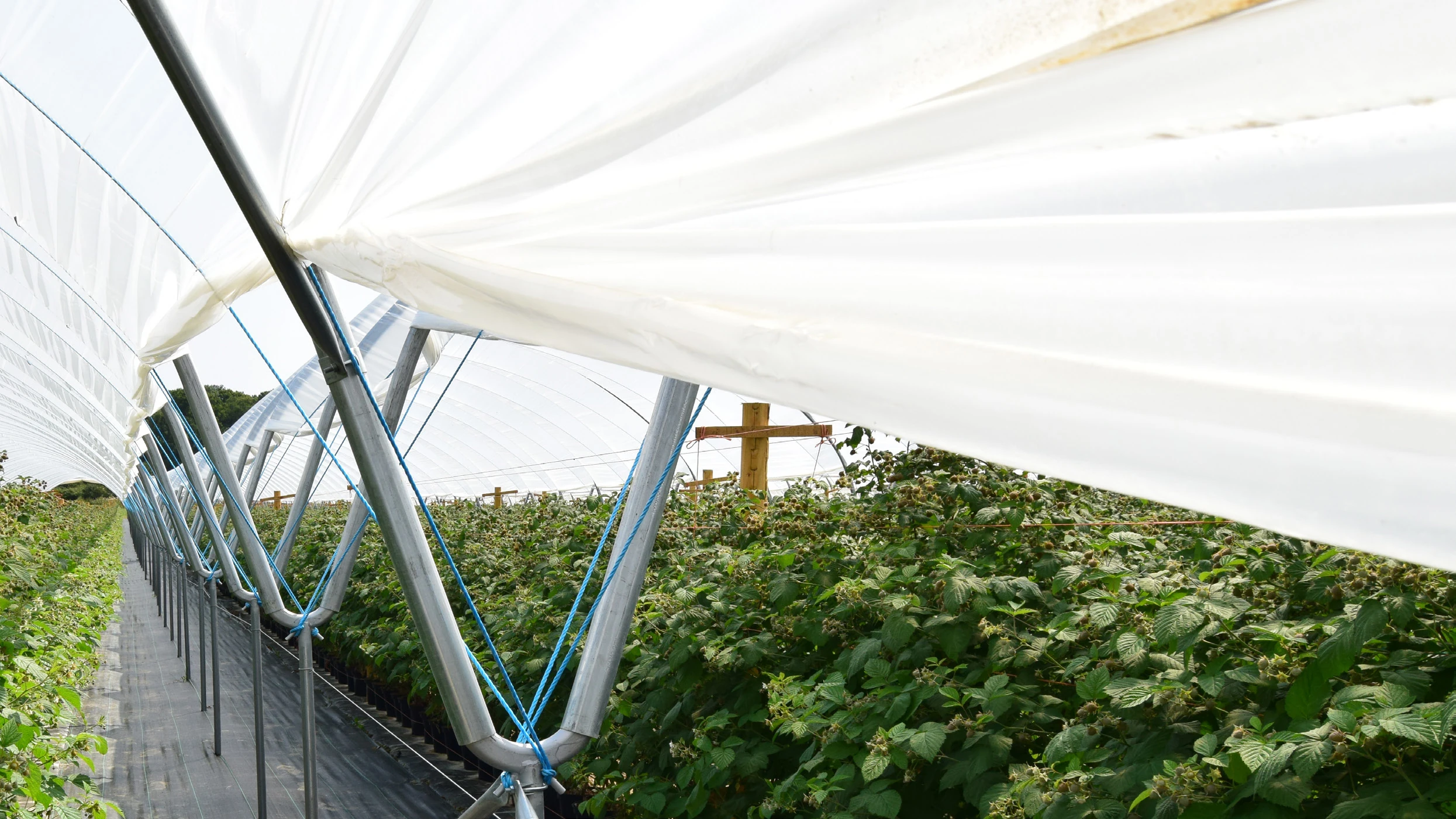
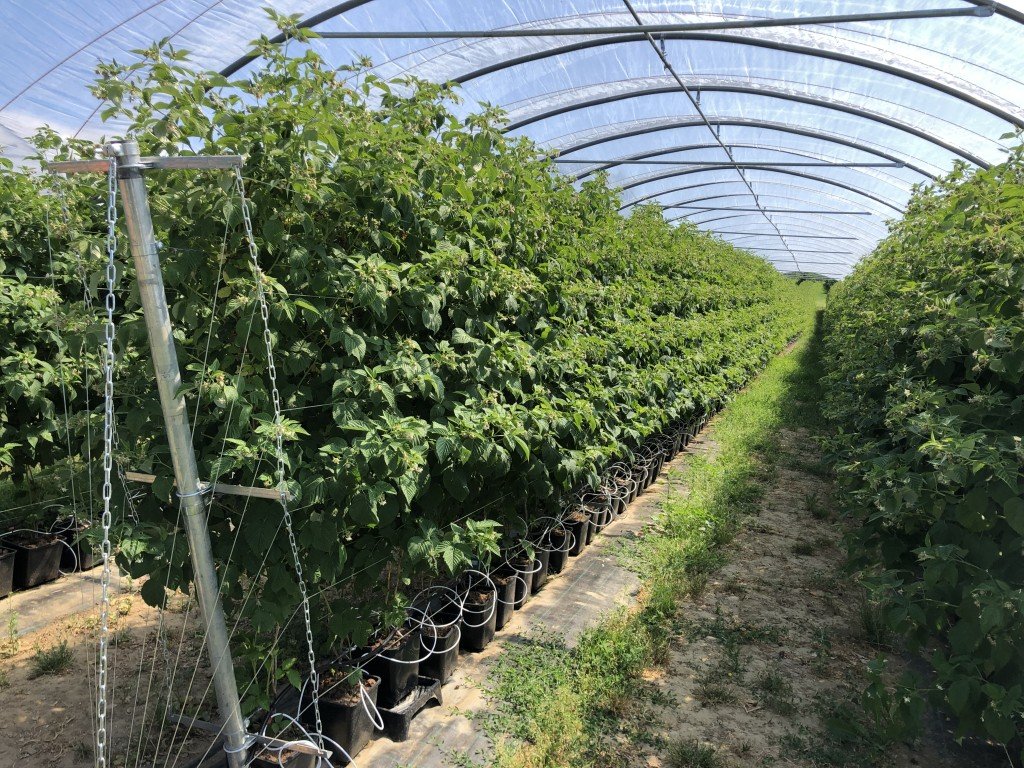
Container-grown raspberries with supported fruiting canes and ventilation along the tunnel bays.
Key design priorities
Match cane type and plant supply to the harvest programme
Keep fruiting laterals supported and working aisles accessible
Minimise fruit transfers between picking and the final pack
Production systems
Compare the production approach first.
The growing method sets the requirements for structures, root-zone management, utilities and daily work. Compare the options against your site, crop programme and team.
01
Open-field perennial rows
Open-field cultivation can suit a locally adapted variety and its natural production season. Roots remain while canes are renewed through pruning, so irrigation and trellising must support seasonal work. Assess winter exposure, drainage and machine access together. Include rain’s effects on picking, field movement and fruit condition at packing.
Tunnels can shelter a soil-grown raspberry crop from rain while changing its temperature and ventilation needs. Design trellises for the mature canopy and retain access for cane renewal, picking and maintenance. The existing soil remains part of the production system, so drainage and root-health history still matter. Match protection to the selected floricane or primocane programme rather than assuming every tunnel extends the season equally.
Containers separate the root zone from field soil and allow planned plant replacement under protection. Match volume, stability and drainage to substrate, incoming root balls and irrigation. A long-cane programme uses prepared nursery plants with a known dormancy history to organise fruiting; it is one scheduling option within this system. Confirm delivery condition and harvest expectations for the site before committing to replacement batches.
Each stage creates requirements for the next. Resolve the crop-specific decisions below before selecting individual machines or fixing the site layout.
01
Set the fruiting type and cane calendar
Floricane varieties fruit on second-year canes; primocane-fruiting types can crop on current-season growth. Keeping a second crop on retained canes changes pruning, labour and scheduling. Long-cane programmes add plant delivery and dormancy preparation to the plan. Define which approach applies to each block, including establishment, harvest and renewal periods. Use local trial evidence and nursery information to check that the intended sales window is realistic.
Decisions to agree
Will the block carry one crop, two crops or supplied long canes?
Which dates are confirmed by the plant supplier and crop adviser?
02
Design the trellis around the mature canopy
Plan for the mature cane and its fruiting laterals, not just the size of arriving plants. Trellis geometry should support fruiting growth while retaining room for replacement canes, pruning and picking. Coordinate posts, anchors, containers and tunnel members so each load has an agreed support path. Keep drainage outlets accessible and containers stable. Check turning space for trolleys and removal of pruned canes at row ends.
Decisions to agree
How will fruiting and replacement canes remain separately accessible?
Can the full container be serviced without dismantling the trellis?
03
Coordinate substrate, irrigation and drainage
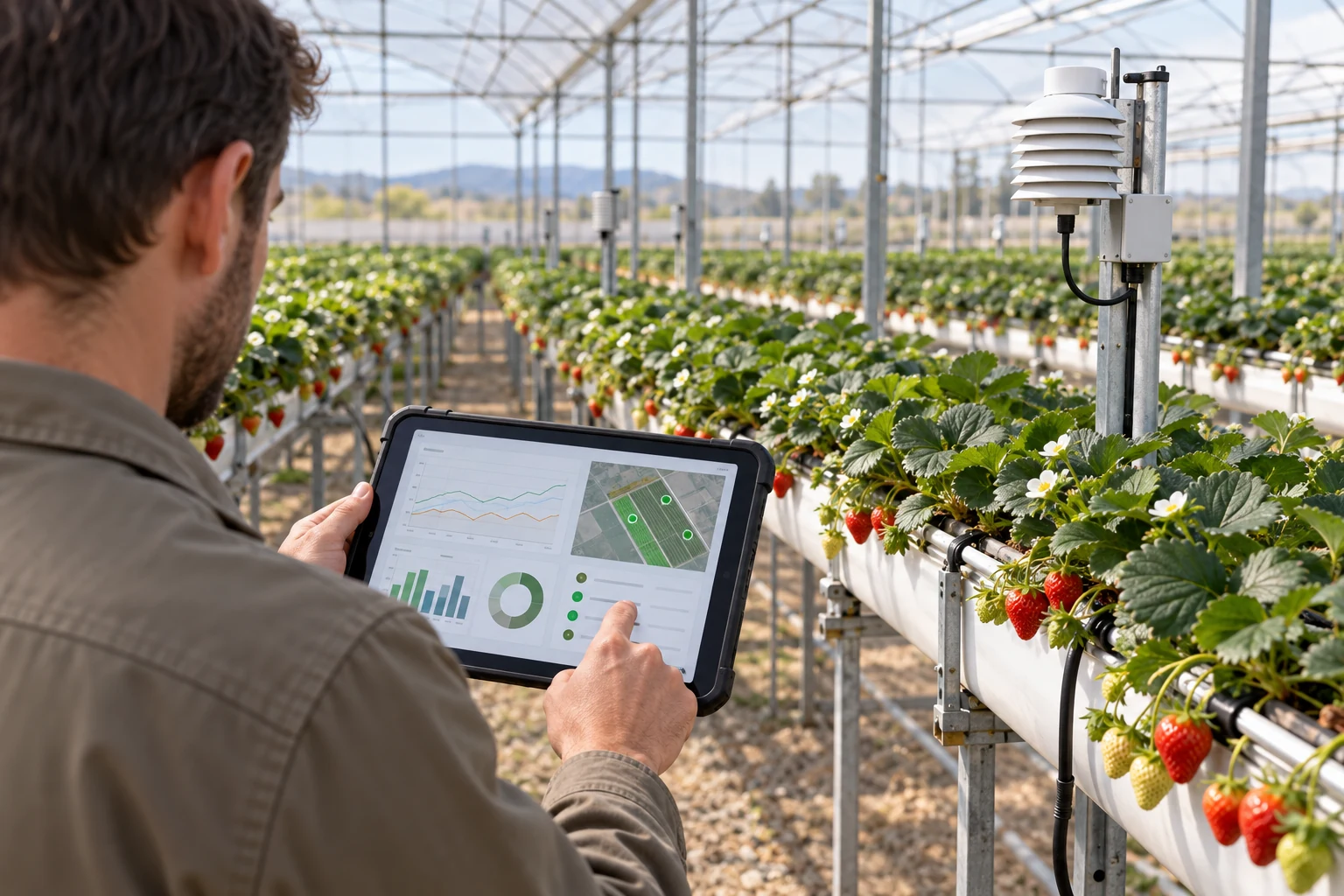
Raspberry roots require water availability alongside adequate aeration; poor drainage increases root-health risk. Select substrate and container geometry together, including the space occupied by the incoming root ball. Divide irrigation by comparable plant size and crop stage. Provide representative feed and drainage sampling points, flushing access and a response plan for interrupted supply. Assess drainage collection or discharge during design, before pots obstruct the working area.
Decisions to agree
Are incoming root balls and final containers compatible in wetting behaviour?
Who checks delivery uniformity and responds to a blocked emitter?
04
Manage canopy density, ventilation and routine work
Tunnel protection can reduce rain exposure while increasing the need to manage heat and canopy density. Provide access to train canes, remove spent growth, inspect pests and maintain pollination. In floricane systems, distinguish the crop-bearing canes from those retained for the following cycle. Lay out service routes so pruning debris, clean harvest containers and newly arriving plants can move without obstructing each other during overlapping operations.
Decisions to agree
How will canopy checks and cane training fit the labour schedule?
What remains in the block after harvest, and what is removed?
05
Plan frequent picking with very few transfers
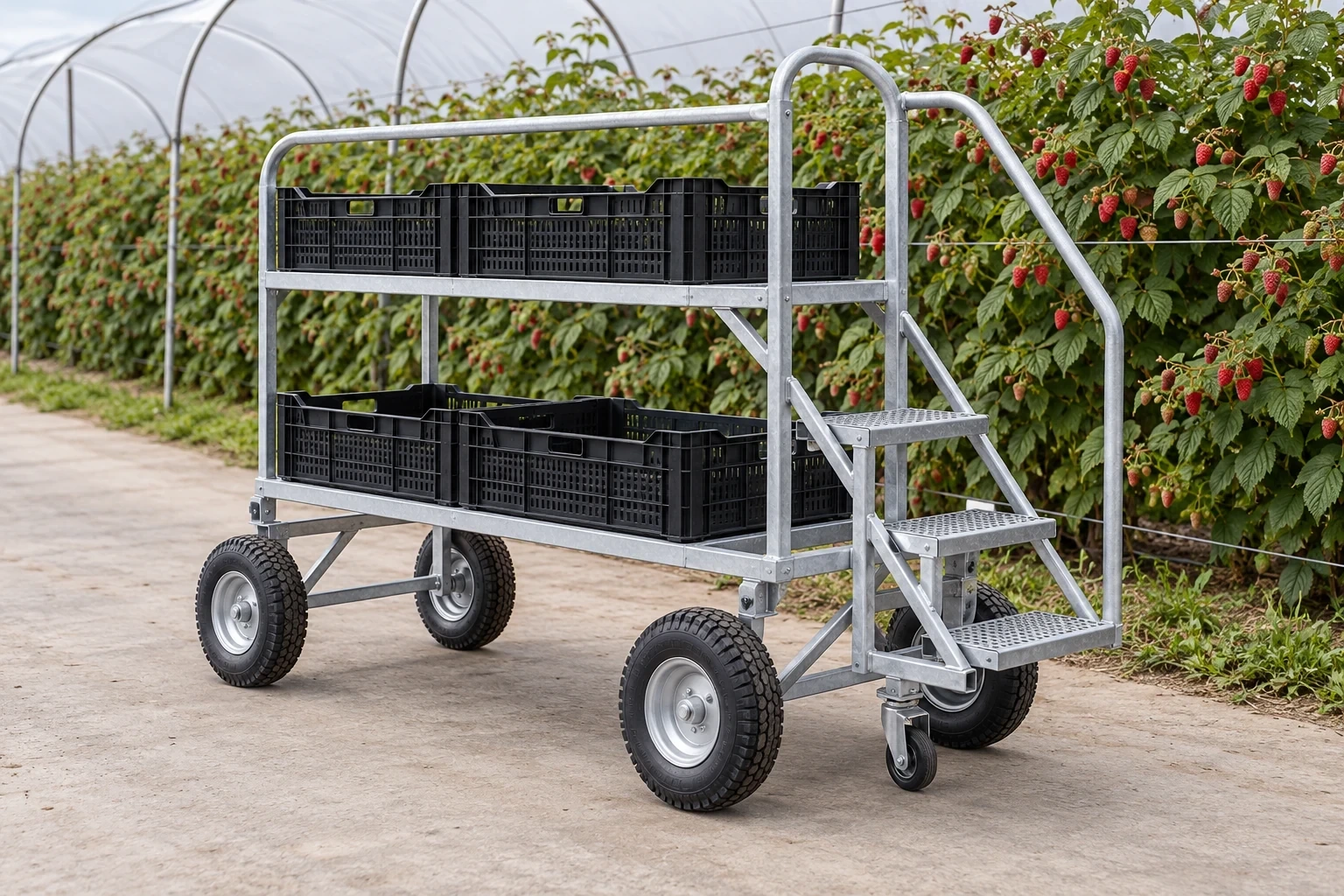
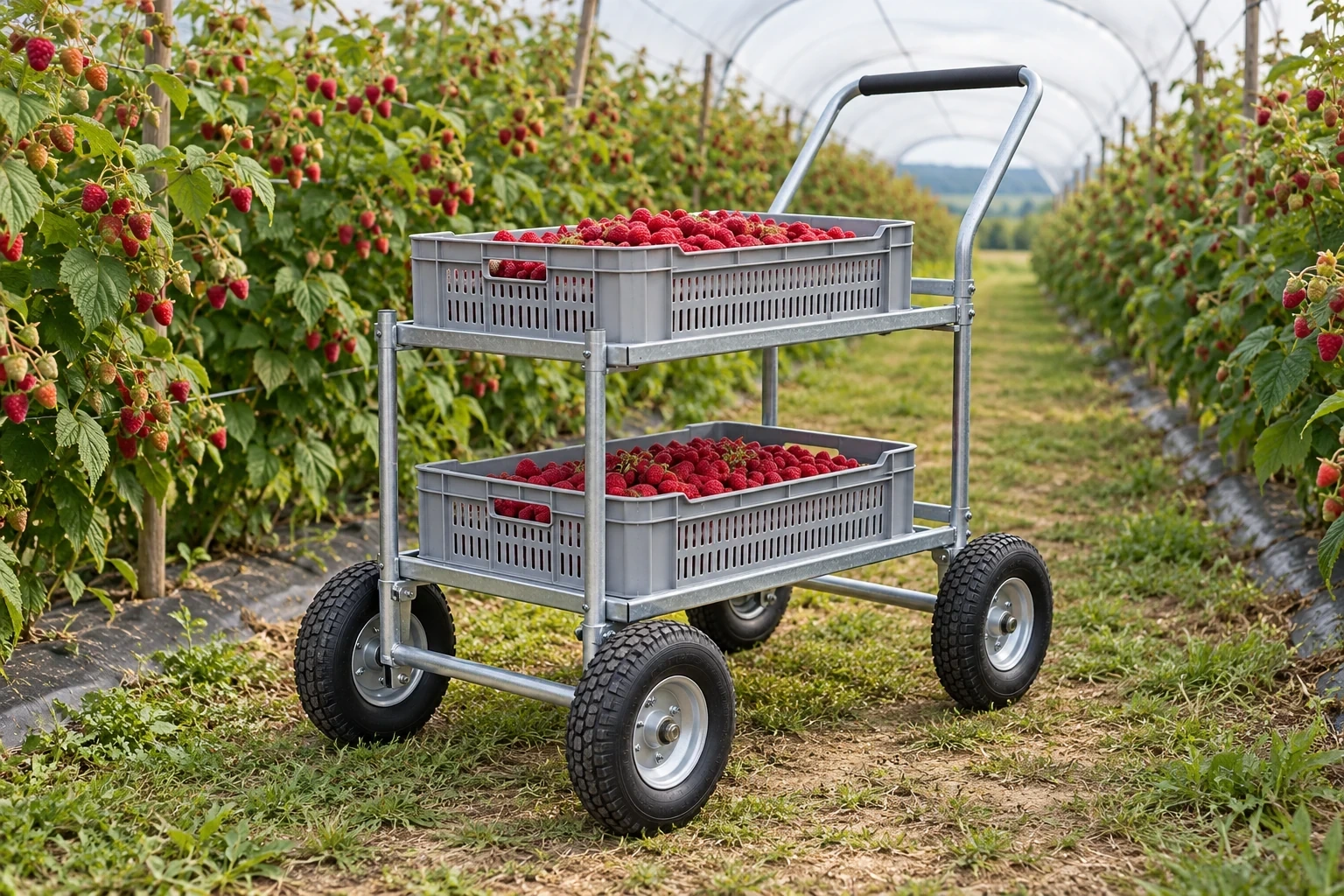
Raspberries are easily damaged by pressure and repeated handling. For fresh markets, assess picking directly into the intended consumer container, with unsuitable fruit removed in the row. Match trolley shelves to the pack and keep loaded trays stable. Plan collection frequency around ripening and actual picking output. A shaded collection point and an agreed transfer to cooling are part of the route, not substitutes for controlled handling.
Decisions to agree
Can berries stay in the same punnet from picking to dispatch?
How are full trays collected without delaying the picking team?
06
Finish packs and preserve lot identity
Choose weighing, closure and labelling around the selected punnet and fruit condition. A process designed for firmer berries should not be assumed suitable for raspberries; check every contact and transfer using representative fruit. Record block, variety, picking date and lot identity before separate harvests are combined. Coordinate pack ventilation, receiving capacity and temperature responsibilities at the cooling handover, with the refrigeration scope defined by the appointed specialist.
Decisions to agree
Which packing steps can be completed without touching the fruit again?
How will each finished pack remain linked to its harvest lot?
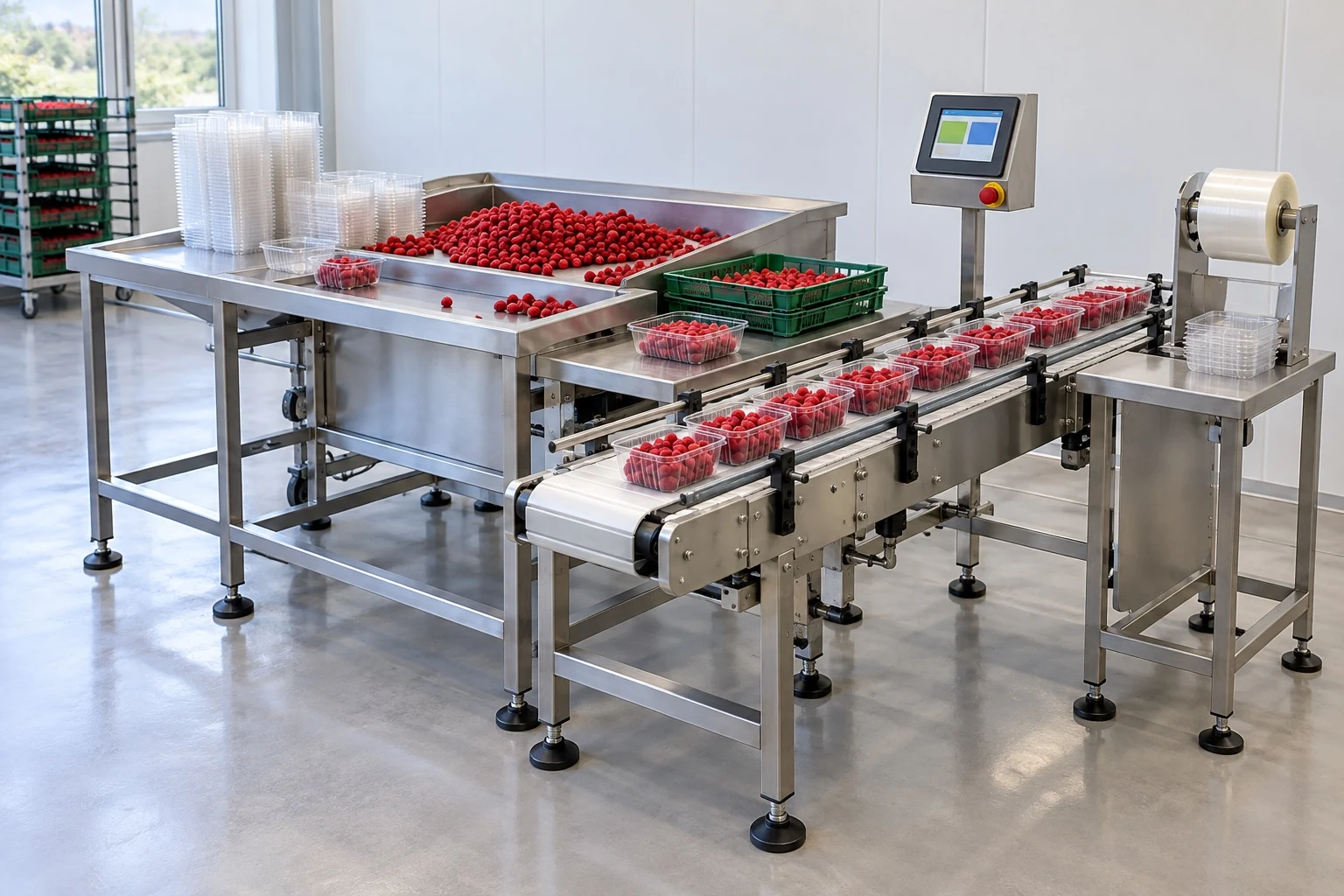
Illustrative packing workflow for raspberries. Tray changes and handling steps should be checked against fruit condition and the required pack format.Detailed irrigation planning for this crop
IRRIGATION PLANNING
Irrigation designed around berries
Raspberries
Define the irrigation system from the chosen production method, row layout and local measurements. Equipment selection follows the project assessment.
01
Beds, containers & row layout
Map the planting pattern, growing medium and drainage route. Use these inputs to choose lateral placement, emitter configuration and irrigation sectors.
Review irrigation and nutrition against crop stage, weather and root-zone measurements. Assess tunnel cooling and frost exposure as separate engineering requirements.
Plants with different preparation or dormancy histories may not follow the same schedule. Agree the nursery specification and arrival condition before committing a harvest window, irrigation grouping or replacement plan.
02
A trellis that closes the working aisle
A layout can look spacious before the canopy develops. Check fruiting laterals, replacement canes and trolley clearance at mature size, including room for workers to train and pick without pushing through the crop.
03
Adding machinery without a fruit trial
Higher nominal line speed does not demonstrate acceptable raspberry handling. Test the selected cultivar and maturity in the actual pack; record damage, pack presentation and queue behaviour before fixing the equipment configuration.
Connected equipment
These catalogue areas support the production plan. Final models, configurations and quantities follow the agreed engineering specification.
Use this list for the first project discussion. We identify missing inputs, coordinate the design and documentation, then prepare the equipment schedule and supply scope.
01Cultivars, fruiting type and the intended single- or double-crop strategy.
02Plant specification, nursery preparation, root-ball size and delivery batches.
03Site layout, soil drainage or container preference, and existing trellis constraints.
04Water analysis, available supply, drainage route and monitoring capability.
05Harvest windows, labour availability, picking containers and customer pack specifications.
06Renewal programme, installation phases and assigned packing and cooling interfaces.
Cultivar, climate, site conditions and management determine the final configuration. Agronomic targets, local approvals, installation, commissioning and training responsibilities are agreed for each project.
Knowledge
Practical guides
Go deeper into the decisions behind your crop plan.