A blackberry project is shaped by the way its canes grow and the market its fruit must reach. Erect, semi-erect and trailing cultivars need different training and working space; floricane and primocane production create different seasonal workloads. We translate the agreed crop plan into coordinated layouts, equipment specifications and supply packages, connecting support systems and irrigation with picking, transport and packing requirements.
Trellised blackberry rows under polythene cover, with a central picking aisle and fruit collected in punnets.
Key design priorities
Cane architecture before row geometry
Accessible fruiting zones at full canopy
Gentle handling to the final pack
Production systems
Compare the production approach first.
The growing method sets the requirements for structures, root-zone management, utilities and daily work. Compare the options against your site, crop programme and team.
01
Open-field trellised rows
A practical option where the cultivar suits local conditions and the intended harvest season. The trellis should organize fruiting and replacement canes while leaving access for pruning and picking. Design row ends for turning and fruit collection, and assess wind exposure, soil drainage and rain-related harvest interruptions before selecting the support configuration.
Rain shelters or ventilated tunnels can support fresh-market programmes where weather threatens fruit condition or picking continuity. Protection must accommodate the mature cane canopy, trellis anchors and worker routes. Compare expected benefits with ventilation work, access for pollination and roof-water disposal; a covered crop still needs active climate and disease monitoring.
Containers can be considered where root-zone management or site limitations favour a separate growing medium. Their suitability needs cultivar-specific agronomic assessment, not a direct copy of a raspberry recipe. Coordinate root volume, plant stability, support attachments and drainage collection, and establish who monitors the substrate and responds to irrigation interruptions throughout the crop cycle.
Each stage creates requirements for the next. Resolve the crop-specific decisions below before selecting individual machines or fixing the site layout.
01
Define cane type and the sales programme
Start with cultivar identity, plant source and the proposed fruiting cycle. Floricane crops depend on retaining suitable canes for the following season; primocane-fruiting cultivars introduce another scheduling option, subject to local ripening conditions. Map harvest windows against labour availability and buyer requirements. Record which assumptions are proven locally and which require a trial before committing the full site to one production method.
Decisions to agree
Which cane habit and fruiting cycle are confirmed for this cultivar?
Is the fruit destined for local fresh sale, longer distribution or processing?
02
Design for the mature cane canopy
The mature canopy, rather than the young planting, should determine clearances. Erect, semi-erect and trailing plants differ in cane length, branching and support needs. Show where fruiting canes, new growth and removed material will pass through the system. Resolve end anchors, wire access and pruning routes alongside tunnel legs and irrigation lines, with structural loads checked for the actual site and chosen configuration.
Decisions to agree
Will fruiting and replacement canes be separated within the chosen training system?
Can staff service wires and pick both sides without obstructing transport?
03
Match water distribution to the root zone
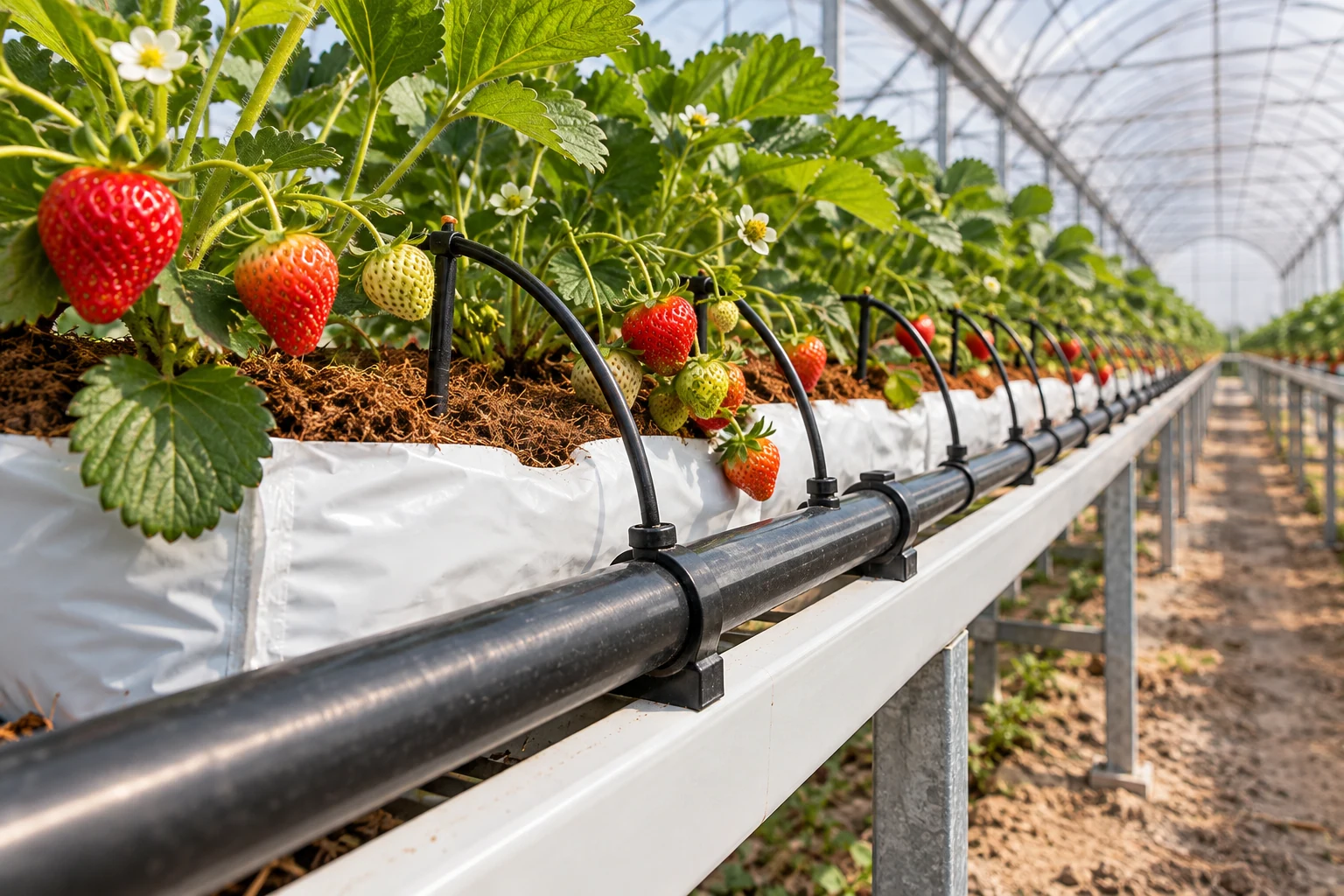
Specify irrigation from water analysis, source capacity, elevation and the chosen soil or container system. Separate zones where cultivar, establishment stage or root-zone conditions demand different management. Provide access for pressure checks, flushing and emitter inspection. For containers, coordinate wetting coverage with substrate behaviour and a clear drainage route; in soil, assess infiltration and waterlogging before treating poor crop uniformity as a fertilizer problem.
Decisions to agree
Which blocks need independent irrigation schedules and monitoring points?
Where will drainage and flushing water go without wetting harvest routes?
04
Make seasonal work part of the design
Cane tying, tipping where appropriate, removal of spent floricanes and canopy inspection require repeat access throughout the season. Reserve space for these tasks after the crop fills the trellis. In protected production, ventilation, pollinator access and monitoring for prolonged humidity must work together. Agree operating routines with the crop manager so that opening a cover or removing canes does not interfere with irrigation or safe picking routes.
Decisions to agree
Who controls cover ventilation and records unusual crop or climate conditions?
Can pruning material leave the row without crossing fruit collection points?
05
Keep delicate fruit moving with fewer transfers
Fresh blackberries should enter a handling sequence designed around maturity and fragility. Review whether picking into the final punnet is appropriate for the buyer, then match trolley shelves, trays and collection intervals to that method. Avoid deep accumulation, rough routes and unnecessary tipping. Define shaded collection and prompt transfer to the agreed cooling interface, with responsibility for handover and temperature records clearly assigned.
Decisions to agree
Can fruit remain in one container between picking and final weight control?
Which route and collection frequency keep harvested fruit from waiting in the sun?
06
Validate packing with the fruit and pack
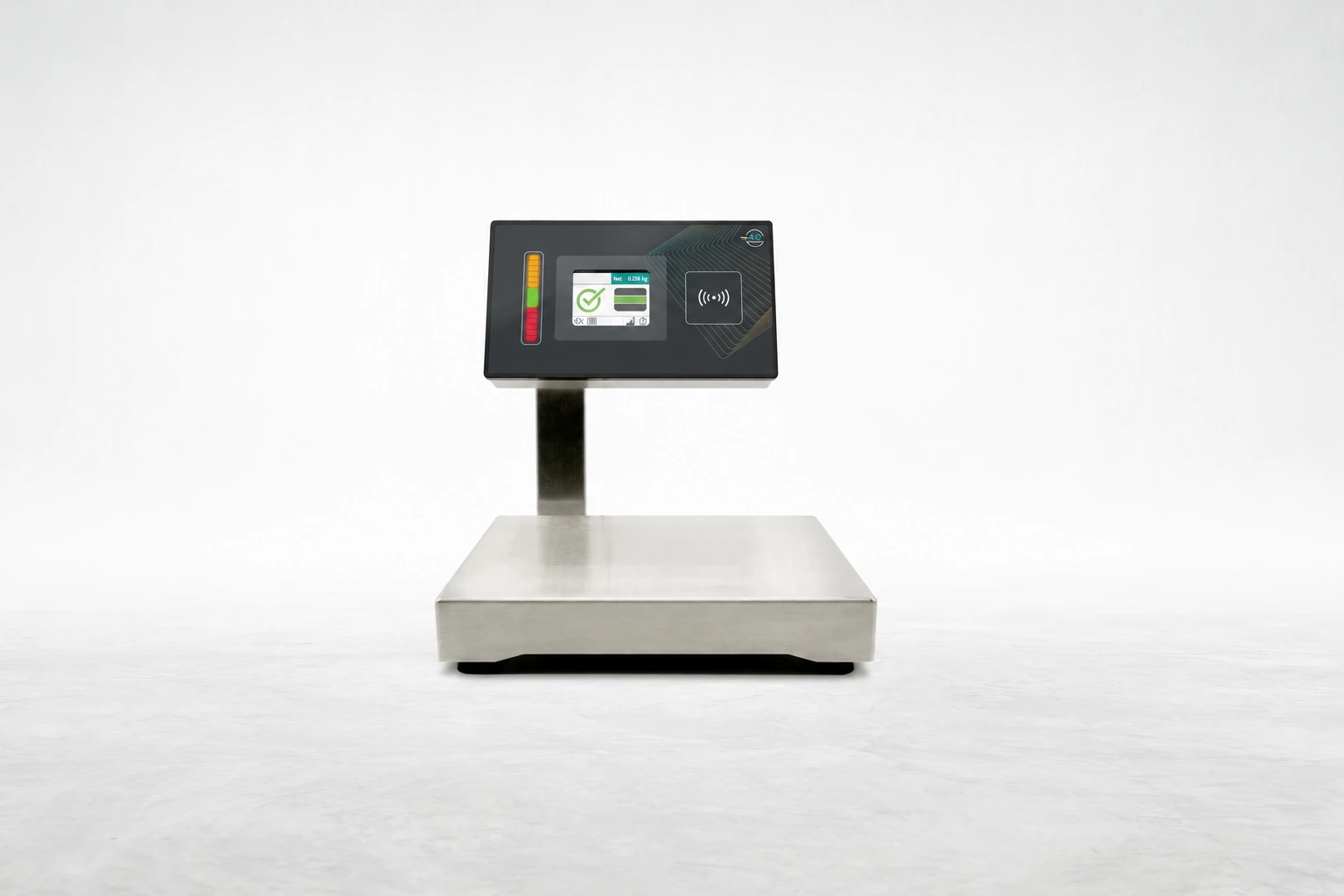
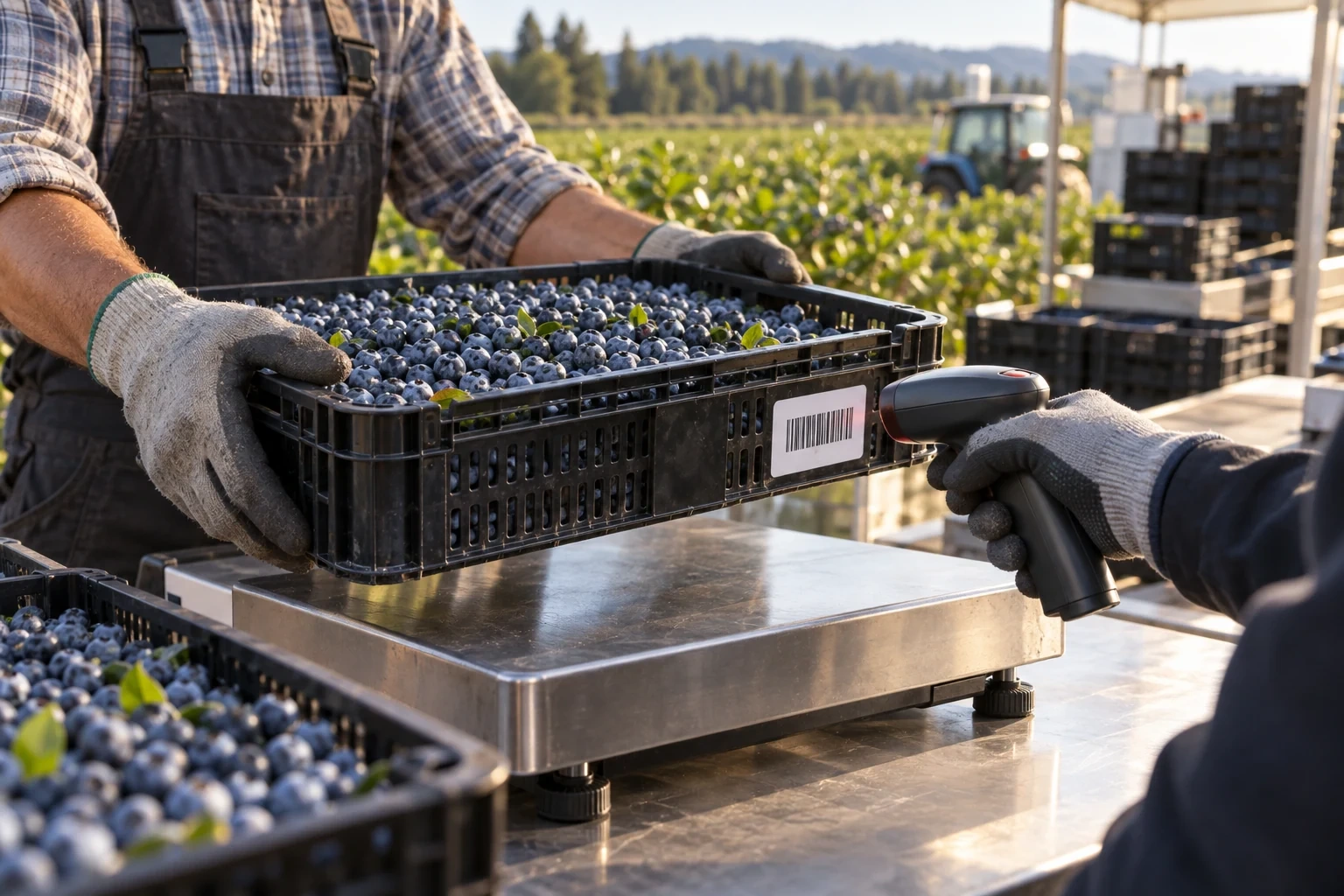
Choose weighing, inspection, closing and labelling functions separately before combining a line. Equipment that handles firmer berries is not automatically suitable for blackberries. Use representative fruit at the intended maturity to evaluate contact surfaces, transfers and pack presentation. Link finished packs to field block, harvest date and incoming lot, and specify how rejected or damaged fruit is separated without losing batch identification.
Decisions to agree
Which handling steps have passed a trial with the intended cultivar and packaging?
Can the packhouse trace a finished pack back to its harvest lot?
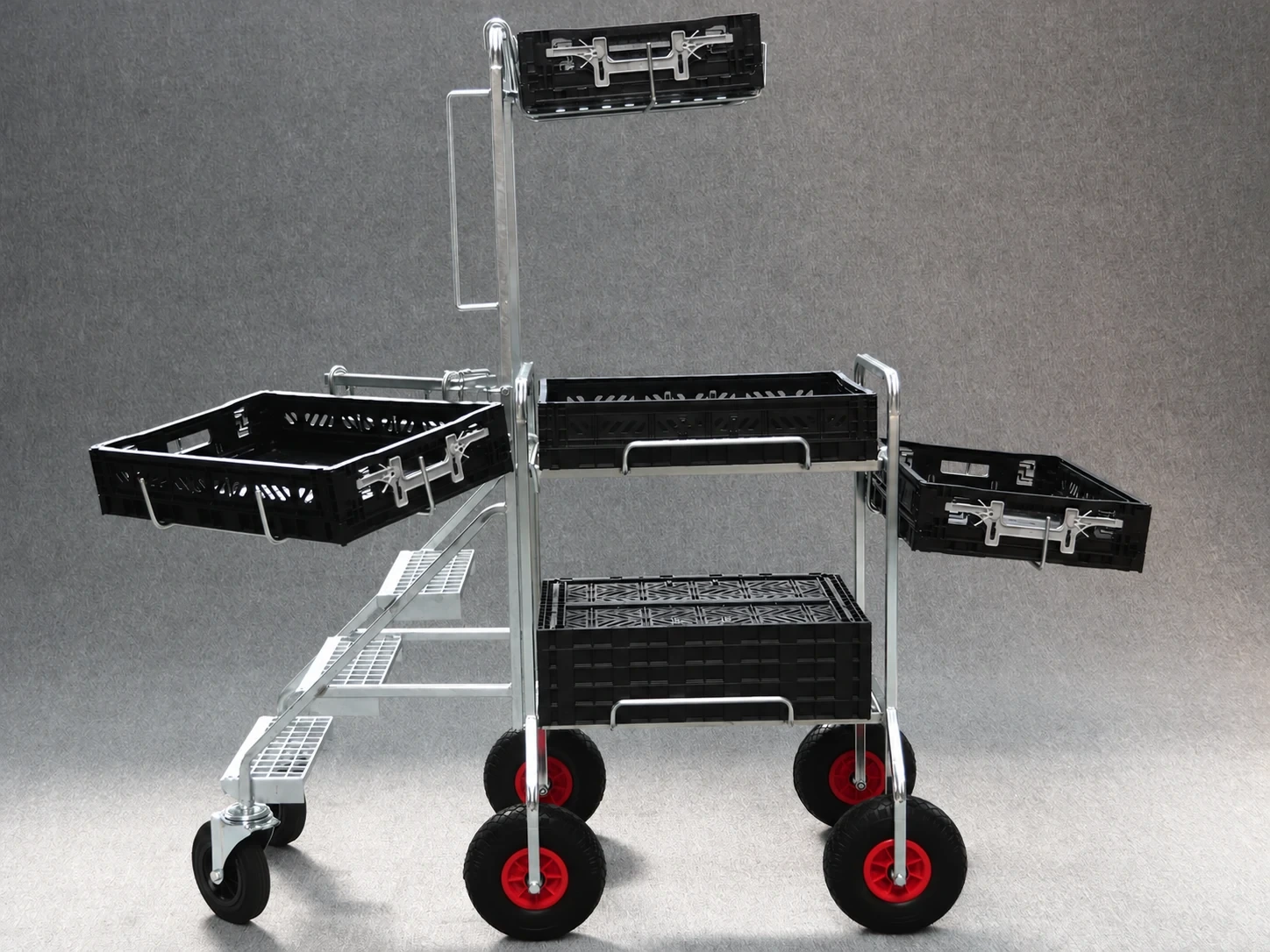
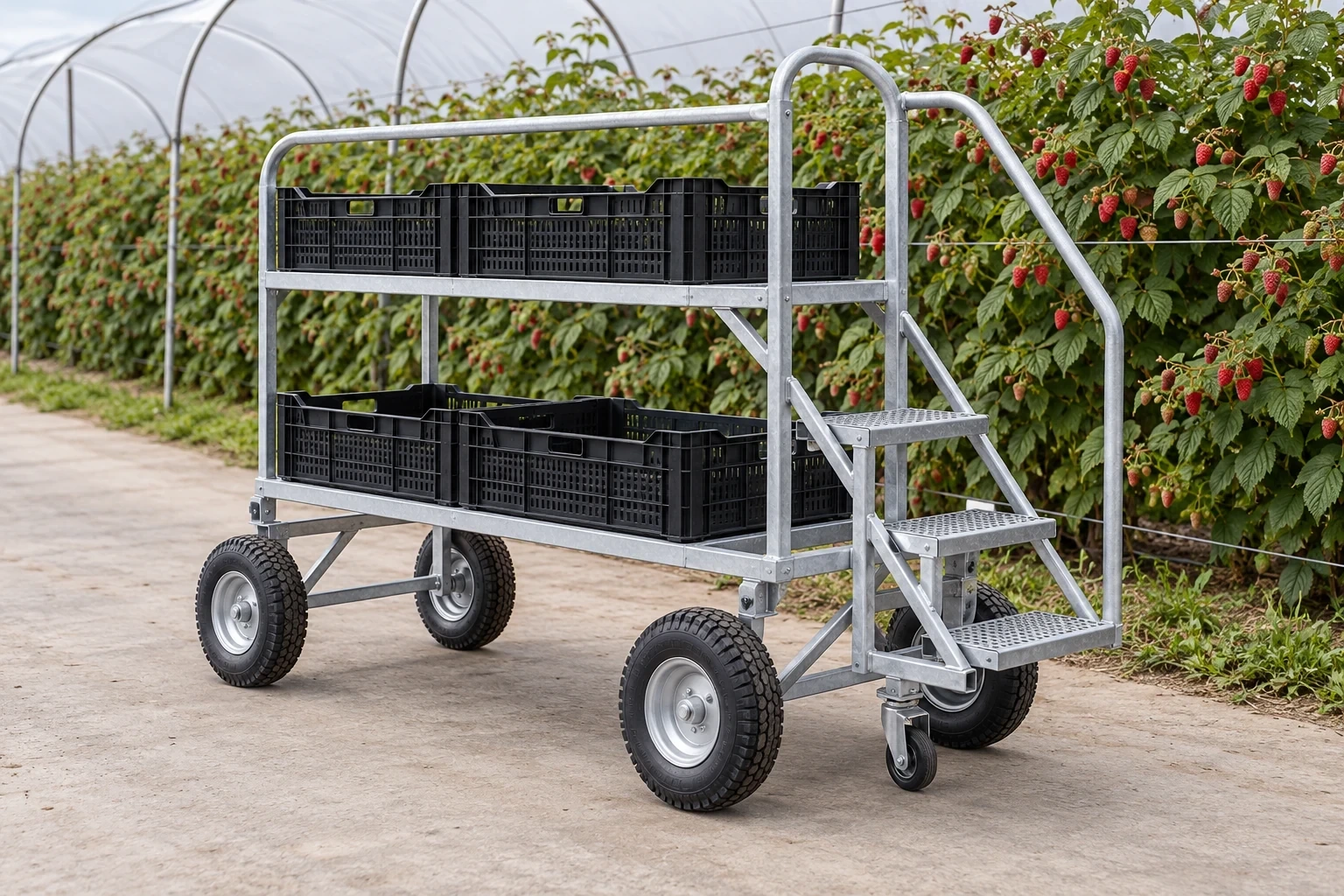
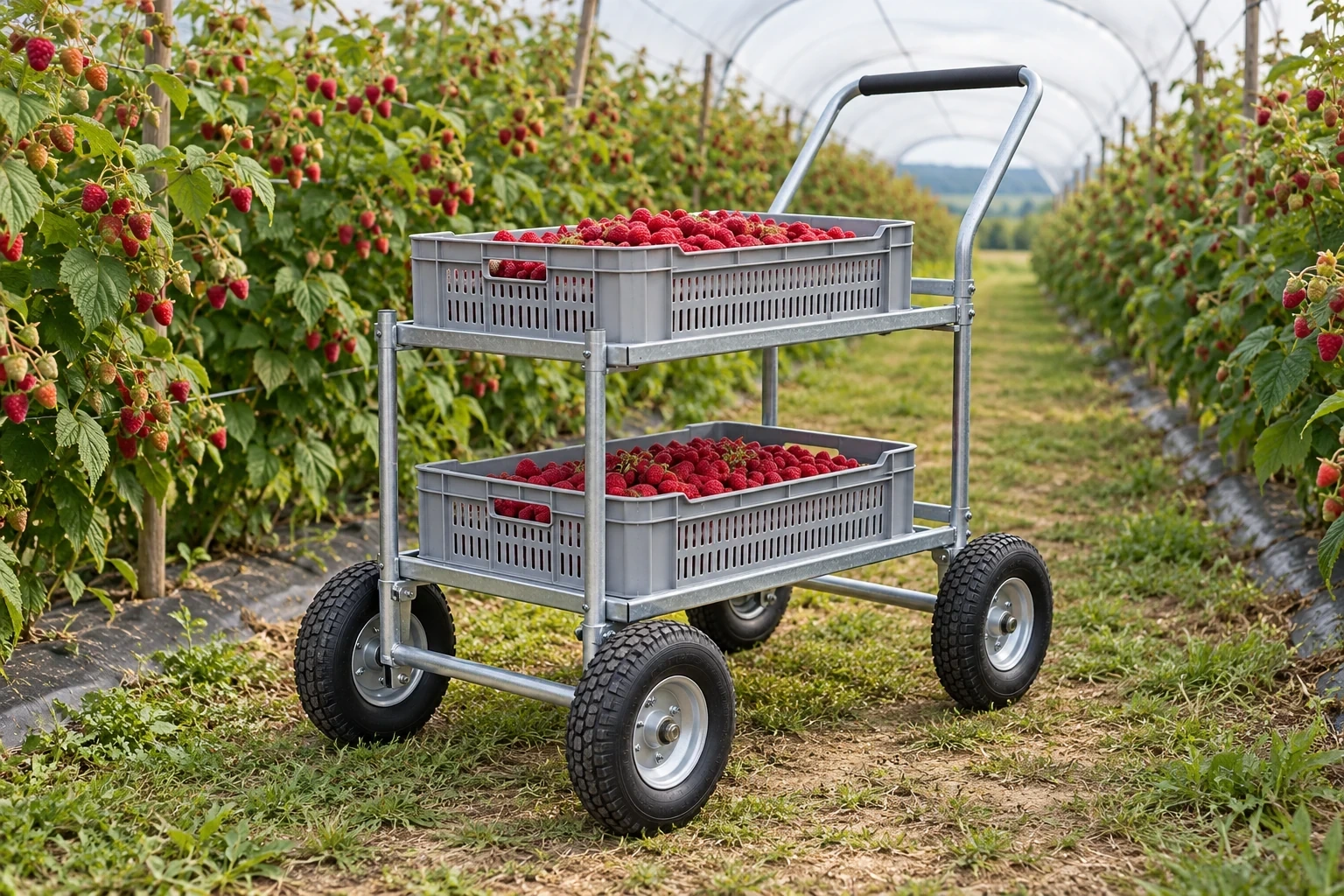
An example of berry-harvesting trolley equipment, shown with crate supports. Suitability, accessories and working dimensions are checked for the project.Detailed irrigation planning for this crop
IRRIGATION PLANNING
Irrigation designed around berries
Blackberries
Coordinate irrigation with the trellis, planting layout and growing medium. Separate everyday root-zone delivery from optional climate functions.
01
Root-zone distribution
Define row lengths, plant positions and access for maintenance. Select distribution lines, emitters and regulation around the actual hydraulic layout.
Plan dosing and monitoring for the selected soil or substrate system. Evaluate cooling, humidity and frost equipment only against the crop and site requirements.
A layout that suits young plants may become inaccessible when replacement canes and fruiting laterals develop together. Confirm canopy separation and staff access before ordering posts, wires or tunnel dimensions.
02
Protection without an operating routine
Rain protection changes the working environment but does not remove climate or disease risks. Ventilation access, roof-water discharge and scouting responsibilities must be resolved alongside the covering specification and harvest calendar.
03
A packing line specified only by throughput
Nominal capacity says little about bruising, leaking berries or package appearance. Acceptance should include fruit condition after the complete handling sequence, using the intended cultivar, maturity, pack and distribution route.
Connected equipment
These catalogue areas support the production plan. Final models, configurations and quantities follow the agreed engineering specification.
Use this list for the first project discussion. We identify missing inputs, coordinate the design and documentation, then prepare the equipment schedule and supply scope.
06Existing trolleys, collection points and packing facilities, with ownership of cooling handover.
Cultivar, climate, site conditions and management determine the final configuration. Agronomic targets, local approvals, installation, commissioning and training responsibilities are agreed for each project.
Knowledge
Practical guides
Go deeper into the decisions behind your crop plan.