A blueberry investment begins below the canopy: with suitable water, an aerated root zone and a cultivar adapted to the climate and sales window. Soil, containers and protection create different management requirements. We connect these choices with irrigation, harvesting access and packing interfaces, preparing layouts, specifications and supply packages around an agreed site-specific agronomic plan.
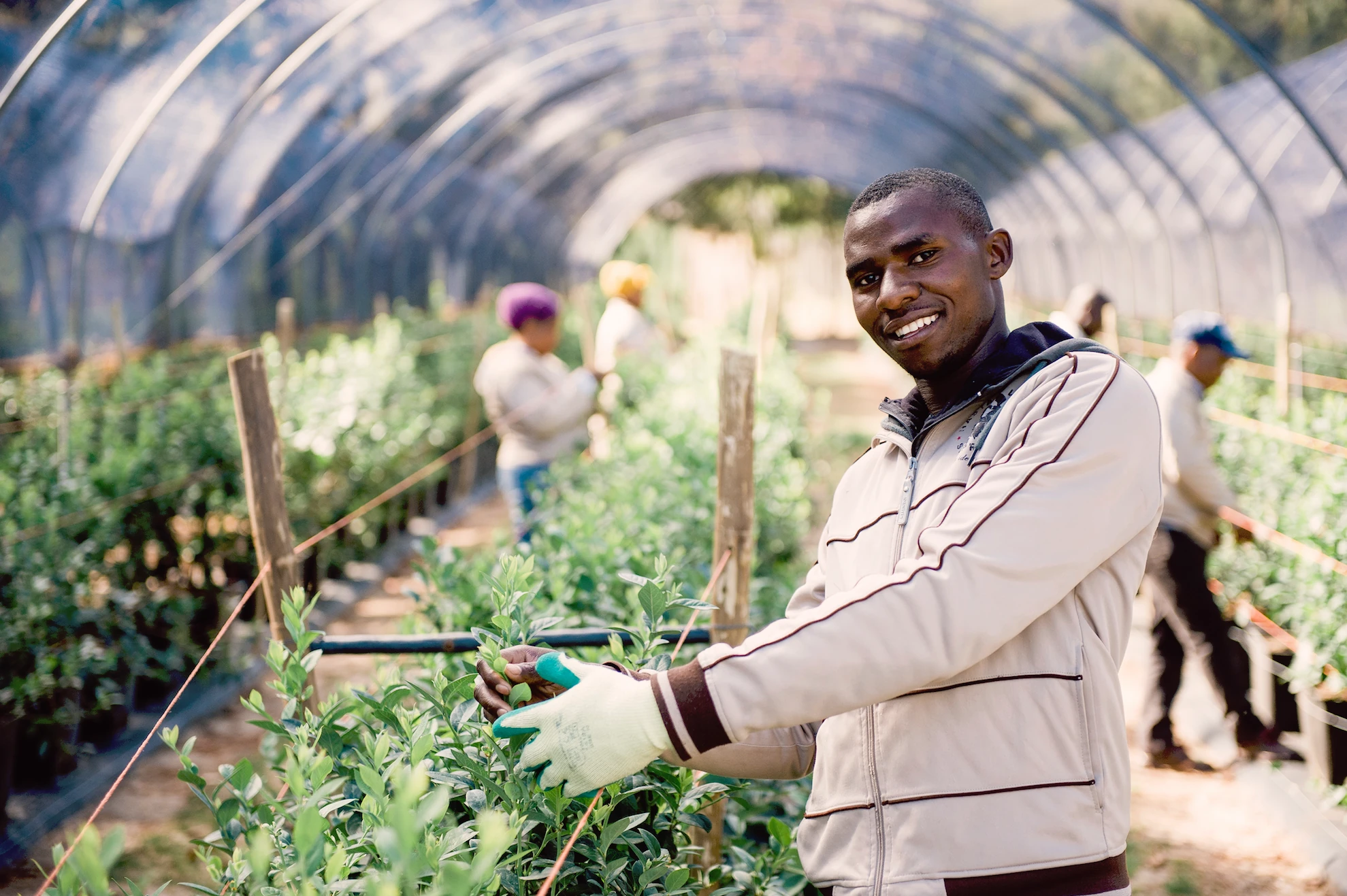
Blueberries in individual containers beneath net-covered tunnel arches, with access for crop care between the rows.
Key design priorities
Water chemistry before treatment selection
An aerated, monitored root zone
Harvest method aligned with market quality
Production systems
Compare the production approach first.
The growing method sets the requirements for structures, root-zone management, utilities and daily work. Compare the options against your site, crop programme and team.
01
In-ground rows and prepared beds
Where soil and drainage can support blueberries, an in-ground system can provide a long-term planting foundation. Assess the soil profile and amendment feasibility before establishing beds; surface improvements cannot correct every underlying drainage constraint. Plan irrigation coverage, maintenance access and future canopy size together, keeping drainage work accessible after planting and mulch installation.
Containers offer a defined root zone where native soil is unsuitable or closer substrate management is required. They also place greater responsibility on irrigation continuity and monitoring. Select substrate properties, drainage openings and plant stability as one system; include ground drainage, container access and a plan for inspecting representative plants rather than relying on one sensor for the entire field.
Tunnels, rain covers or nets may be considered where a defined weather or pest risk justifies protection. This is an additional design layer over the selected root-zone system, not a substitute for it. Check mature bush clearance, pollination access, ventilation and equipment movement, and confirm how the structure affects the intended harvesting method before choosing dimensions or coverings.
Each stage creates requirements for the next. Resolve the crop-specific decisions below before selecting individual machines or fixing the site layout.
01
Align the site, cultivar and market window
Blueberry types and cultivars differ in climatic adaptation, flowering behaviour, plant size and fruit characteristics. Obtain local agronomic advice on suitability, including winter chilling and flowering-period risks. Plan compatible pollination arrangements where needed and map cultivar blocks to the sales calendar. The layout should allow establishment work, mature-bush access and staged expansion without placing later plantings beyond the capacity of the original water system.
Decisions to agree
Which cultivars demonstrably suit this climate and buyer specification?
Do flowering periods and the planned protection permit the required pollination arrangement?
02
Specify the root-zone system
Blueberries need a root environment that combines moisture availability with aeration. For soil-grown crops, review profile, drainage and amendment planning together. For containers, compare substrate water retention, air space and salinity information with the container shape and drainage openings. Include stability of mature plants, access for sampling and the path of drainage water; a product name alone is not a usable root-zone specification.
Decisions to agree
Which measured substrate properties and batch documents support material acceptance?
Can containers drain freely without standing in runoff from neighbouring rows?
03
Design water treatment from analysis
Water pH alone does not describe its effect on a blueberry root zone. Obtain alkalinity or bicarbonate results alongside electrical conductivity and relevant ions, then agree treatment objectives with the agronomist. Particle filtration does not by itself correct dissolved salts or alkalinity. Coordinate dosing, filtration, distribution uniformity and sampling points, with an operating plan for checking delivered water and root-zone conditions over time.
Decisions to agree
Does the laboratory report include alkalinity, pH and conductivity?
Who reviews source changes, sampling results and alarms before adjusting the treatment settings?
04
Coordinate monitoring and protective functions
Monitor the crop in representative locations, including different irrigation zones and exposed edges. Compare root-zone readings with plant observations and drainage behaviour rather than reacting to a single number. Where protection is proposed, define the actual purpose: rain exclusion, bird control, shading or frost management. Irrigation, evaporative cooling and frost protection have different operating requirements and must not be assumed interchangeable when sizing water supply or controls.
Decisions to agree
Which readings trigger inspection, and who can respond during an irrigation interruption?
Has each protective function been checked for water, power and access requirements?
05
Choose harvest methods through fruit trials
Hand picking and mechanical harvesting place different demands on row geometry, bush form and fruit handling. Mechanical suitability depends on the cultivar, maturity, machine and destination market; it cannot be inferred from blue colour or firmness alone. Before reserving clearances or buying associated equipment, trial the complete route from harvest to packing and subsequent quality assessment. Confirm headlands, collection containers and any conflicts with pots, trellises or protective structures.
Decisions to agree
Has fruit quality been assessed after handling and storage, not only immediately after picking?
Does the layout physically fit the harvesting and collection method?
06
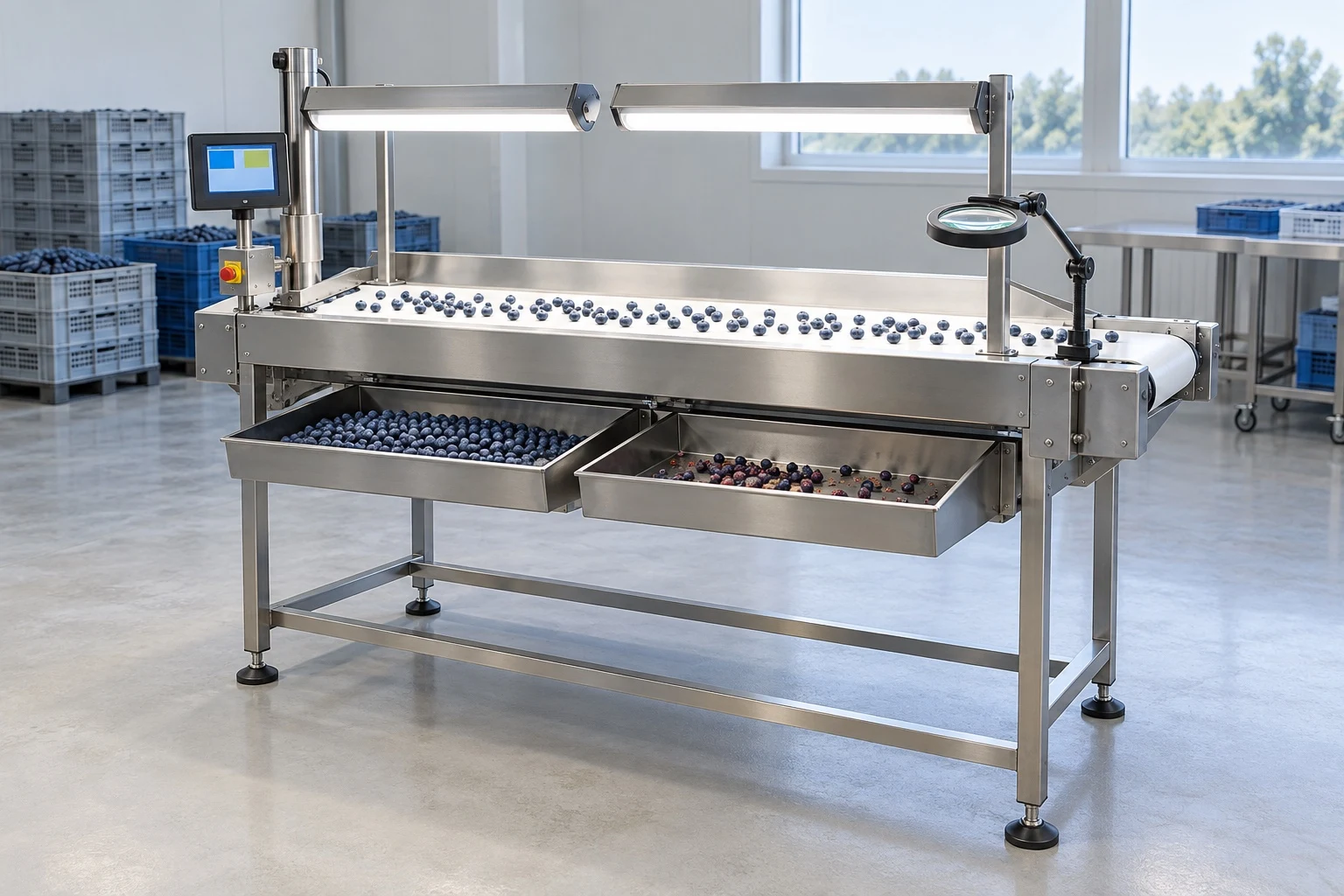
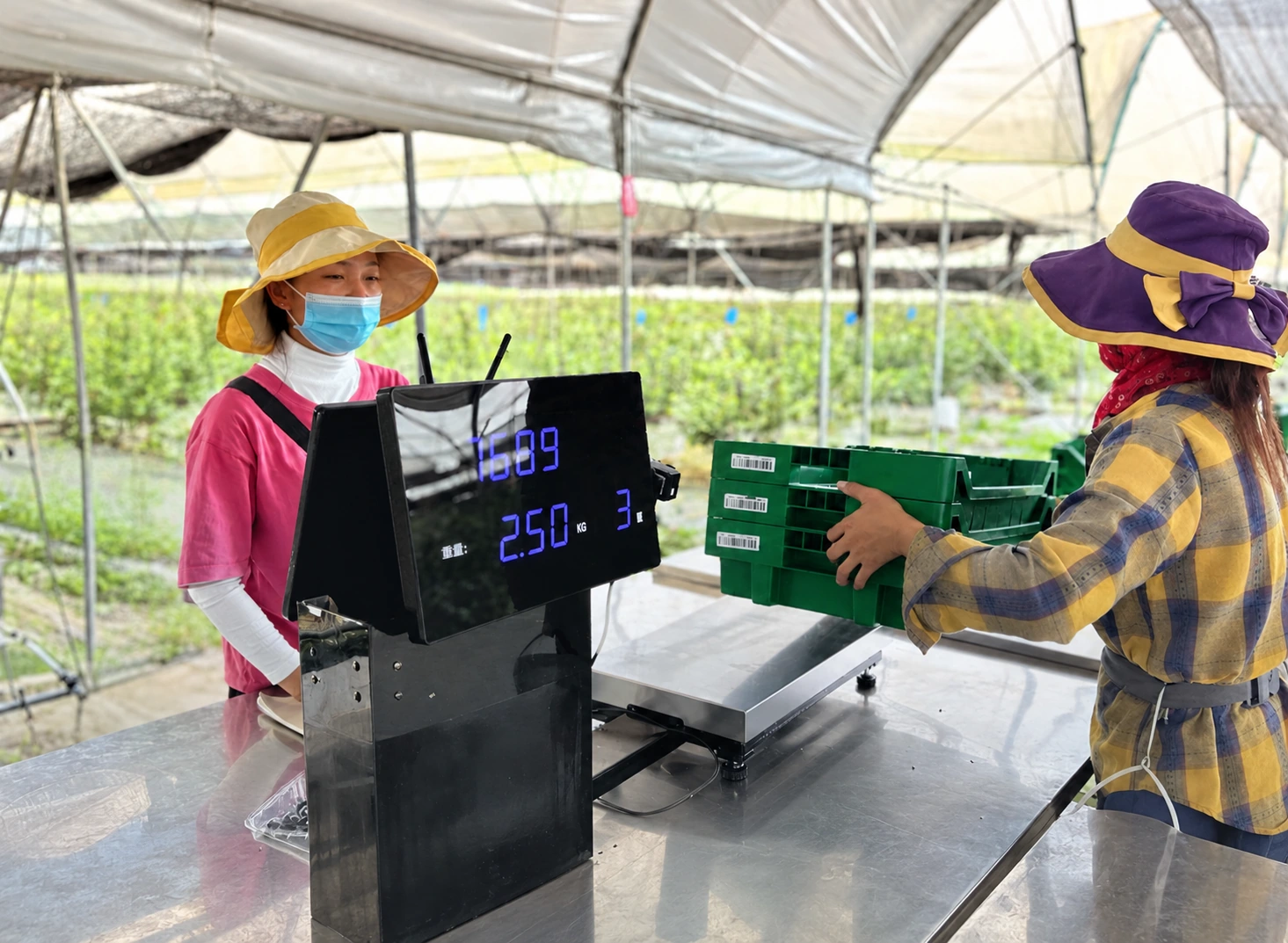
Connect incoming fruit to the finished pack
Specify incoming lot identification, inspection needs, weighing, pack format and labelling before defining a line. Distinguish visual inspection or grading from weight control; one function does not replace another. Evaluate transfers with representative berries, including internal bruising where relevant, and protect the fruit surface during handling. Coordinate the cooling handover with the responsible operator, keeping lot identity intact through packing, rejected fruit streams and dispatch.
Decisions to agree
Which quality defects must be checked, and how will the trial measure them?
Can field, harvest and packing records connect without relabelling or guesswork?
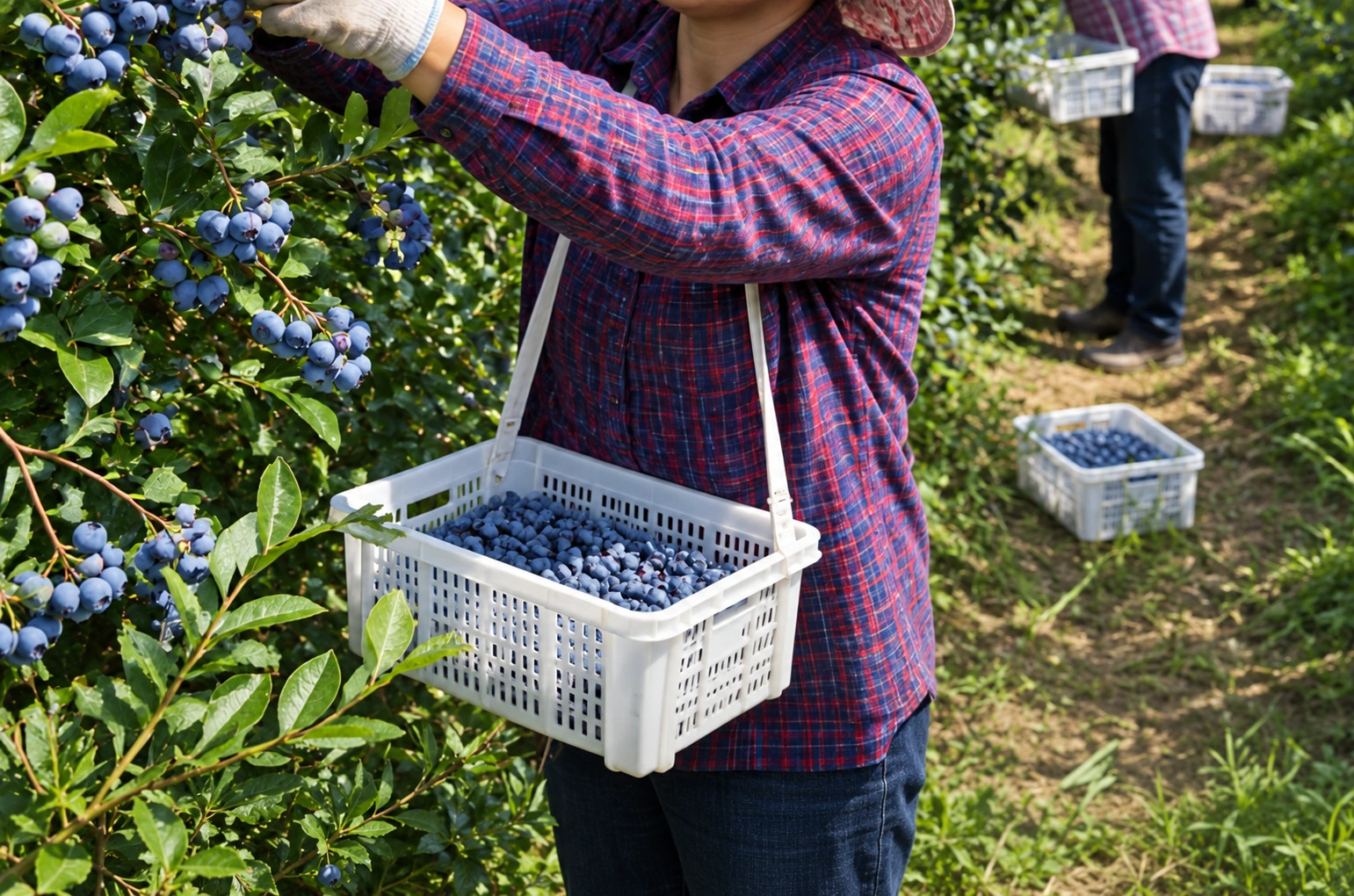
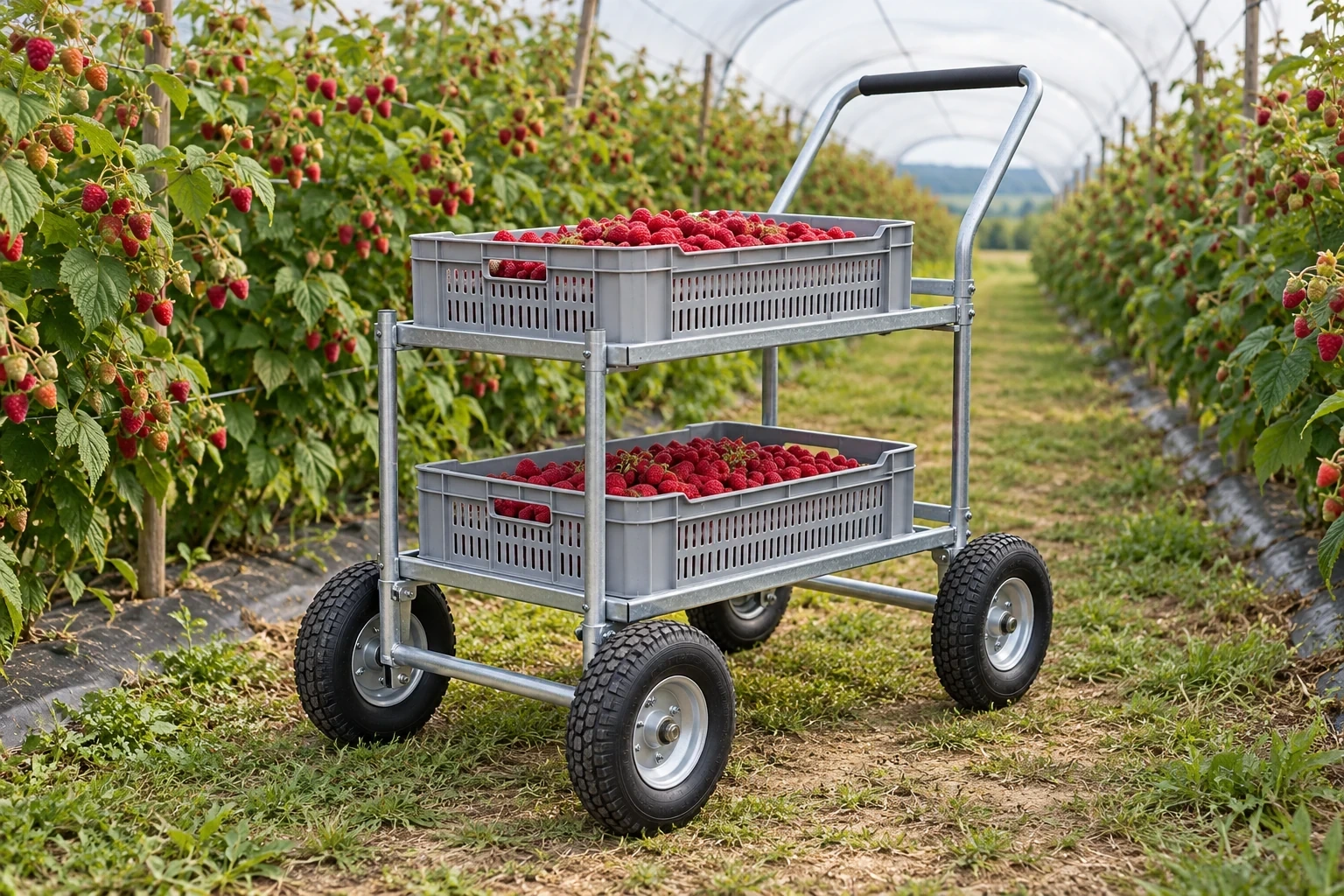
Hand-picked blueberries collected into field baskets. The harvest method must fit fruit destination, handling limits and the packing workflow.Detailed irrigation planning for this crop
IRRIGATION PLANNING
Irrigation designed around berries
Blueberries
Shallow roots and sensitivity to waterlogging make root-zone coverage, drainage and precise nutrient delivery central design tasks.
01
Raised beds & soil production
Assess wetting on both sides of the root zone, bed drainage and soil acidity. Select drip-line configurations and shutdown drainage control for the site.
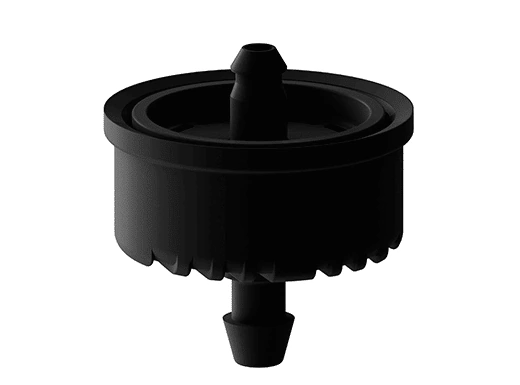
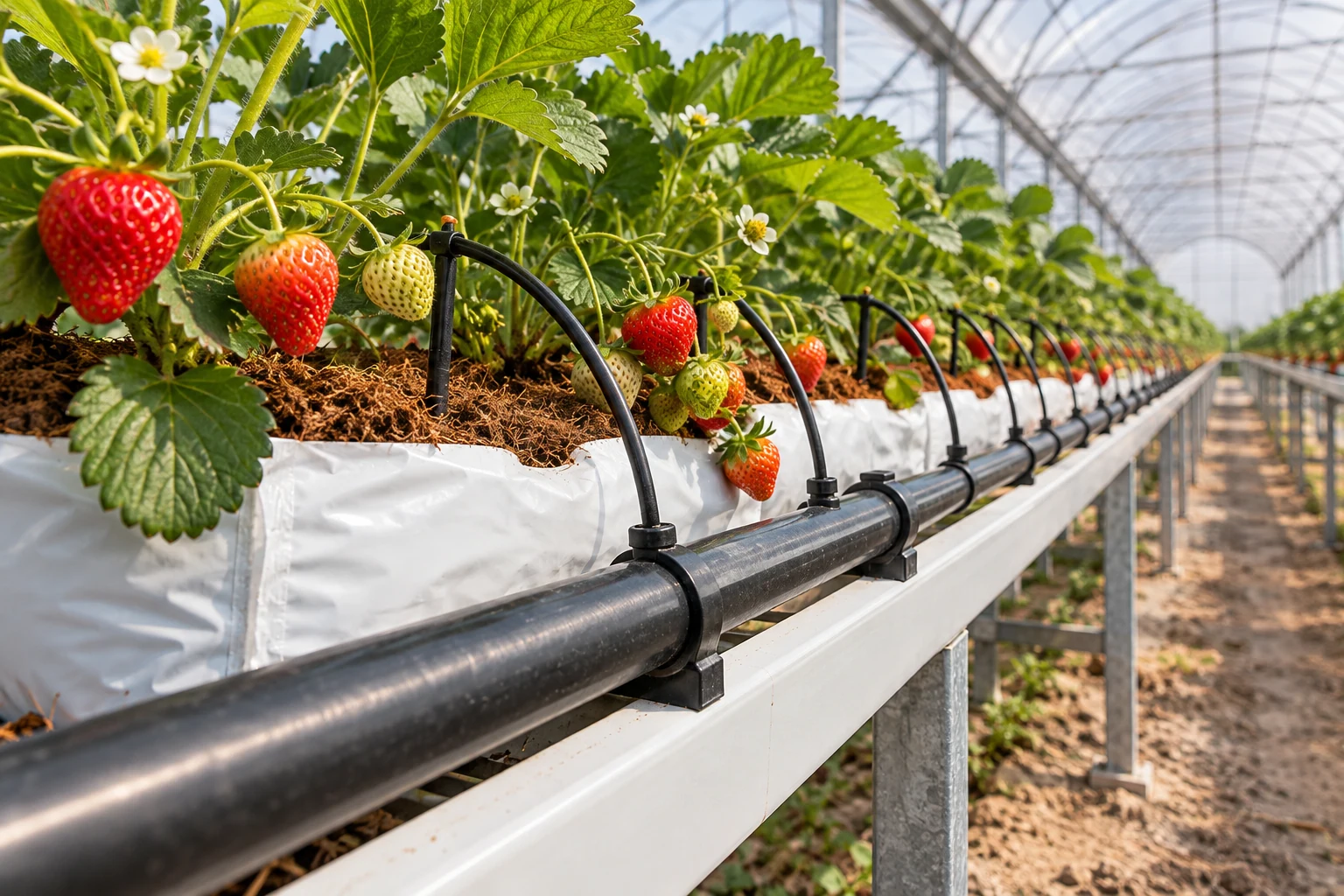
Distribute water across each container using suitable emitters, tubes and pegs. Combine pulse control with substrate, drainage and nutrient-solution measurements.
Two water sources with similar pH can affect the root zone differently. A treatment specification based only on pH can miss bicarbonate load or salinity; obtain a complete, representative laboratory analysis first.
02
Containers added without drainage and response planning
A suitable substrate cannot compensate for blocked outlets, standing runoff or unnoticed irrigation failures. Plan inspection points, drainage access and named operational responsibilities before increasing the number of container blocks.
03
Mechanical harvest assumed to suit every planting
A workable machine route does not prove that the fruit will meet the intended market standard. Validate cultivar, maturity, handling and later quality together before fixing layout or making capacity commitments.
Connected equipment
These catalogue areas support the production plan. Final models, configurations and quantities follow the agreed engineering specification.
Use this list for the first project discussion. We identify missing inputs, coordinate the design and documentation, then prepare the equipment schedule and supply scope.
01Cultivar and plant-material details, local suitability evidence, flowering windows and target sales calendar.
02Laboratory water analysis including alkalinity or bicarbonate, conductivity and relevant dissolved ions.
03Soil profile and drainage assessment, or proposed container and substrate technical information.
04Surveyed layout, elevations, water and power capacity, expansion phases and existing protection.
05Intended hand or mechanical harvest method, machine clearances where relevant, and fruit trial results.
06Buyer quality and packaging requirements, intake scenarios, lot records and the agreed cooling handover.
Cultivar, climate, site conditions and management determine the final configuration. Agronomic targets, local approvals, installation, commissioning and training responsibilities are agreed for each project.
Knowledge
Practical guides
Go deeper into the decisions behind your crop plan.