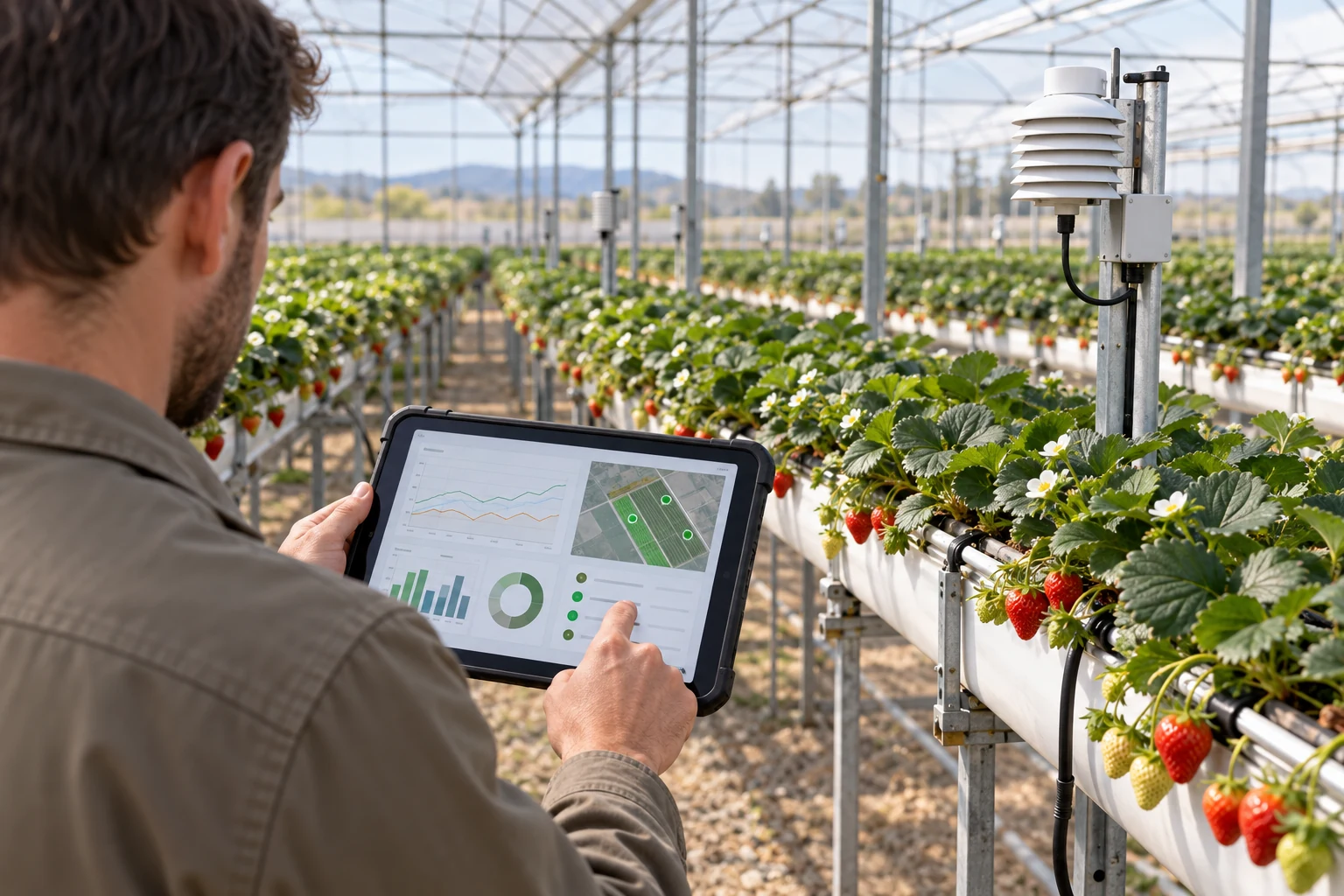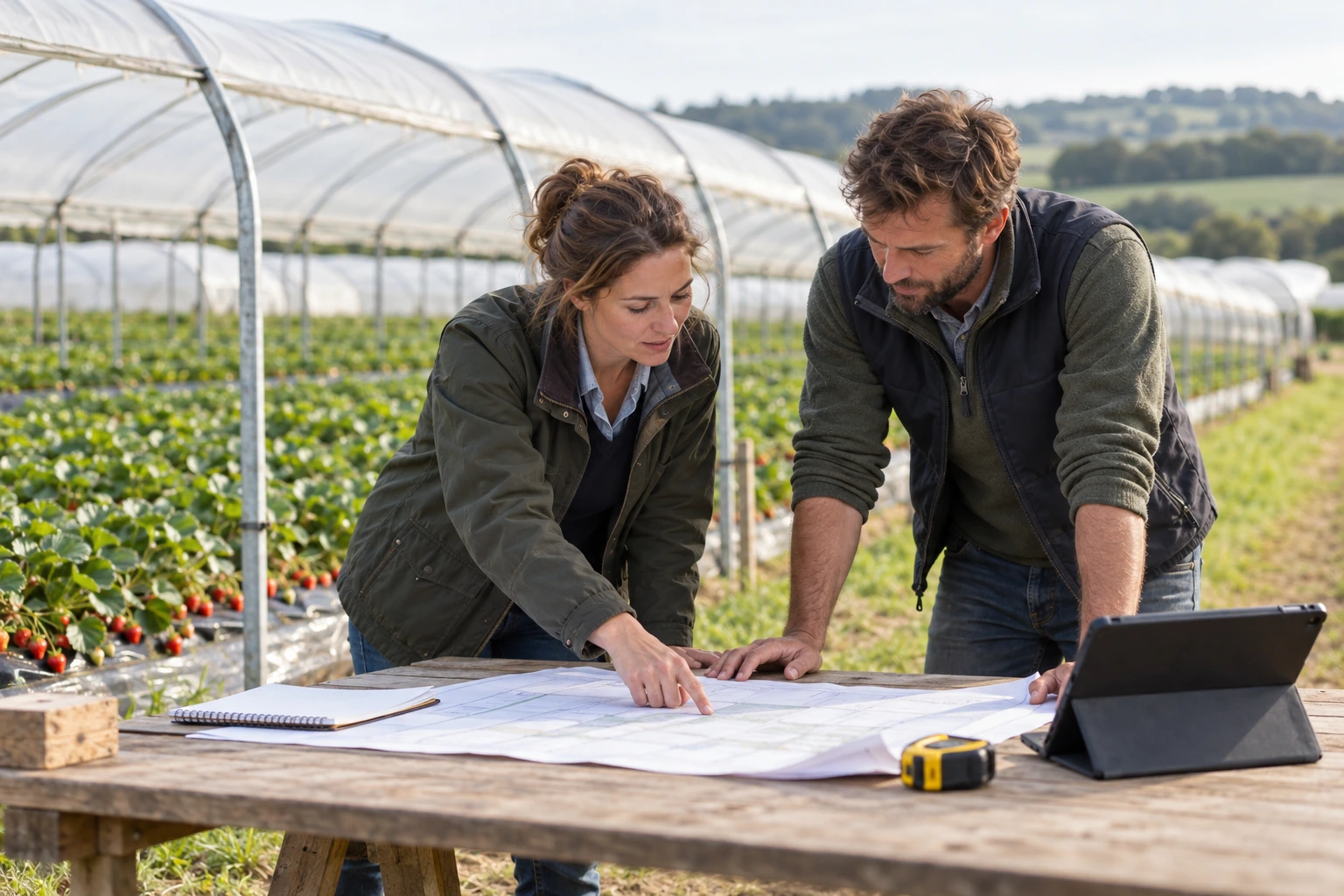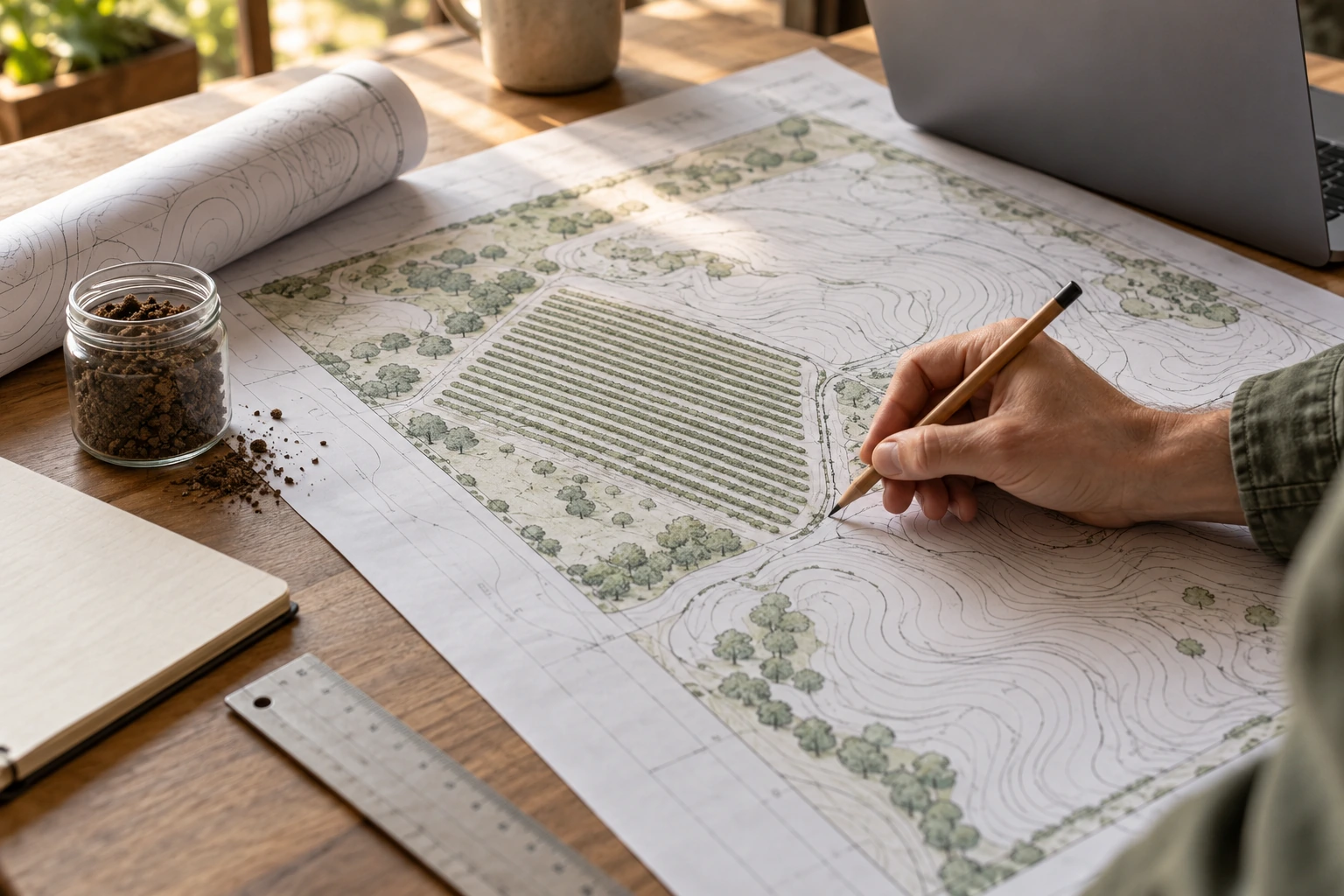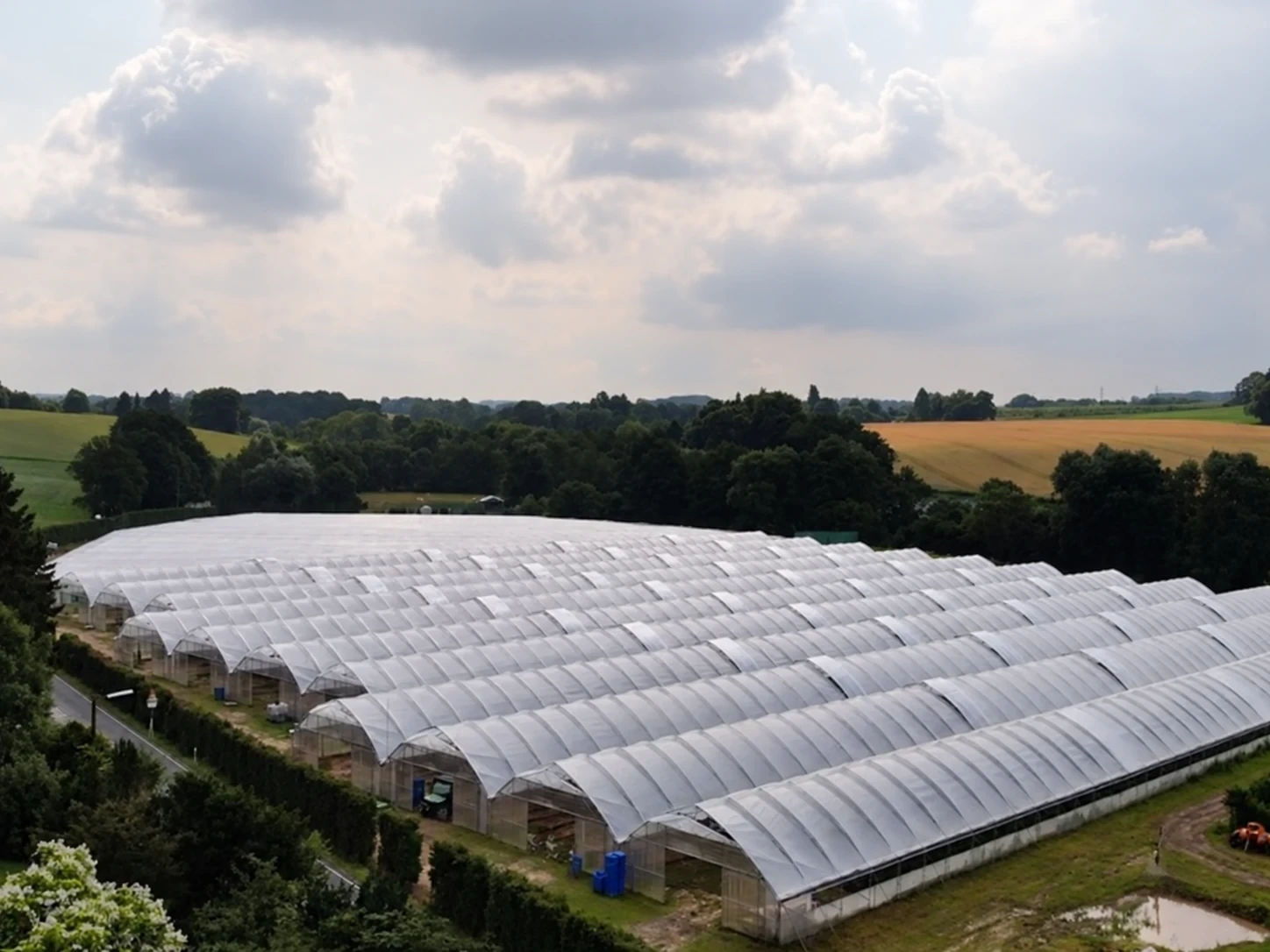

Start with the berry and the finished pack
A strawberry harvested directly into a punnet follows a different route from loose blueberries arriving in crates. List varieties, incoming containers, fruit condition, intended pack weights and closure types. Supply physical examples of the smallest and largest formats. Record whether the product is already graded in the field. Fragile fruit makes unnecessary tipping, drops and repeated handling important design questions, so trace every transfer before specifying automation.
Separate inspection, weighing and packing
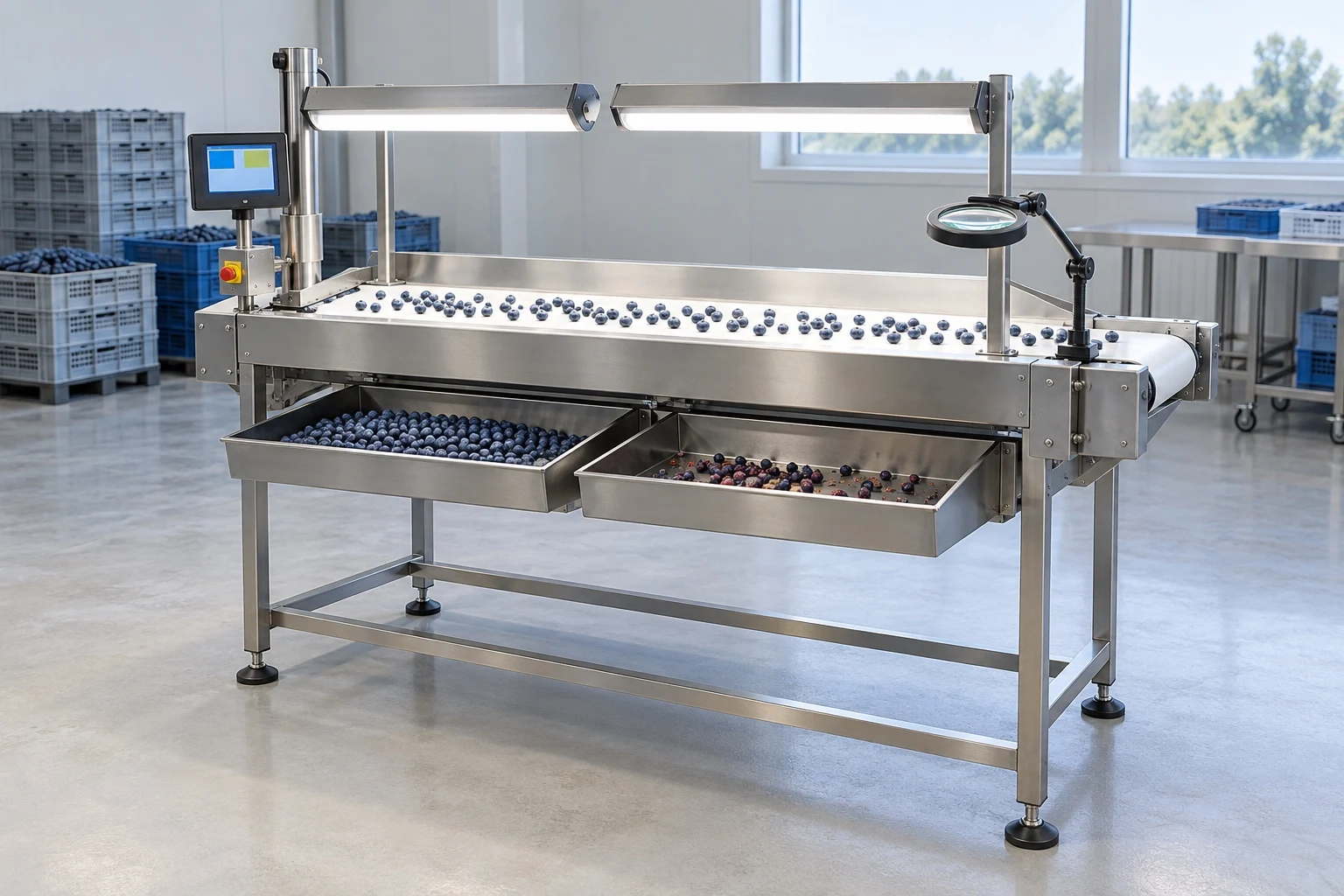
Quality inspection decides which fruit meets the agreed appearance and condition criteria. Weighing builds or checks the required quantity; it does not identify every defective berry. Packing conveys and arranges fruit or packs, while closing and labelling add further interfaces. Specify each function separately, including reject handling and rework. If optical sorting is required, define the defects and arrange a separate suitability trial; a weighing line is not evidence of optical capability.
Calculate capacity from net working time
Use the busiest receiving window, not an annual average. In a hypothetical shift, 1,200 kg must be packed in six scheduled hours, with one hour reserved for cleaning, breaks and changes. The required net rate is 1,200 ÷ 5 = 240 kg/h. At a 250 g pack, that equals 960 packs/h. These are planning assumptions, not machine ratings. Test realistic interruptions, staffing and reject rates before selecting capacity and any operating reserve.
Draw the people, fruit and packaging routes
A line fits only when operators, empty packaging, waste removal and maintenance fit around it. Mark receiving, inspection, packing, finished-product staging and the cooling interface on a dimensioned plan. Minimise backtracking and keep rejected fruit away from finished packs. Berry quality depends on gentle handling and timely temperature management, so agree maximum waiting arrangements with the postharvest adviser. Check doors, cleaning access, power and drainage before fixing the layout.
Run a representative product trial
Test more than an attractive sample batch. Include the intended pack range and representative fruit variation, then record output, weight results, damaged fruit, stoppages and changeover time. Agree how samples are selected and who records the results. Check label readability and the match between physical packs and their lot records. Capture the accepted settings and any unresolved issues; a demonstration without a written method is difficult to compare with another proposal.
Turn the workflow into a supply package
Future Farm Equipment can develop the process brief, coordinated layout, equipment schedule and interface list, then source and supply the agreed configuration. The proposal should identify exclusions, utilities, packaging samples, software connections and the trial criteria. Installation, commissioning and training responsibilities must be agreed explicitly. Keep cooling as a coordinated interface where it sits outside the supply scope, and retain spare-parts and cleaning requirements in the handover file.
Choose by the operation you need
Swipe the table sideways to compare all columns.
| Your situation | First function to assess | Evidence to request |
|---|---|---|
| Field-packed punnets | Inspection and weight adjustment | Trial with actual punnet sizes |
| Loose berries in crates | Gentle feeding and portioning | Damage and throughput observations |
| Several customer formats | Changeover, closing and labels | Timed format-change demonstration |
Common mistakes to avoid
- 01
Buying a nominal speed without net-hour calculations: test the complete shift workflow.
- 02
Treating weight control as quality sorting: write separate acceptance criteria for each.
- 03
Leaving packaging or cleaning until installation: verify samples and access during layout design.
Prepare these inputs for an engineering discussion
Mark the information you already have. Download the list and use it to prepare your conversation with our engineering team.
The checklist is a working aid. Ticks stay on this page only; no information is sent. Missing inputs can be identified together during the project review.
An introductory planning guide from Future Farm Equipment. Equipment specifications, site calculations, responsibilities and the final scope are confirmed in the project documentation and proposal.