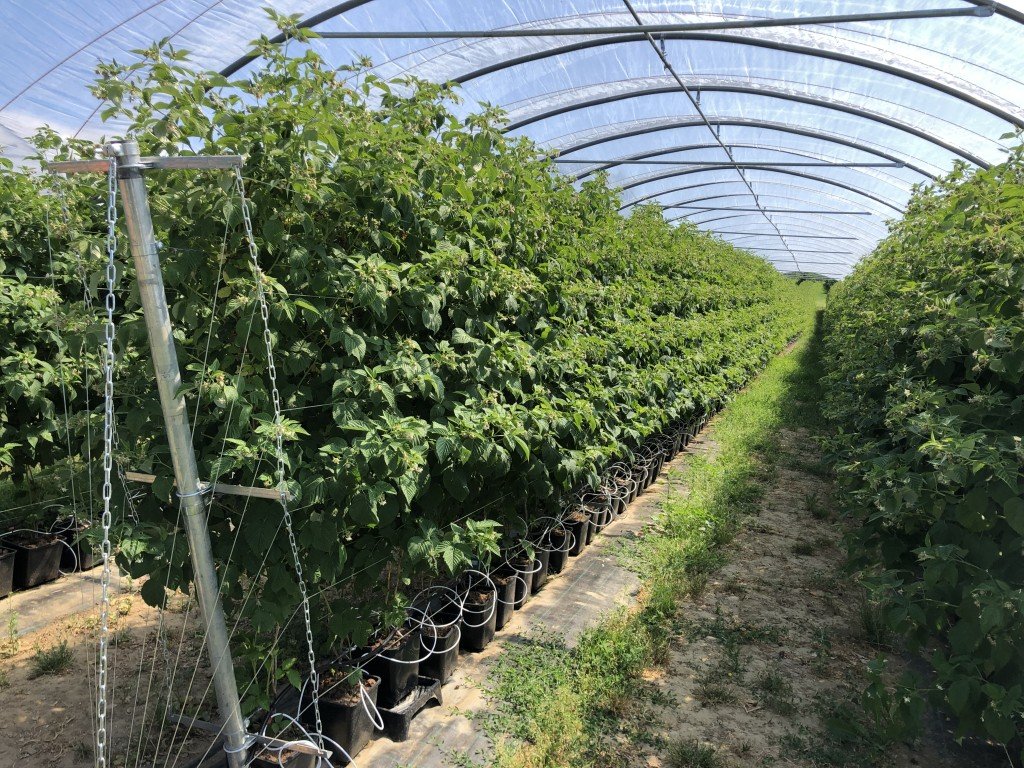
Define the crop cycle and container
Start with plant type, production duration, planting density and whether containers move between nursery and fruiting areas. These decisions set the demands on root space, handling and stability. Record container height and drainage openings as well as nominal litres. The same blend can behave differently in a shallow bag and a taller pot, so a substrate recommendation should name the container in which it will be used.
Compare air, water and structure
Coir pith, fibres and chips contribute different particle structures; peat grades and added components also change a blend. Request evidence for water retention, air space after drainage, particle distribution and stability over the intended crop cycle. A material label alone cannot describe those properties. Evaluate the prepared blend in the chosen container, because compaction, filling and container geometry influence the root environment after delivery.
Ask how the material was prepared and tested
For coir, distinguish washing from buffering and request a clear preparation statement for the supplied batch. For every blend, ask for pH, electrical conductivity and relevant nutrient or ion information, with the laboratory extraction method and units. Results from different extraction methods are not directly interchangeable. Read this evidence together with the irrigation-water analysis; the agronomist then sets crop-specific acceptance limits and the nutrition programme.
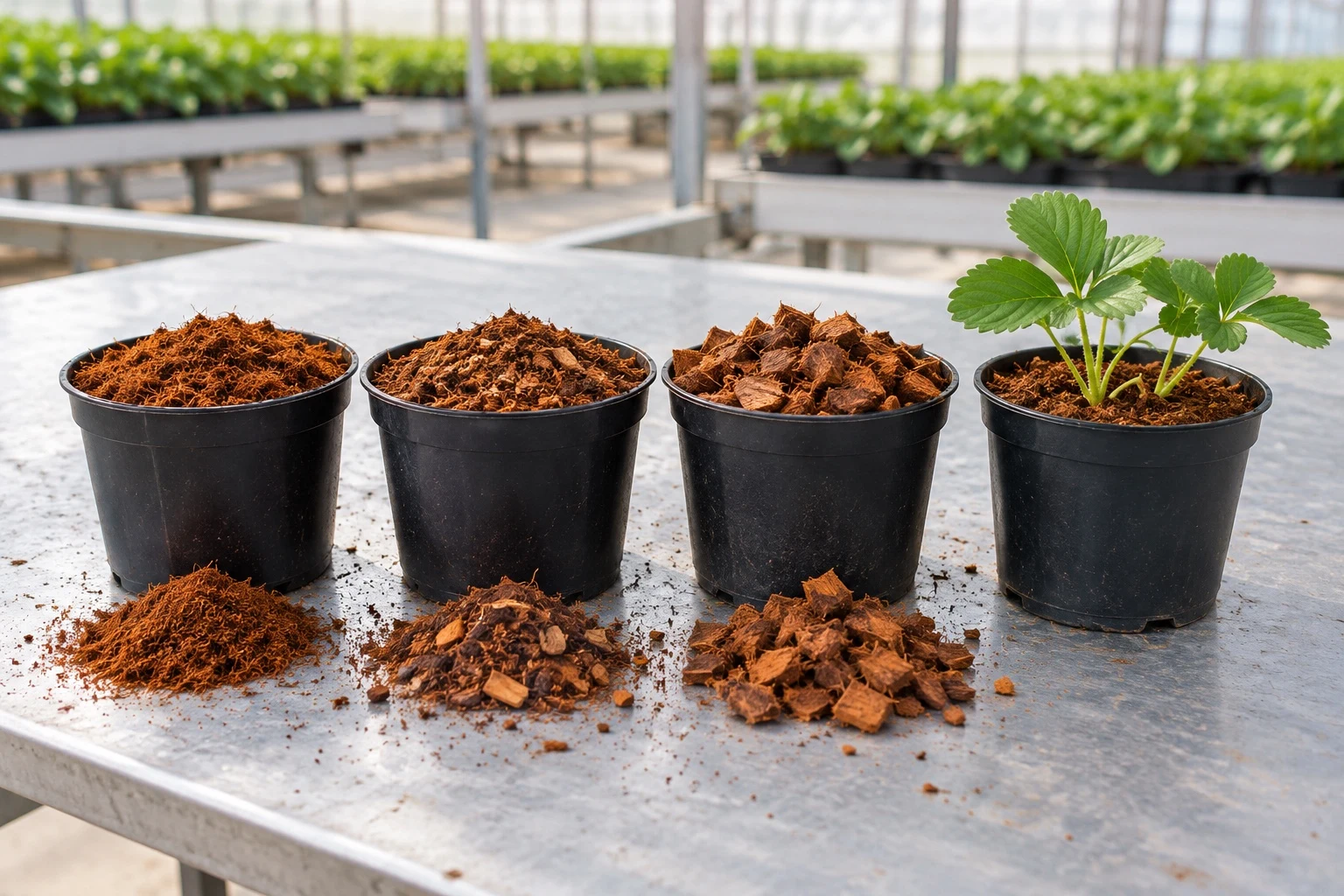
Select the format around farm operations
Grow bags arrive with a defined shape; compressed bales require preparation and filling capacity; loose or prepared blends need suitable storage and handling. Compare usable prepared volume, packaging, delivery access and labour rather than purchase weight alone. Confirm expansion instructions and planting or drainage openings for the selected product. Keep propagation discs or cubes separate from the final fruiting substrate specification: they serve a different stage.
Connect irrigation and drainage before planting
Check that emitter positions wet the intended root volume and that drainage outlets remain clear after the bag or pot is installed. Decide how representative containers will be observed and how drainage will be collected or managed. A different substrate can require a different irrigation strategy; copying the old timer settings is not a trial. Review physical observations alongside measurements rather than adjusting irrigation from a single reading.
Use a controlled trial and batch acceptance
Before scaling up, compare candidate materials with consistent plant type, container and recorded management. Define what will be reviewed: wetting, drainage, root condition, handling and crop response over an appropriate period. Keep batch references and retain a representative sample. Future Farm Equipment can coordinate substrate formats, containers and delivery documentation; agree laboratory acceptance, agronomic evaluation and replacement criteria before ordering the full volume.
Compare formats by operational consequence
Swipe the table sideways to compare all columns.
| Format | Useful when | Check before selection |
|---|---|---|
| Prepared grow bag | A repeatable row format is required | Filled dimensions, planting positions and drainage openings |
| Compressed coir bale | The farm can prepare and fill containers | Prepared volume, water quality and handling capacity |
| Peat-based or custom blend | A defined container and crop programme guide the mix | Physical tests, batch chemistry and storage instructions |
Common mistakes to avoid
- 01
Comparing EC without the extraction method: request like-for-like laboratory results before judging a batch.
- 02
Assuming washing and buffering are identical: verify the actual preparation and batch analysis.
- 03
Choosing by price per kilogram: compare usable prepared volume, labour and container performance.
Prepare a substrate enquiry
Mark the information you already have. Download the list and use it to prepare your conversation with our engineering team.
The checklist is a working aid. Ticks stay on this page only; no information is sent. Missing inputs can be identified together during the project review.
An introductory planning guide from Future Farm Equipment. Equipment specifications, site calculations, responsibilities and the final scope are confirmed in the project documentation and proposal.