Verify supply before selecting equipment
Record source flow, usable storage and water quality across the season. A borehole yield estimate is not the same as the flow available at the field when other users are operating. Request a recent laboratory analysis and identify suspended material or biological contamination risks. Map power availability and the source-to-field elevation difference. These inputs determine whether pumping, storage and treatment need attention before emitter selection.
Give each application its own brief
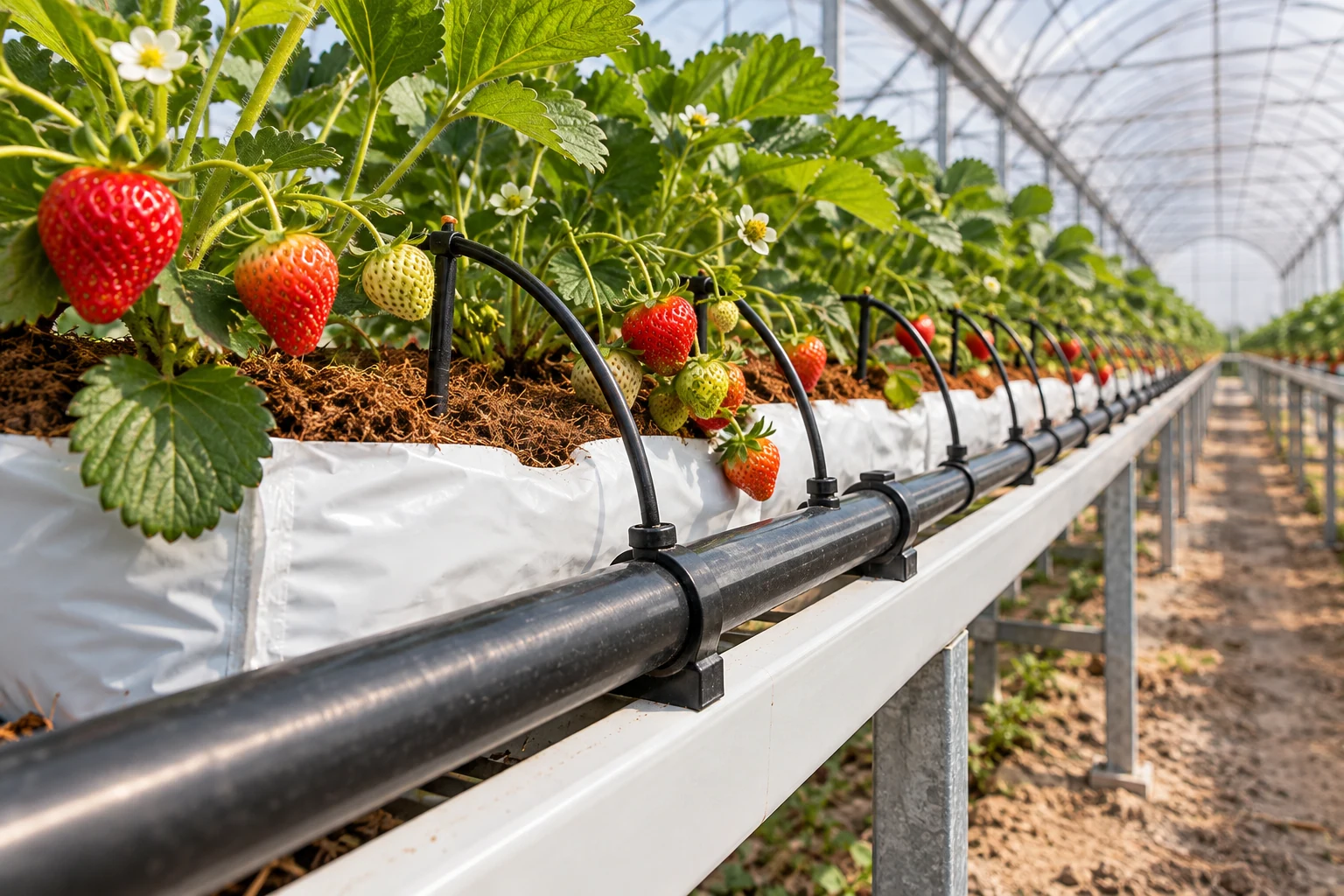
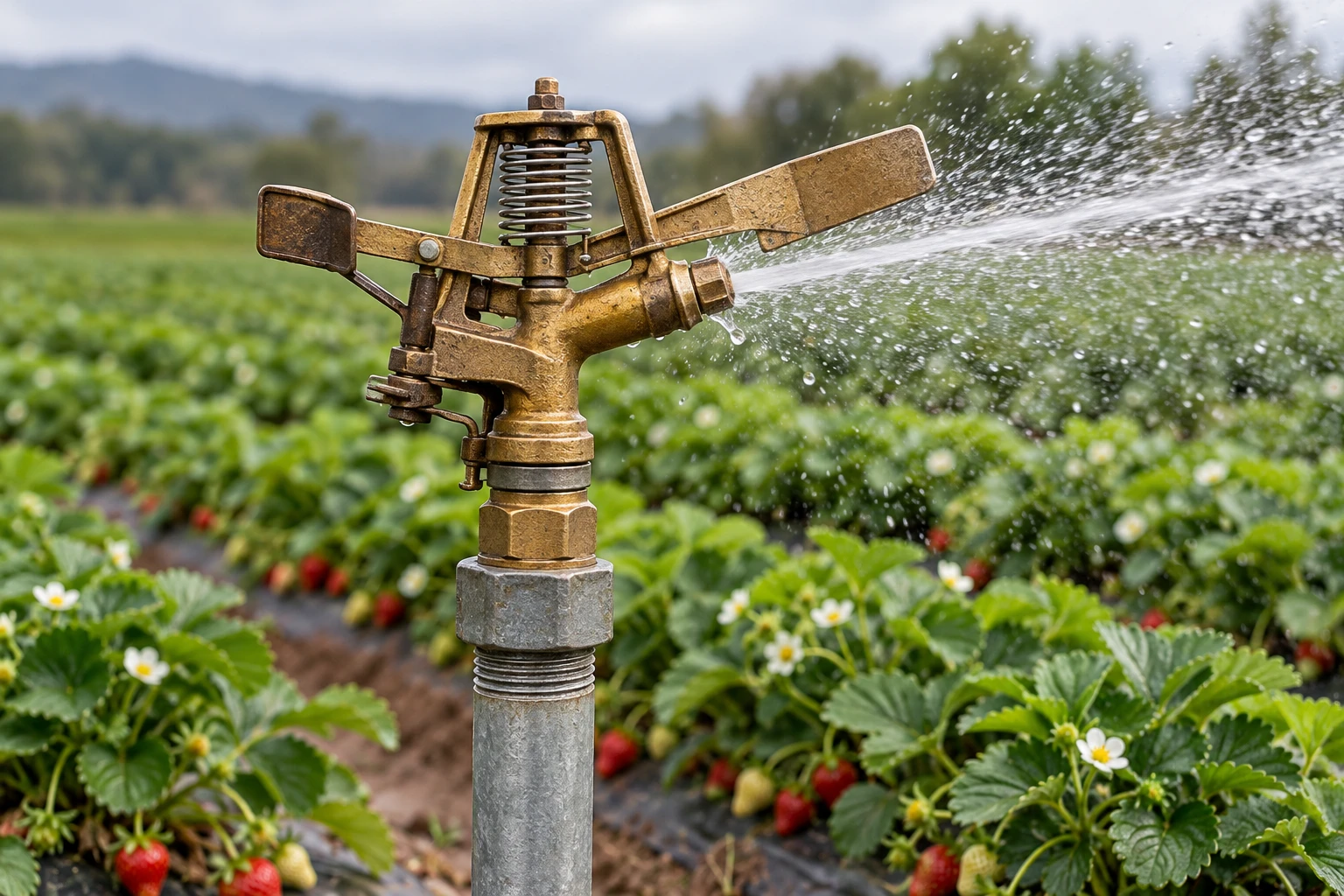
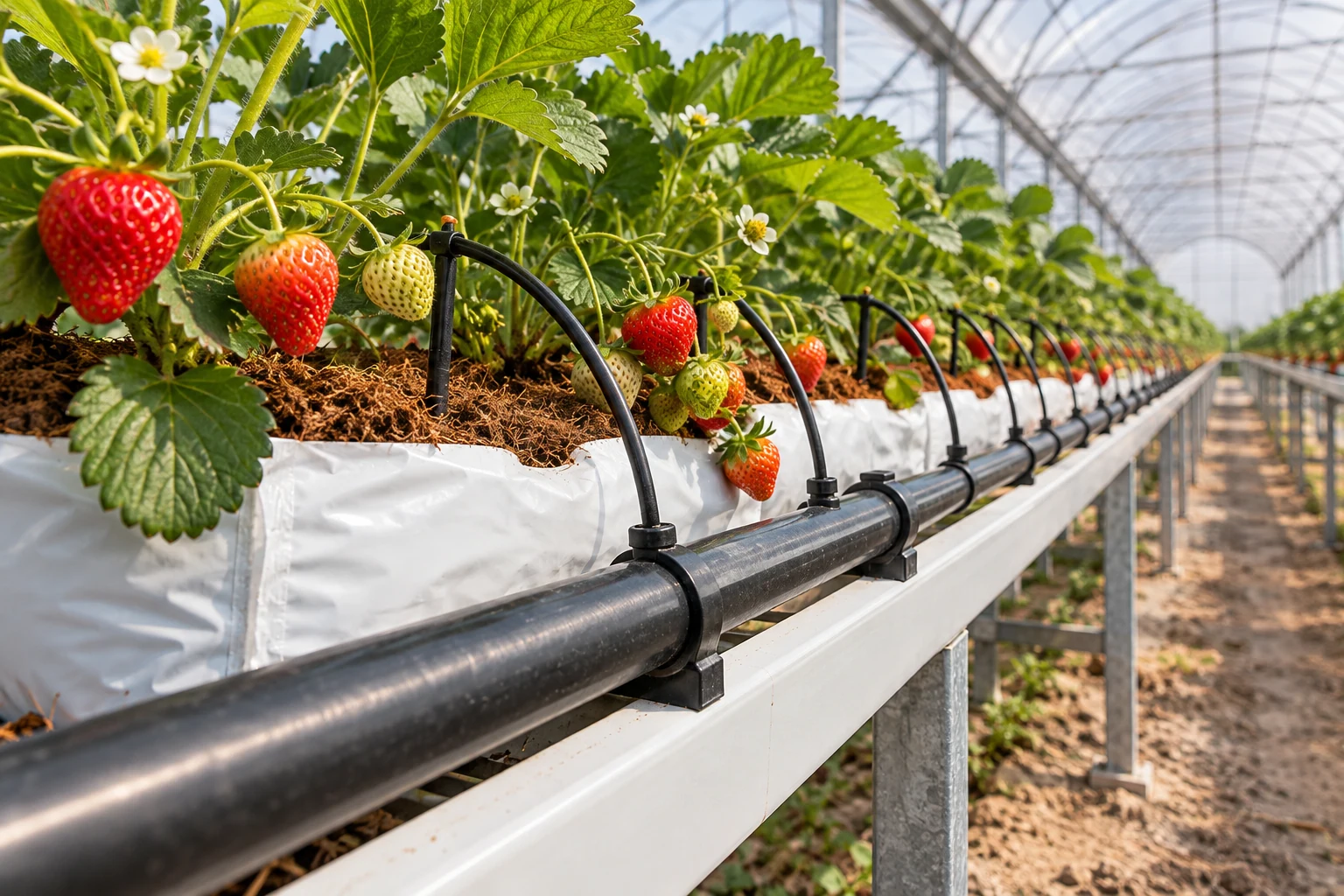
Drip lines suit continuous rows; online drippers can distribute water to individual pots or planting positions. Sprinklers wet a wider area, while foggers and misters serve different climate-management tasks. The correct choice depends on the root zone and production method. Do not treat a cooling system or ordinary sprinkler layout as a frost-protection design: that requires a separate capacity, reliability and operating assessment.
Design zones around the actual layout
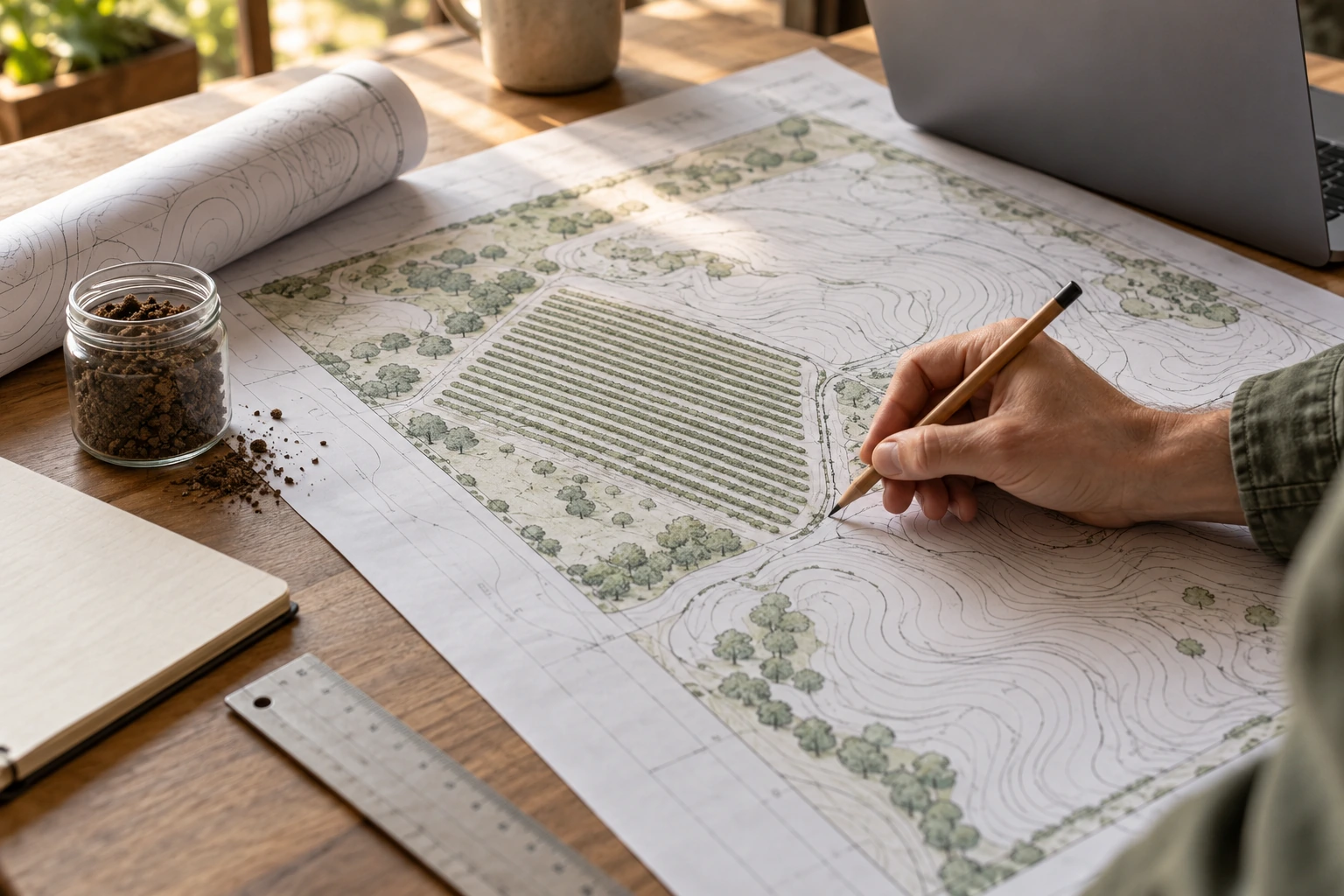
Show row lengths, elevation changes, emitter quantities and proposed operating zones. The designer checks pressure losses from the pump through filters, valves and pipes to the most demanding outlets. Pressure compensation has an operating range; it does not remove the need for hydraulic calculations. State which zones run together and leave room for flushing and filter cleaning in the water and operating plan.
Coordinate filtration and fertigation
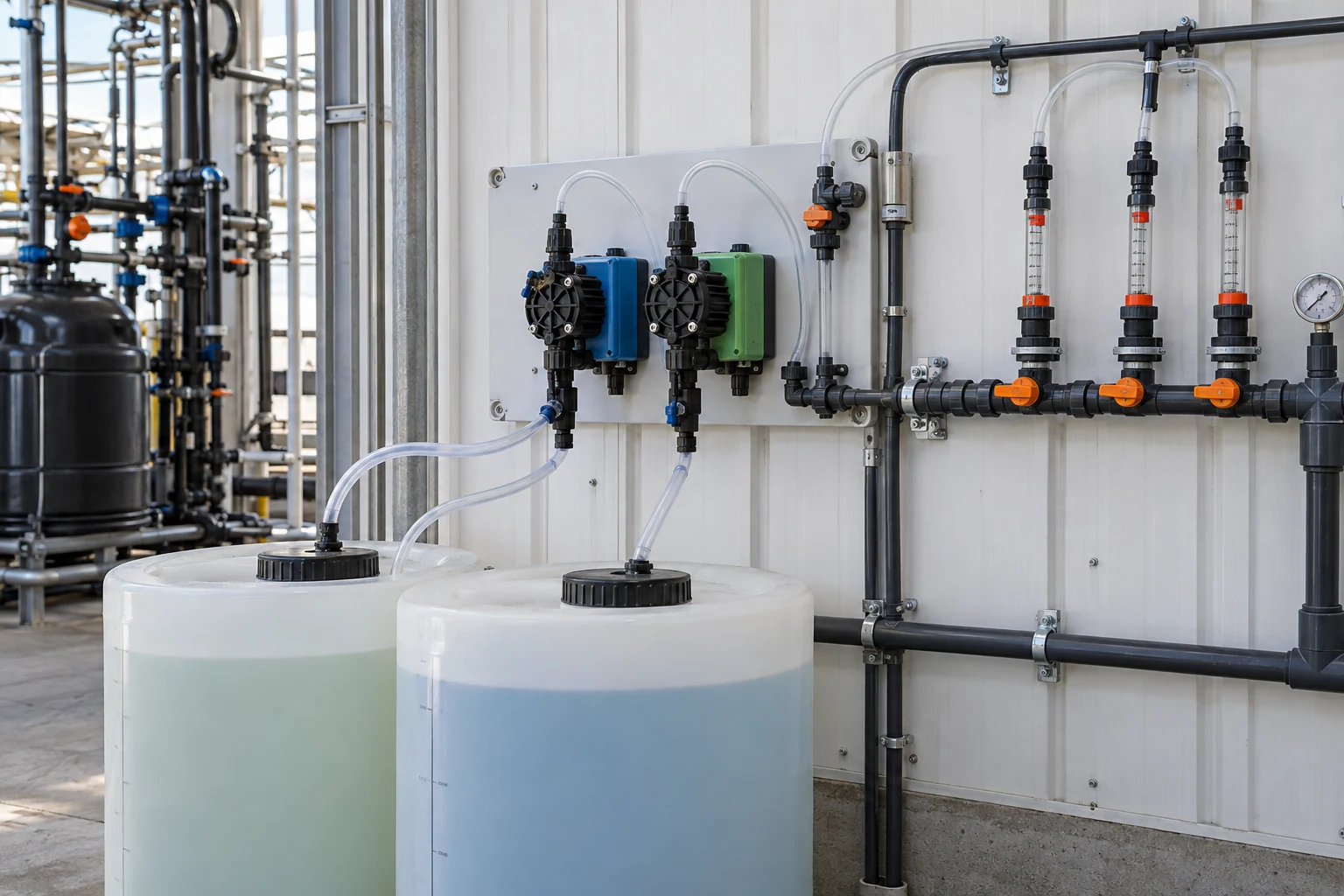
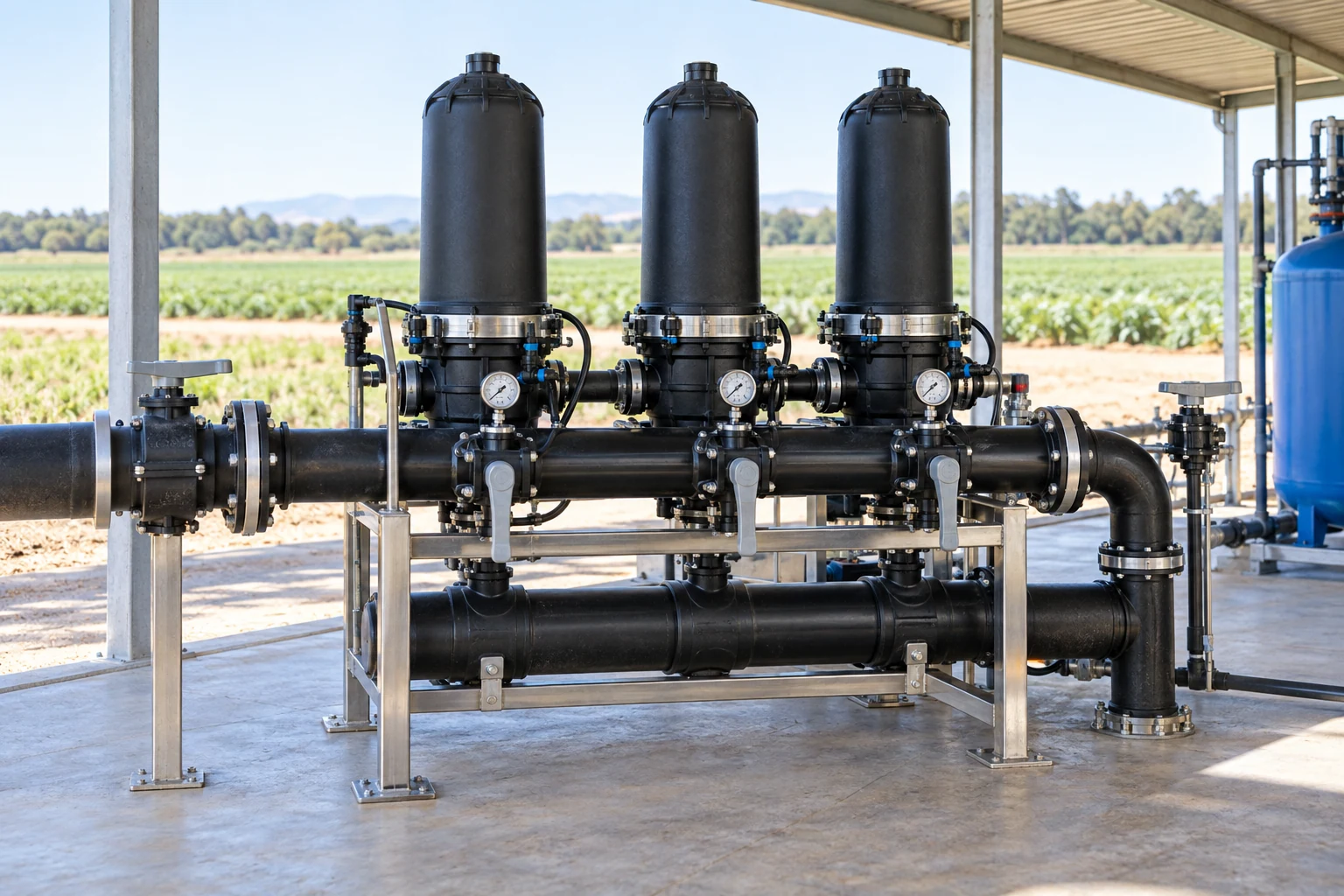
Select filtration against both the water analysis and the selected emitter requirements. Include accessible pressure readings and a maintenance route, not just a filter body. Fertigation adds dosing, mixing, monitoring and backflow-protection requirements. The agronomist defines the nutrient programme; the engineering specification defines how it is delivered and checked. Chemical compatibility, storage and operator training belong in the project review, not an improvised on-site recipe.
Make monitoring actionable
A controller can execute a schedule without proving that plants received the intended water. Combine zone-flow and pressure checks with observations of soil or substrate moisture and drainage where relevant. Decide who investigates a sudden change and which records are retained. Start with a manageable set of measurements. Sensor placement and interpretation should represent the crop, rather than the easiest installation point beside a valve box.
Agree what successful commissioning means
Before ordering, request a zone plan, equipment schedule, hydraulic assumptions and responsibility matrix. At commissioning, record pressures and discharge checks at representative positions, verify zone identification and demonstrate flushing and alarms. Keep these baseline measurements for later comparisons. Future Farm Equipment can connect the design brief, equipment supply and documentation; agree separately who installs, commissions, trains operators and maintains the system after handover.
Choose by the delivery task
Swipe the table sideways to compare all columns.
| Application | Equipment direction | Critical check |
|---|---|---|
| Continuous planted rows | Drip tapes and drip lines | Wetted pattern, length and pressure variation |
| Individual containers | Online drippers and distribution accessories | Container coverage and drain-down behaviour |
| Wider-area wetting | Sprinklers and micro sprinklers | Wind, overlap, canopy wetting and purpose |
Common mistakes to avoid
- 01
Selecting a pump by hectares: calculate flow, head and simultaneous zones from the layout.
- 02
Using longer watering to hide uneven delivery: investigate pressure, clogging and emitter performance first.
- 03
Buying controls before defining the process: specify measurements, responses and operator responsibilities first.
Inputs for an irrigation enquiry
Mark the information you already have. Download the list and use it to prepare your conversation with our engineering team.
The checklist is a working aid. Ticks stay on this page only; no information is sent. Missing inputs can be identified together during the project review.
An introductory planning guide from Future Farm Equipment. Equipment specifications, site calculations, responsibilities and the final scope are confirmed in the project documentation and proposal.